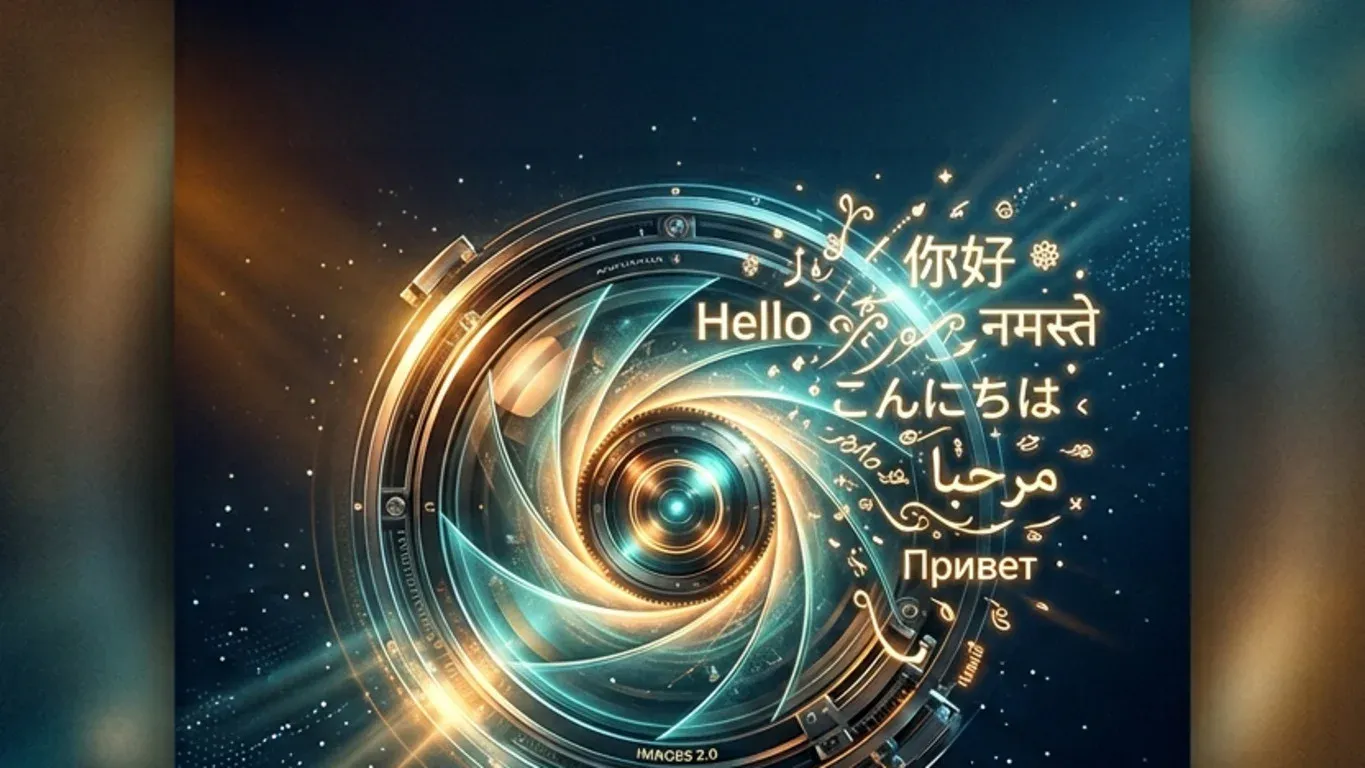
ChatGPT Images 2.0: OpenAI's New Image Model With Reasoning, Multi-Output and Real Multilingual Text

TL;DR: „ChatGPT Images 2.0 uses reasoning, generates multiple images per prompt, dramatically improves text rendering (including Chinese, Hindi, Japanese), supports aspect ratios from 3:1 to 1:3, and rolls out globally to ChatGPT and Codex users. Available via API as `gpt-image-1` – with real implications for marketing workflows, editorial design, and vibe-coding apps."
— Till FreitagWhat's the news?
On April 21, 2026, OpenAI shipped ChatGPT Images 2.0 – the second generation of its native image model in ChatGPT. This isn't a classic diffusion update. It's the first model that plugs ChatGPT's reasoning capabilities directly into the image-generation loop.
That has three practical consequences you'll feel immediately:
- Multiple images per prompt – a single prompt can output a complete study booklet, a magazine spread, or a character reference sheet.
- Real multilingual text – Chinese, Hindi, Arabic, Japanese, and Devanagari render visibly better than predecessors and competitors.
- Up-to-date world – knowledge cutoff is December 2025, and (in Thinking Mode) the model can search the web before generating.
The global rollout is live for ChatGPT and Codex, with a more capable version for Plus/Pro subscribers. Via API, the model is exposed as gpt-image-1.
What's actually new?
1. Reasoning before pixels
This is the real break. Previous image models (including DALL-E 3 and the original ChatGPT Images) were single-shot: prompt in, image out. Images 2.0 is allowed to think – research sources, plan layout, structure text content – before it renders.
Wired demonstrated this with a San Francisco weather infographic: the model fetched real weather data, identified landmarks (Ferry Building, Castro Theater, Painted Ladies, Transamerica Pyramid), and produced a correct, visually coherent map. That's not an image anymore – it's a fully generated editorial asset.
2. Multi-image output from one prompt
Probably the most useful change. Examples from the OpenAI launch:
- Full study booklets on a topic – cover, content pages, diagrams, glossary
- Character reference sheets for game or comic production (poses, expressions, outfits, backstory notes)
- Brand mood boards with logo, typography, palette, and mockups in one shot
- Manga sequences with consistent characters across multiple panels
For marketing and content teams: one prompt now replaces a briefing loop with three iterations.
3. Text rendering that actually works
This was the Achilles heel of every image model for years. Images 2.0 renders English text close to typographically clean – no more "Ferry Bilding", no doubled letters, no errant glyphs.
In non-Latin scripts the picture is more nuanced:
- Chinese & Japanese: significantly better, but per Wired's testing, complex posters can still contain "semi-gibberish" – characters that look Chinese but are pseudo-text. Notable: the model recognizes its own errors when asked for a translation.
- Hindi, Arabic, Bengali, Devanagari, Cyrillic: surprisingly stable in OpenAI's demos, varies by complexity in the wild.
For DACH builders: German text including umlauts renders cleanly in our tests.
4. Aspect ratios from 3:1 to 1:3
Finally. Previously you were stuck at 1:1, 16:9, and 9:16. Now:
| Format | Use case |
|---|---|
| 3:1 wide | Banners, LinkedIn covers, hero headers |
| 16:9 / 21:9 | Blog heroes, presentations, web backdrops |
| 1:1 | Social posts, avatars |
| 9:16 / 1:3 tall | Stories, mobile-first layouts |
Size is passed inline in the prompt, not via separate UI toggles.
5. Currency via December 2025 cutoff
Combined with web search in Thinking Mode: images featuring current brands, products, events, and people become plausible and fact-shaped – not just "hallucinated generic".
Via API: gpt-image-1
For builders the model is exposed as gpt-image-1 through OpenAI's image generation API. Three endpoints matter:
- Generations – image from text prompt
- Edits – modify an existing image (inpainting, style transfer)
- Variations – produce variants of an existing image
What changes vs. the predecessor:
- Multi-image output is available API-side as well
- Aspect-ratio parameter instead of fixed size enums
- Reasoning mode as an optional flag (higher quality, higher latency, higher cost)
- Output as Base64 or URL, same as before
Relevant for vibe-coding apps: the model is no longer just a hero-image generator. It's now usable for in-app generation of editorial assets – onboarding diagrams, dynamic learning material, personalized dashboards.
What it means for marketing & content
The honest take: generic stock photography is officially dead. Not because stock photos are bad, but because the effort to find a matching one is now higher than writing a precise prompt.
Concrete workflow shifts we already see at Till Freitag:
- Blog headers in seconds – instead of stock search, a 3-sentence on-brand prompt (see our blog image pipeline)
- Editorial infographics on-demand – instead of a designer brief, a prompt with data sources
- Multilingual marketing assets – one prompt produces English, German, and Spanish variants of the same poster
- Mood boards for pitches – brand direction in minutes, not days
If you're still paying Midjourney for every blog header, add the ChatGPT Images 2.0 API to your stack – not necessarily as a replacement, but as the fastest default.
Where Images 2.0 still falls short
Being honest:
- Faces & identity continuity: multi-panel sequences with the same characters are better than before but not yet at Nano Banana 2 level.
- Photoreal quality: hyperrealistic portraits are possible, but competitors like Flux Pro or Midjourney v8 still produce finer results for pure photo tasks.
- Complex technical diagrams: UML, Sankey, precise architecture diagrams remain Mermaid and ExcaliDraw territory – the model can draw diagrams but doesn't guarantee technical correctness.
- "Semi-gibberish" in rare scripts: if you depend on 100% correct text in languages like Chinese or Hindi, build in a native-speaker review loop.
The bigger picture
With Images 2.0, what a "model" actually means in 2026 becomes visible: not a single network, but a reasoning loop wrapping a renderer, search, and tool use. The same architecture we see in agentic coding tools and autonomous browsers.
The most exciting consequence: image generation becomes a subroutine – callable from any agent, any workflow, any marketing pipeline. If you're building a Lovable app today, the image API shouldn't be planned as a nice extra but as a default building block – like a database.
Bottom line
ChatGPT Images 2.0 isn't an incremental update. It's the first generation that shows how image generation embeds into a reasoning architecture – with the three big levers of multi-image, multilingual, and current-world.
For marketing teams: productive immediately. For builders: a new default in the API. For designers: less of a threat than often suggested – the requirement shifts from "produce pixels" to "give direction".
Action items for this week:
- Open ChatGPT, run three of your standard marketing prompts
- Spin up an API key, send a test call against
gpt-image-1with multi-output - Audit existing image pipelines: where does Images 2.0 replace a 3-day designer loop?
Ignore this and you'll be paying – in six months – the cost of a workflow that's already not state of the art today.
Sources & further reading:
Related Articles

The AI Race in 43 Milestones: The Complete OpenAI vs. Anthropic Timeline
From GPT-4o to Project Glasswing: Every acquisition, model launch, and product release from OpenAI and Anthropic on an i…
Read more
Working 2.0: AI Tools That Actually Help – Our Stack for the New World of Work
Which AI tools do we actually use every day? An honest look at our stack – from monday AI to ChatGPT to Make – and what'…
Read more
Why We Switched from ChatGPT to Claude – and What We Learned About LLMs Along the Way
We worked with ChatGPT for 18 months – then switched to Claude. Here's our honest comparison of all major LLMs and why C…
Read more
The 10 Best monday MCP Prompts for Your Daily Work
Copy-paste-ready prompts for Claude, Cursor, and ChatGPT – to control monday.com via natural language. From board creati…
Read more
monday.com MCP: All Available Tools and Integrations Overview
monday.com offers two powerful MCP servers – Platform MCP and Apps MCP – plus native integrations for Claude, Cursor, Ch…
Read more
Why We Don't Cover xAI
No enterprise product, no values alignment, not the best model. Three reasons why Grok doesn't appear on our blog.…
Read more
GitHub Uses Your Copilot Data for AI Training – What This Means Strategically for Microsoft
Starting April 24, 2026, GitHub will use Copilot interaction data for AI model training unless you opt out. Here's what'…
Read more
OpenAI Buys a TV Show. Anthropic Builds the Future of Software. And Google? It's Playing a Different Game Entirely.
OpenAI buys TBPN, a Jony Ive hardware startup, and builds a desktop superapp. Anthropic turns Claude into a Developer OS…
Read more
Copilot Cowork: Microsoft Bets on Claude – and What It Means for OpenAI
Microsoft launches Copilot Cowork – powered by Anthropic's Claude. 400M+ users get an autonomous agent for emails, calen…
Read more