
Jamstack 2026: Dead, Alive, or Transformed?

TL;DR: „The term Jamstack is dead. But the idea – pre-rendered, API-driven, edge-first – won. It just goes by different names now."
— Till FreitagThe Term Is Dead
Let's get this out of the way: Nobody says "Jamstack" anymore.
Netlify coined the term in 2016. By 2020, it was at every conference. In 2023, Netlify itself stopped using the word. In 2026, barely anyone searches for it.
But here's the paradox: the principles Jamstack stood for have won. They've just become so standard that they no longer need their own name.
What Jamstack Actually Was
Jamstack stood for three ideas:
- JavaScript – Dynamism in the browser, not on the server
- APIs – Backend as decoupled services, not a monolith
- Markup – Pre-rendered HTML, not server-side rendering on every request
The vision: websites are fundamentally static files on a CDN. Dynamism comes via APIs. No PHP, no Ruby, no server assembling HTML on every page view.
That was radical in 2016. In 2026, it's the default.
What Changed
From "Static First" to "Edge First"
The original Jamstack promise was: build at build time, deploy to a CDN, done. That worked for blogs and marketing sites. But it failed at:
- Personalization: Every user sees the same build? No dynamic content?
- Build times: 10,000 pages = 10-minute build? On every change?
- Real-time data: Prices, availability, dashboards – none of this works with static builds
The answer wasn't "back to the server." The answer was Edge Computing.
Instead of pre-rendering everything at build time, we now render at the edge – on servers 50ms from the user. This is neither classic SSR (central server) nor classic SSG (everything at build time). It's something new.
The Framework Evolution
| Era | Framework | Paradigm |
|---|---|---|
| 2016-2019 | Gatsby, Hugo, Jekyll | Pure Static Site Generation |
| 2019-2022 | Next.js, Nuxt | Hybrid SSG + SSR |
| 2022-2024 | Astro, Remix | Islands Architecture, Edge SSR |
| 2024-2026 | Astro 5, Next.js 15, Cloudflare EmDash | Edge-First, AI-native |
Gatsby – the poster child of Jamstack – is effectively dead. Hugo lives in a niche. But Astro translated the Jamstack idea into the edge era: zero JavaScript by default, only dynamic where necessary.
From APIs to AI
Jamstack relied on APIs as the backend layer. In 2026, the API landscape looks fundamentally different:
- Headless CMS (Contentful, Strapi, Sanity) were the Jamstack backend standard
- BaaS (Supabase, Firebase) commoditized the backend
- AI APIs (OpenAI, Anthropic, Replicate) are the new "APIs" in the stack
The modern stack isn't JavaScript + APIs + Markup anymore. It's AI + Edge + Structured Content. AI is just the next abstraction layer in a long history of technological evolution.
The Jamstack Heirs
Astro: The Spiritual Successor
Astro carried the Jamstack principles forward most consistently:
- Content Collections with schema validation (like a typed headless CMS, but local)
- Island Architecture – JavaScript only where interactivity is needed
- Edge-ready – deploys to Cloudflare, Vercel, Netlify, Deno Deploy
- View Transitions API for SPA-like navigation without SPA overhead
Astro is Jamstack 2.0, even if it never calls itself that.
Cloudflare: The Infrastructure Layer
Cloudflare is building the backend that Jamstack always needed but never had with D1, R2, and Workers. EmDash is the proof: a complete CMS on edge infrastructure, no traditional server.
The strategic analysis shows: Cloudflare doesn't just want to be a CDN – they want to be the default backend of the post-WordPress era.
AI Builders: The End of Craftsmanship?
Tools like Lovable, Bolt, and v0 generate frontends via chat. Most of these tools produce output that follows Jamstack principles: React components, API calls, deployed on edge infrastructure.
Ironically, this might be exactly why Jamstack has outlived its usefulness as a term: when AI writes the code, the architecture decision is no longer the developer's. The AI instinctively chooses the most performant approach – and that usually looks like Jamstack.
What We Do at Till Freitag
This website is a living example of the Jamstack evolution:
- Frontend: React + Vite + Tailwind (SPA with SSG via Playwright)
- Content: Markdown files in the repository, no headless CMS
- Backend: Supabase for auth, database, and storage
- Editing: Lovable as an AI-native editing interface
- Deployment: Static assets on CDN, edge-ready
No WordPress. No traditional CMS. No server rendering PHP. The Jamstack principles, without the Jamstack label.
The Current Landscape
| Need | 2020 (Jamstack Era) | 2026 (Edge Era) |
|---|---|---|
| Static Sites | Gatsby, Hugo | Astro, Next.js SSG |
| Blog/Content | Ghost, Gatsby + Contentful | Astro + MDX, EmDash |
| E-Commerce | Gatsby + Shopify | Astro + Shopify, Hydrogen |
| Web Apps | Next.js | Next.js 15, Remix, Astro + React Islands |
| Enterprise CMS | Contentful, Prismic | Sanity, Storyblok, EmDash |
| AI-generated | – | Lovable, Bolt, v0 |
Conclusion: The Idea Won, the Name Didn't
Jamstack as a term has become irrelevant. But as an architectural philosophy, it fundamentally changed the web:
- Pre-rendering is the default, not the exception
- APIs over monoliths is standard
- CDN/Edge delivery is a given
- Git-based workflows for content are normal
The difference from 2020: it's no longer a movement. It's just how you build websites.
Anyone planning a new website in 2026 doesn't think "Should I do Jamstack?" – but "Which edge framework fits my use case?" The answer to that question is almost always a successor to the Jamstack idea.
The term is dead. The revolution was successful.
Verwandte Artikel
EmDash: Cloudflare's Answer to WordPress – CMS on Serverless Steroids
Cloudflare released EmDash, a full-stack TypeScript CMS on Astro running on D1, R2, and Workers. Plugin sandboxing, stru…
Weiterlesen
Vibe Coding & SEO: Why AI-Generated Apps Stay Invisible – And How We Fix It
Lovable, Bolt, v0 – Vibe Coding tools produce SPAs that Google can't see. Our playbook makes them SEO-ready: SSG, Schema…
Weiterlesen
Cloudflare's Real Play – Why EmDash Isn't a CMS Product, It's an Infrastructure Trojan Horse
Cloudflare didn't launch a CMS. They laid the bait to establish D1, R2, and Workers as the default backend of the AI bui…
Weiterlesen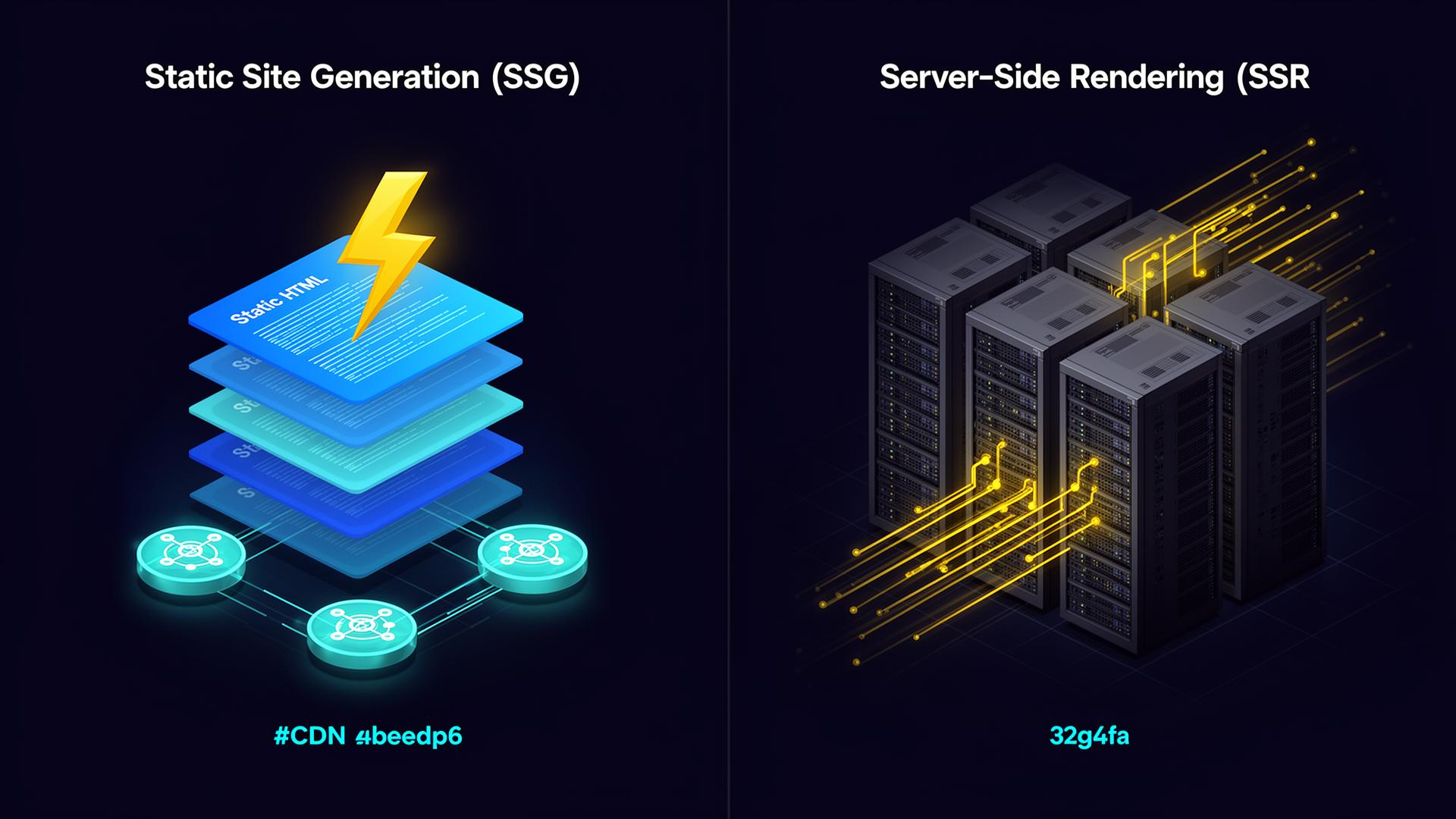
SSR or Pre-Rendering? What We Evaluated for Mykeythai vs. Our Default Approach
Lovable now ships real SSR via TanStack Start. We checked for Mykeythai whether to switch – and why our pre-rendering ap…
Weiterlesen
Google Search Console for Vibe Coding Projects: Setup, Debugging & Indexing
Your Lovable app is live on Vercel – but Google isn't indexing anything? How to set up Search Console, debug crawling is…
Weiterlesen
OG-Image Best Practices for SPAs: Making Your Vibe Coding Projects Shareable
When you share a link from your Lovable app, LinkedIn shows an empty box. Why SPAs don't deliver social previews – and h…
Weiterlesen
AI Website Builder Compared: Framer vs. Webflow AI vs. Wix AI vs. Durable vs. Lovable Stack
Five ways to build a website compared on SEO: Framer, Webflow AI, Wix AI, Durable – and the Lovable + GitHub + Vercel st…
Weiterlesen
Lovable SEO/AEO: Every App Discoverable by Google and ChatGPT From Day 1
Lovable ships server-side rendering, pre-rendering for existing apps, Semrush directly in the builder chat, and an on-de…
Weiterlesen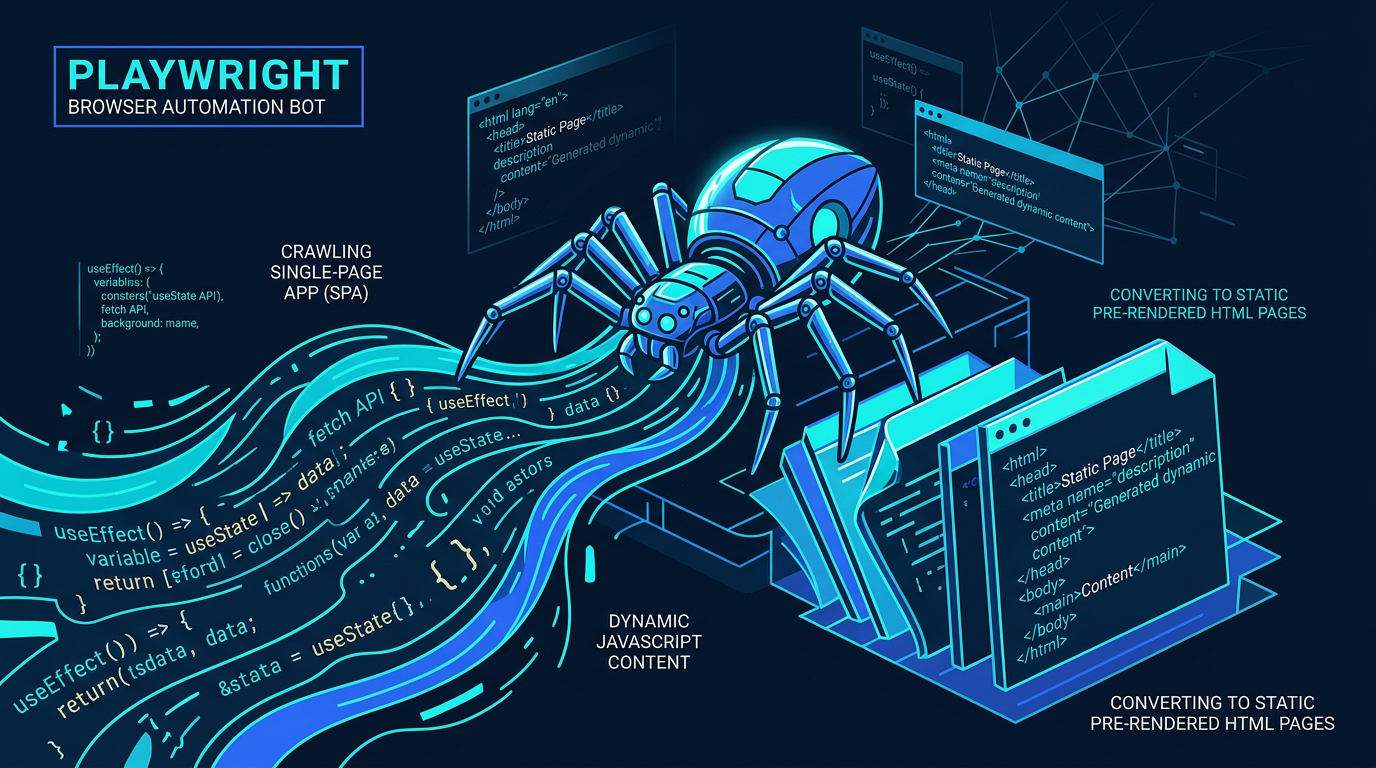
Prerendering: How to Turn a React SPA Into a Google-Friendly Site
React SPAs are invisible to crawlers. Prerendering fixes that – without Next.js, without an SSR server. How our Playwrig…
Weiterlesen