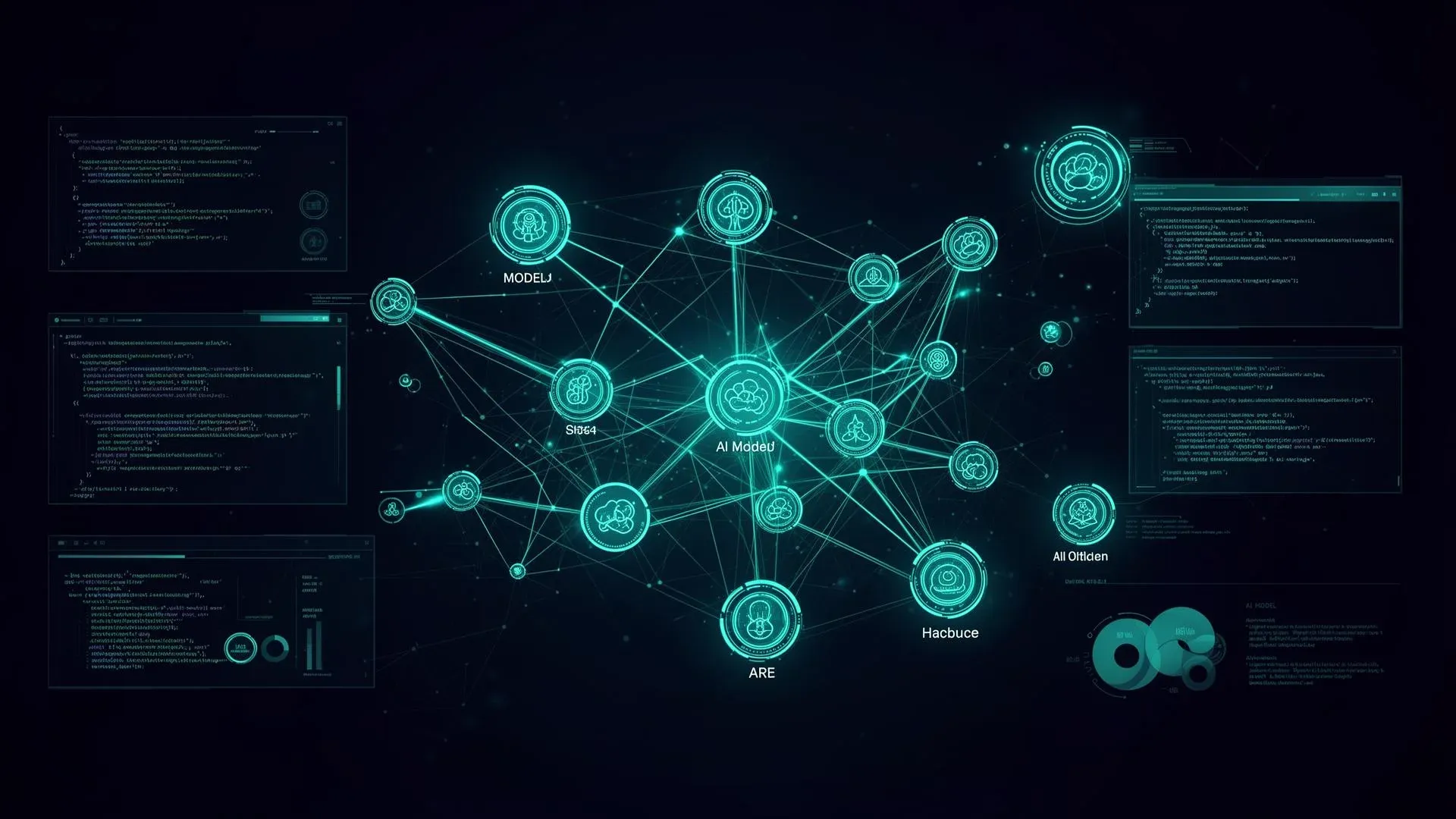
Perplexity Computer: 19 AI Models, One System – The End of Single-Model Thinking


TL;DR: „Perplexity Computer orchestrates 19 specialized AI models into one system. It's the strongest signal yet that the future of AI isn't one model to rule them all – it's intelligent routing."
— Till Freitag30-Second Summary
Perplexity launched Computer on February 25, 2026 – a multi-model agent orchestration platform that coordinates 19 different AI models to complete complex, long-running workflows in the background. Available to Perplexity Max subscribers ($200/month), it represents a fundamental bet: AI models are specializing, not commoditizing, and the value will accrue to the orchestration layer.
What Is Perplexity Computer?
Think of Computer as a general-purpose digital worker. You give it a high-level objective – "Build a dashboard tracking my side project's metrics and deploy it" – and it:
- Decomposes the task into subtasks
- Routes each subtask to the best-suited AI model
- Executes everything in parallel, in the background
- Checks in only when it genuinely needs your input
The system runs on 19 models under the hood. Claude Opus 4.6 handles orchestration and coding. Gemini powers deep research. GPT-5.2 manages long-context recall. Grok handles lightweight, speed-sensitive tasks. And so on.
The model roster isn't fixed – Perplexity adds new models as they prove their strengths and rotates out underperformers.
Why Multi-Model Matters
Here's the data point that makes this interesting: In January 2025, over 90% of enterprise tasks on Perplexity's platform were handled by just two models. By December 2025, no single model commanded more than 25% of usage.
What happened? Models got better at different things, not the same things. A new frontier model appeared every 17.5 days in 2025, each with distinct strengths:
| Model | Strength | Weakness |
|---|---|---|
| Claude Opus 4.6 | Coding, architecture, reasoning | Creative writing |
| Gemini | Research, writing, image generation | Complex code tasks |
| GPT-5.2 | Long-context recall, broad web search | Specialized reasoning |
| Grok | Speed, lightweight tasks | Deep analysis |
A Perplexity executive put it bluntly: Claude Opus 4.6 is "a terrible writer" – but it's the best coder available. A marketing team using Claude will underperform one using Gemini. An engineering team using Gemini will underperform one using Claude.
No company operates with only one type of team. No single model can serve all of them.
Computer vs. the Competition
The launch positions Computer in a crowded but differentiated landscape:
vs. OpenClaw (Open-Source Agent)
OpenClaw runs locally, accessing your files, email, and APIs directly. Powerful – but risky. A widely shared incident this week showed a Meta AI researcher frantically trying to stop OpenClaw from deleting her entire email inbox. Computer runs entirely in the cloud, in an isolated sandbox. Security failures are contained.
vs. Claude Code / Cowork
Anthropic's tools assume Claude can handle everything. Computer doesn't make that assumption – it routes coding to Claude, writing to Gemini, and research to whatever model performs best today.
vs. ChatGPT / Operator
OpenAI's approach is similar to Anthropic's: one model ecosystem. Computer bets on model diversity.
The core philosophical difference: OpenAI, Anthropic, and Google are building vertical ecosystems. Perplexity is building the horizontal orchestration layer.
What This Means for Businesses
The "Dependency Moat" Problem
If your entire workflow runs on one model provider, you're exposed. Models improve unevenly. Provider pricing changes. API reliability varies. Computer's multi-model approach is essentially infrastructure-level diversification.
The Orchestration Layer Thesis
In cloud computing, the companies that built abstraction layers above commodity infrastructure (think: Kubernetes, Terraform) often captured more value than the infrastructure providers themselves. Perplexity is making the same bet for AI: the orchestration layer, not the model layer, is where value accrues.
Practical Use Cases
From the demos and enterprise data:
- Marketing teams: Research → draft → design → deploy, using the best model for each step
- Engineering teams: Architecture (Claude) → implementation (Claude) → documentation (Gemini) → deployment
- Operations: Data analysis (GPT-5.2) → reporting (Gemini) → workflow automation
- Executive teams: Market research (Perplexity Search) → competitive analysis → strategy docs
Pricing and Availability
| Tier | Price | Computer Access |
|---|---|---|
| Max | $200/month | ✅ 10,000 credits/month |
| Pro | $20/month | Coming soon |
| Enterprise | Custom | Coming soon |
Max subscribers currently get a 20,000-credit bonus for 30 days. The credit system is usage-based – you can select specific models for sub-agents and set spending caps.
Our Take
Perplexity Computer validates a thesis we've been operating on for a while: the right model for the job matters more than the best model overall. It's why we use OpenRouter in our own stack – unified access to multiple models, intelligent routing, no lock-in.
For most teams, Computer is probably overkill today. At $200/month, it's positioned for power users and enterprises. But the underlying principle – multi-model orchestration with intelligent routing – is the direction the entire industry is heading.
The question isn't whether you'll use multiple AI models. It's who orchestrates them for you – and whether you want that to be a proprietary platform or something you control.
What to Watch
- Pro tier rollout – When Computer hits $20/month users, adoption will tell us if multi-model orchestration is a power user feature or a mainstream need
- Model maker reactions – Will OpenAI, Anthropic, or Google restrict API access to protect their own agent products?
- Search API expansion – Four of the "Magnificent Seven" already use Perplexity's search API in production. That's the real strategic asset
- Open-source alternatives – If multi-model orchestration is the future, open-source frameworks will inevitably emerge
Perplexity Computer launched February 25, 2026. This analysis reflects the state at launch. We'll update as Pro/Enterprise tiers roll out.
Related: Perplexity Comet – Why an AI Company Built a Browser
→ Need help choosing the right AI stack for your team? Book a free consultation
Related Articles
AI Agentic First at Groupon: What Ales Drabek's Dark Software Factory Teaches Us
Ales Drabek, CTIO at Groupon, runs two patterns in production: Dark Software Factory and Speedboats. What that reveals a…
Read more
Enterprise-Grade Agentic Setup: Why an API Key Is Not an AI Strategy
An API key on your website is child's play. An agentic setup with specialised sub-agents, TOOLS.md, clean system prompts…
Read more
Ponytail: The Best Code Is the Code You Never Wrote
A dev built Ponytail because his AI agents wrote 500 lines for a 5-line problem. The result: 80-94% less code, 47-77% ch…
Read more
Google's Agent Marketplace Goes Live – And monday.com Is Already Inside
Google just opened Gemini Enterprise to partner-built AI agents – and monday.com is one of the first in. What that means…
Read more
Globster: monday.com Enters the Personal AI Agent Game – on NVIDIA's NemoClaw
monday agent labs just launched Globster: personal AI agents built on OpenClaw, secured by NVIDIA's NemoClaw runtime. Wh…
Read more
Token Maxxing: When AI Stops Being a Search Engine and Becomes Infrastructure
Most teams use AI like Google. The winners treat it like electricity. Token maxxing means pushing every doc, every call,…
Read more
Agentalent.ai: monday.com Launches the First Marketplace for Hiring AI Agents
monday.com launches Agentalent.ai – a marketplace where companies can 'hire' AI agents for real business roles. Here's w…
Read more
AI Agent Ops: How to Monitor, Audit, and Control Agents in Production
Governance is the strategy – Agent Ops is the execution. How to monitor autonomous AI agents in production, audit every …
Read more
Agent Sandboxing: Containers vs. WASM vs. Kernel – Three Ways to Contain AI Agents
AI agents need isolation. But which kind? Containers, WASM, or kernel-level – three approaches compared with concrete tr…
Read more