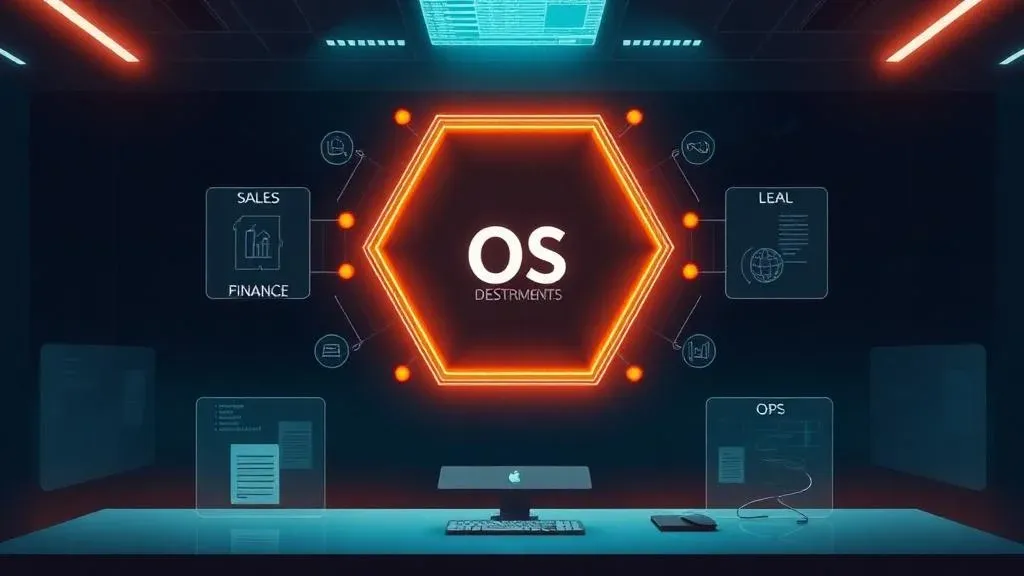

TL;DR: „Your company doesn't need a 16th SaaS tool. It needs an operating system that understands all your information – and gives every team the right lens on it."
— Till FreitagThe Compound Startup Revolution
Something fundamental is happening in software right now that most people are noticing but not fully processing.
Mercury started as a bank. Now it does invoicing, accounting, even tax filing. Rippling started as HR software. Now it does IT, payroll, spend management – and is going after Deel. Stripe was payments, now it's billing, invoicing, tax, treasury, and corporate cards. Canva was a design tool, now it does video, websites, and print.
Parker Conrad calls this the compound startup. His argument: "pick one thing and do it well" was a constraint, not a strategy.
I think he's right. And the reason is simple: building software used to be expensive. It took years and millions to build a good CRM. Another few years and millions for accounting software. You picked a lane because you couldn't afford to build everything.
That constraint is disappearing.
The Five-System Problem
Abhi Gutgutia describes the problem perfectly:
A new contract gets signed at a 40-person company. What happens today? The salesperson goes into Salesforce, drags the deal to Closed Won, types in the contract value. Finance opens QuickBooks and manually creates an invoice. Legal uploads the contract to their CLM tool. The PM opens Jira and creates a project. Someone sends a Slack message: "Acme signed!" – Five people entered data from the same document into five different systems. Half of it will be slightly wrong.
This isn't an efficiency problem. It's an architecture problem.
Every one of those systems was built the same way: design a database, build an app on top of it, force humans to keep the database updated. That model worked for 50 years. It doesn't anymore.
The File Is the Truth
Imagine the alternative model:
The signed contract lands in the system. That's it.
An agent reads the contract and derives everything at once: deal closed, $120K annually, net-30 quarterly. First invoice generated. Onboarding checklist created from the deliverables section. Renewal flagged for 11 months out. Every department's view updates simultaneously.
The same contract that sales cares about for deal value, finance cares about for payment terms, legal cares about for liability clauses, and operations cares about for deliverables. Today each department has a different system with its own partial copy.
In the new model: One file. Different lenses.
Why This Is Possible Now
The reason is honestly just the agent. Two years ago, no software could reliably read a contract and simultaneously pull the deal value for sales, the payment terms for finance, the liability cap for legal, and the deliverables for ops.
Now it can. That's the unlock. Not better databases or better UIs. Better understanding of messy, human-produced documents.
The Company Operating System
Gutgutia calls it a "Company Operating System" – not an OS in the traditional sense, but the foundational layer that replaces the SaaS stack:
- Your files – organized, as the single source of truth
- An agent – that understands all of them and derives structured data
- Thin, purpose-built views – for each team, spun up or thrown away at any time
The views are disposable. The agent and the files are not.
Where monday.com Already Lives This Approach
What's fascinating about this concept: it's not a pure thought experiment. Platforms like monday.com have been moving in exactly this direction for years – from a project management tool to a Work Operating System.
The parallels are striking:
- One data layer, many views: In monday.com, an item exists once – but sales sees it as a deal, PM sees it as a task, and finance sees it as a budget line. Different boards, dashboards, and views on the same data.
- Products as "thin layers": monday CRM, monday dev, monday service – all running on the same platform. The products are the "purpose-built views" from the OS model.
- AI as the agent layer: With monday AI, you can analyze documents, generate formulas, and trigger actions – the beginning of the agent layer Gutgutia describes.
- Automations replacing middleware: Instead of connecting five tools via Zapier, everything happens within the platform. Automations replace the copy-paste work between browser tabs.
This isn't the full file-system-first model yet. But it's the most pragmatic approximation that exists today.
What This Means for You
The question isn't "Which new SaaS tool do we need?" The question is: "Can we find a platform that works as an operating system for our company?"
Three concrete steps:
- Audit your stack – How many tools carry data from the same source? Every duplicate entry is a signal that you have an architecture problem.
- Consolidate on one platform – Not everything at once. Start with two departments that need the same data (e.g., sales + operations).
- Use AI as the bridge – Where you're still manually syncing between systems, an agent can automate it. Not someday. Now.
Every company is already trying to keep data in sync across a dozen tools. They're just doing it badly – with integrations, middleware, and people copy-pasting between browser tabs.
The Company OS makes the sync unnecessary. Because there's nothing to sync.
Related Articles
How I Learned to Love the AI Revolution
AI isn't killing jobs – it's freeing us from the wrong ones. Why history shows that panic is the worst advisor.…
Read more
Scale Impact, Not Headcount – How Small Teams Grow Disproportionately with AI-First
More impact without more headcount? Here's how small teams scale disproportionately with an AI-First approach, automatio…
Read more
The 10 Best monday MCP Prompts for Your Daily Work
Copy-paste-ready prompts for Claude, Cursor, and ChatGPT – to control monday.com via natural language. From board creati…
Read more
monday.com MCP: All Available Tools and Integrations Overview
monday.com offers two powerful MCP servers – Platform MCP and Apps MCP – plus native integrations for Claude, Cursor, Ch…
Read more
monday.com Sidekick 3.0 Is Fully Released: Smarter AI Across the Entire Platform
monday.com rolls out Sidekick 3.0 to all customers – with massively expanded action coverage, cross-platform execution, …
Read more
monday Vibe Apps – Build Custom Mini-Applications Without Code (2026 Guide)
monday Vibe Apps let anyone build custom mini-applications using natural language prompts – no code, directly within mon…
Read more
monday.com + OpenClaw: How monday.com Becomes the Brain of Your AI Agent
monday.com is more than a project management tool – it can serve as the long-term memory and execution log for an AI age…
Read more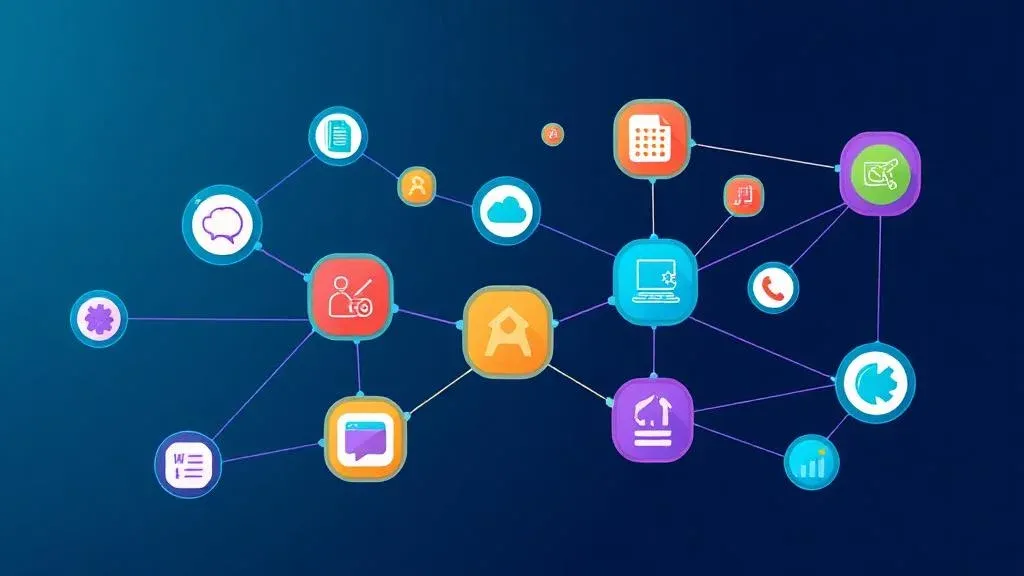 Deep Dive
Why You Can't Do Without Middleware Beyond a Certain Point
Native integrations only get you so far. Why middleware like make.com or n8n becomes the indispensable backbone of your …
Read more
Lean CRM Teams: The 3-Step Framework for 80% Less Manual Work
'We have too many people in our CRM team, we work inefficiently, and we have nothing going on with AI.' That's the exact…
Read more