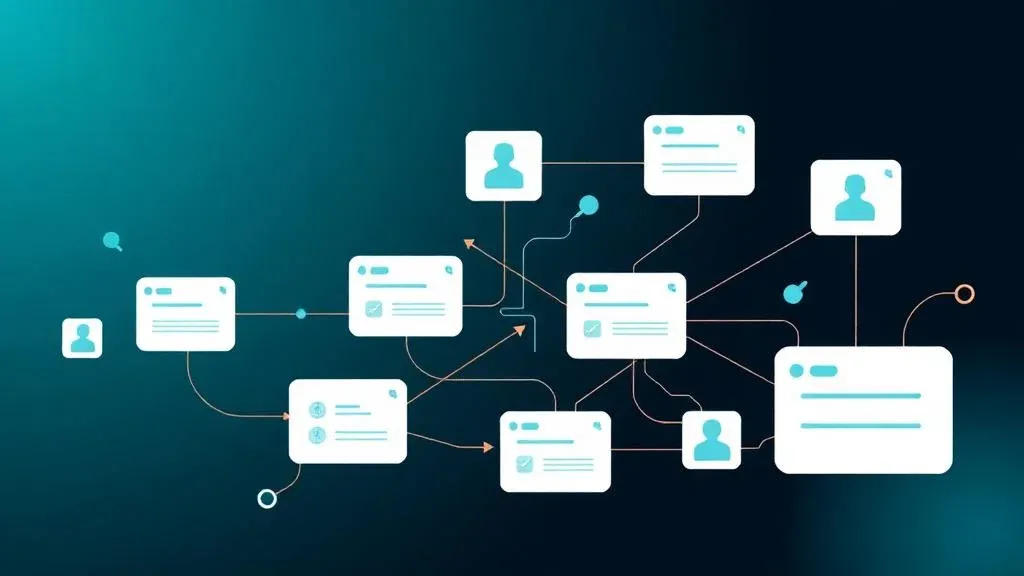
Scale Impact, Not Headcount – How Small Teams Grow Disproportionately with AI-First

TL;DR: „More output doesn't require more people – it requires the right tools, processes, and an AI-First mindset."
— Till FreitagThe Old Equation Is Broken
For decades, the formula was simple: More output = more people. Double the revenue? Double the team. New market? New department.
That equation no longer holds.
The most successful teams we've advised in 2025 and 2026 don't grow linearly. They scale their impact – without proportionally increasing headcount. The key: a consistent AI-First approach.
What Does AI First Actually Mean?
AI First doesn't mean AI does everything. It means: For every new task, first ask – can this be automated or AI-assisted?
- Before you post a job listing: Can a workflow solve the problem?
- Before you manually create a report: Can a dashboard do it automatically?
- Before you type an email: Can an agent handle it?
This isn't replacing people – it's liberating them from routine work so they can focus on what only humans can do: strategy, creativity, relationships.
The AI-First Tech Stack for Small Teams
We consistently see the same combination in teams that scale disproportionately:
1. Work Management: monday.com
The central platform for projects, CRM, development, and service. One system instead of ten tools – that alone saves hours every week.
2. Automation: make.com
Connects all systems and automates repetitive workflows. From lead capture to invoicing – everything runs in the background.
3. AI Assistants: monday AI Suite
Sidekick for analysis, Agents for autonomous tasks, Workflows for intelligent automation. AI works inside your system, not alongside it.
4. Rapid Development: Lovable
Internal tools, landing pages, and MVPs in hours instead of weeks. No dev team needed for 80% of internal software requirements.
The Math: 5 People, Impact of 15
| Task | Traditional | AI-First |
|---|---|---|
| Lead Qualification | 1 SDR (full-time) | monday CRM + AI Agent |
| Reporting | 1 Analyst (part-time) | Automated Dashboards |
| Customer Onboarding | 1 CSM (part-time) | make.com Workflow + Templates |
| Internal Tools | 1 Developer | Lovable + monday Apps |
| Meeting Follow-ups | Everyone (30 min/meeting) | monday Notetaker |
| Savings | ~10 FTE equivalents | Automated |
This doesn't mean eliminating these roles. It means your existing team can deliver the output of three teams.
Why This Matters Especially for Founders
As a founder, you have two scarce resources: time and money. Every hire is a commitment – salary, onboarding, management overhead.
AI-First means:
- Validate faster – MVPs in days, not months
- Lower burn rate – Automation instead of headcount
- More focus – Your small team works on things that actually matter
- Pivot faster – Fewer dependencies, more agility
AI First = People First
Here's the part most people miss: AI First is a deeply human strategy.
When routine work disappears, something interesting happens:
- People work on projects that genuinely motivate them
- Error rates on repetitive tasks drop dramatically
- Teams have time for innovation and professional development
- Work-life balance improves measurably
We call it: Scale Impact, Not Burnout.
The Social Impact Multiplier
This approach doesn't just work for startups and SMBs. It's especially powerful for non-profit organizations and NGOs.
Imagine: An NGO with 5 employees achieving the impact of an organization with 20. Processing more donations, coordinating more projects, reaching more people – without blowing the budget.
That's why we support verified non-profits with reduced rates. And that's why monday.com's NGO program offers 10 free Professional seats and up to 70% off.
Our long-term vision: At sufficient scale, offering pro-bono projects and technical crisis support – because technology creates the greatest impact when it's available to those who need it most.
5 Steps to an AI-First Team
- Audit: Which tasks are repetitive? Where do you spend the most time on things that have no strategic value?
- Consolidate your stack: Fewer tools, better integrated. monday.com as the central platform, make.com as middleware.
- Automate: Map your top 5 time-wasters as make.com scenarios. Start with quick wins.
- Integrate AI: Activate monday AI features, deploy Agents for recurring decisions.
- Iterate: Automate one new process every month. In 6 months, you'll be a different team.
Bottom Line: Redefining Growth
The future doesn't belong to the biggest teams – it belongs to the smartest. Teams that see AI not as a threat, but as the biggest lever since the invention of the spreadsheet.
Scale Impact. Not Headcount. Not Burnout. Impact.
Related Articles
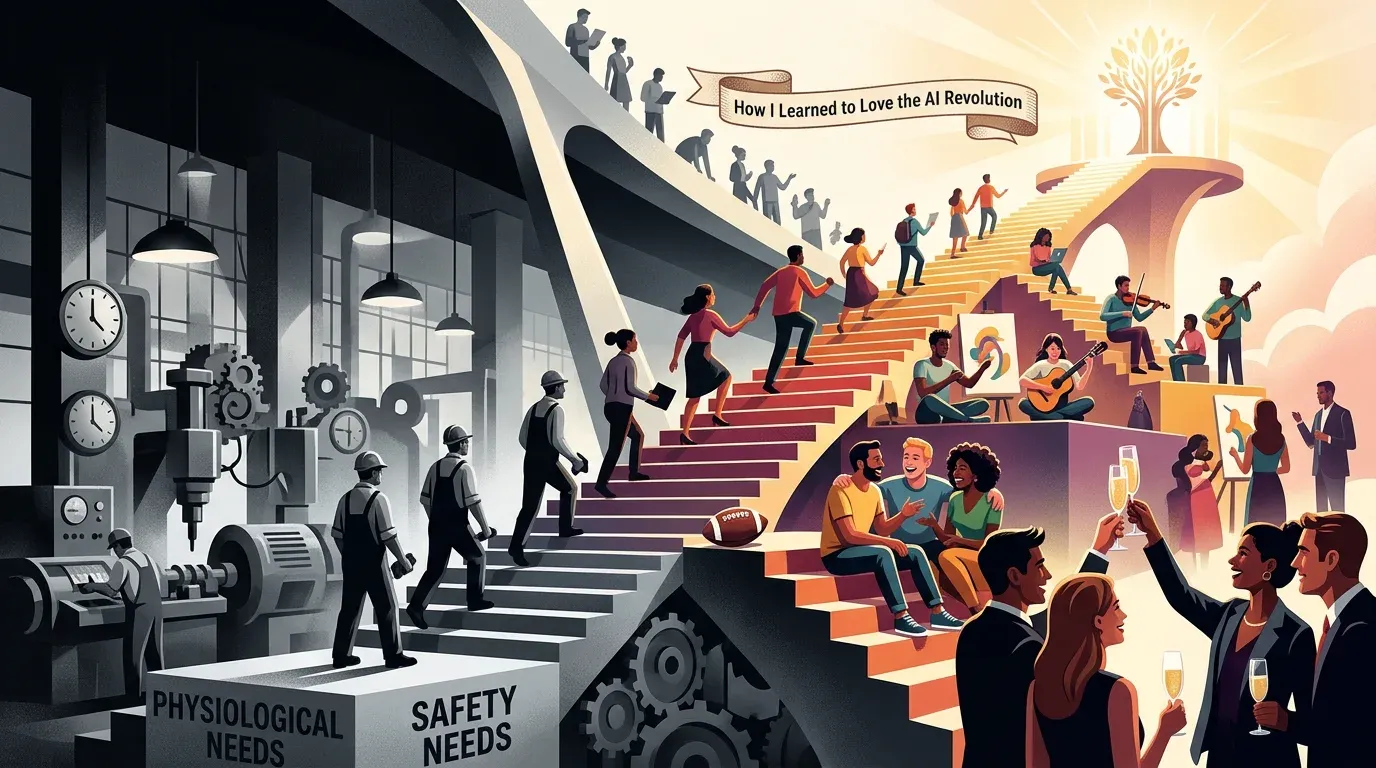
How I Learned to Love the AI Revolution
AI isn't killing jobs – it's freeing us from the wrong ones. Why history shows that panic is the worst advisor.…
Read more
Why Your Company Needs an OS, Not More SaaS
Mercury, Rippling, Stripe – they're all becoming compound startups. What happens when your company takes the same approa…
Read more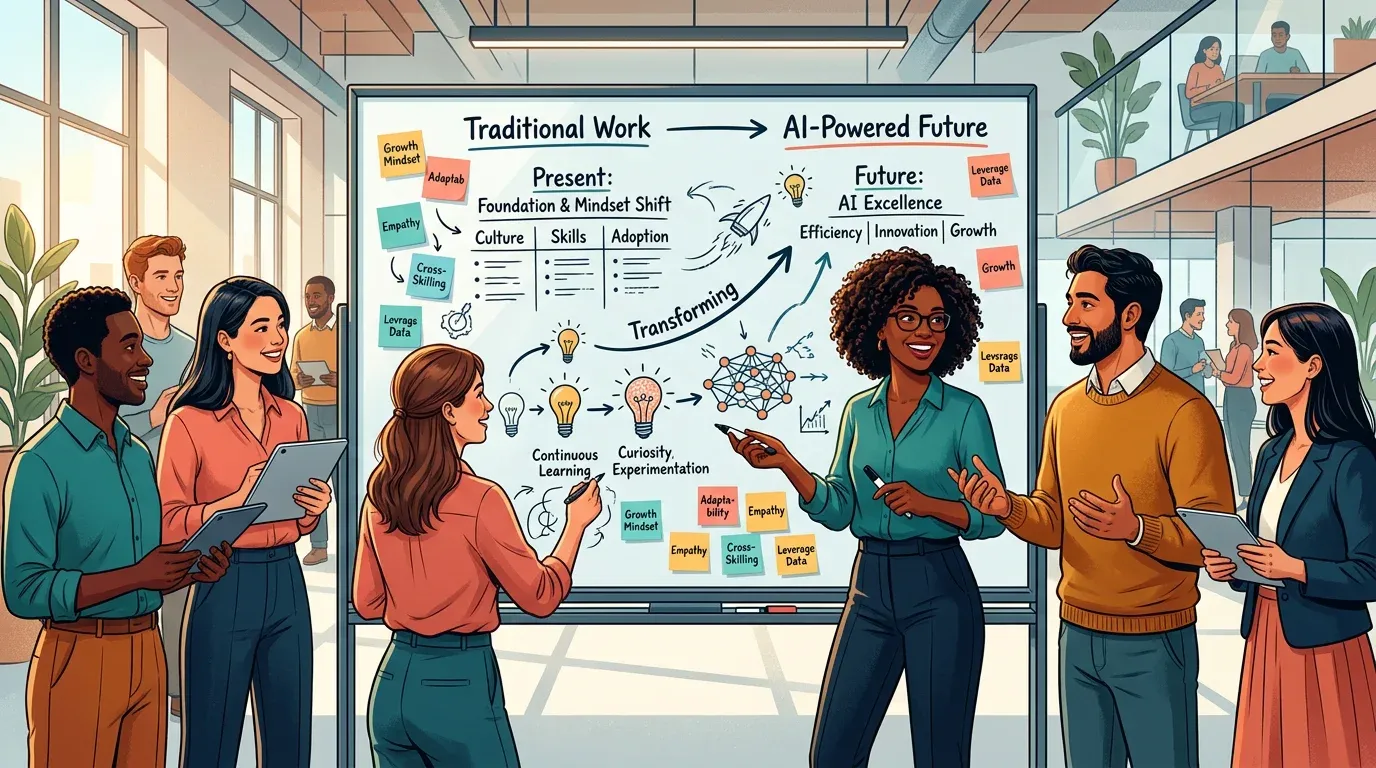
AI First = People First – Why Augmentation Is the Future of Work
AI First sounds like technology first. For us, it means: people first. Why augmentation wins and how we live that at Til…
Read more
Lean CRM Teams: The 3-Step Framework for 80% Less Manual Work
'We have too many people in our CRM team, we work inefficiently, and we have nothing going on with AI.' That's the exact…
Read more
AI First = People First: Why AI-Native Doesn't Mean Anti-Human
AI First sounds like a technology fetish. For us, it means the opposite: we use AI so people can do better work – not so…
Read more
Autonomous AI Agents in Business: Opportunities, Risks & Governance
Gartner says 40% of agentic AI projects will be cancelled by 2027. Not because of the tech – because of missing governan…
Read more
The 10 Best monday MCP Prompts for Your Daily Work
Copy-paste-ready prompts for Claude, Cursor, and ChatGPT – to control monday.com via natural language. From board creati…
Read more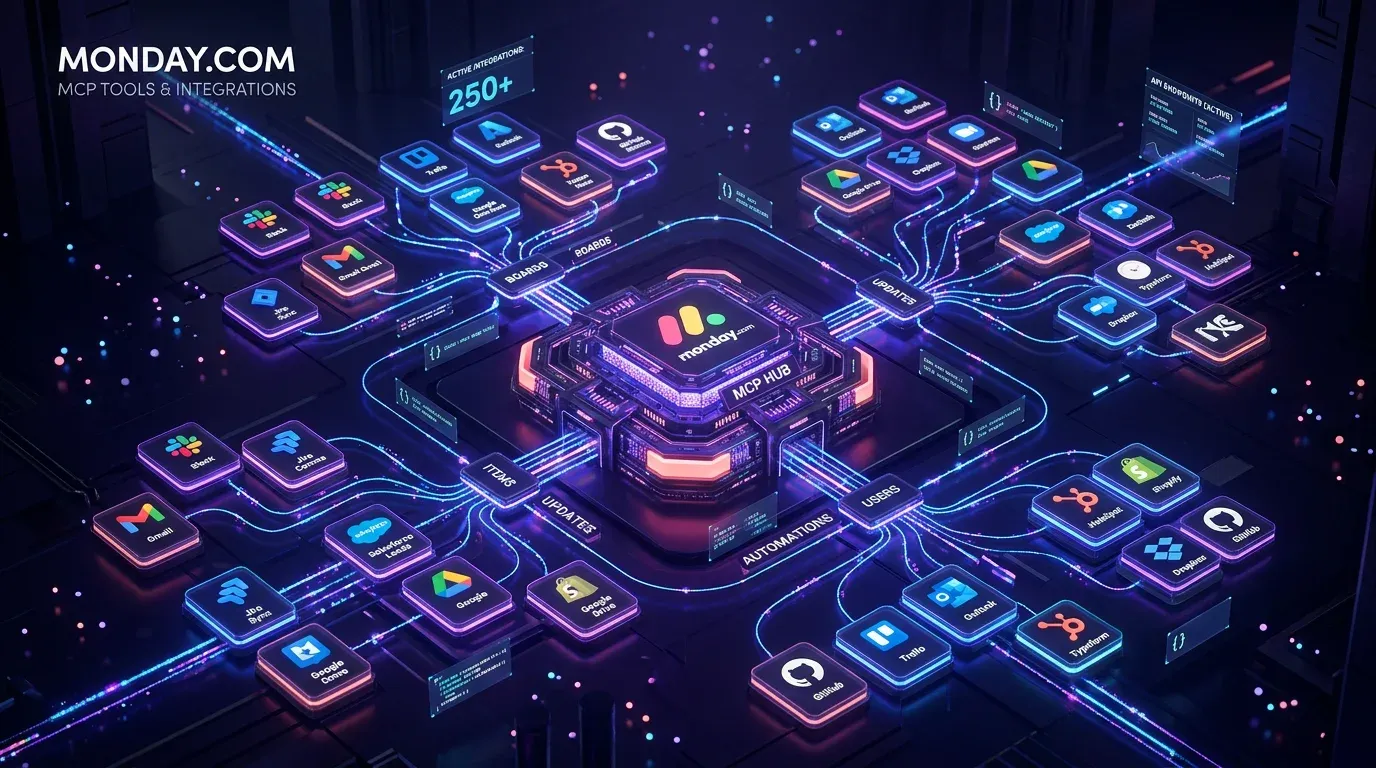
monday.com MCP: All Available Tools and Integrations Overview
monday.com offers two powerful MCP servers – Platform MCP and Apps MCP – plus native integrations for Claude, Cursor, Ch…
Read more
monday.com Sidekick 3.0 Is Fully Released: Smarter AI Across the Entire Platform
monday.com rolls out Sidekick 3.0 to all customers – with massively expanded action coverage, cross-platform execution, …
Read more