Desktop Agents Showdown: Dispatch, Manus, Perplexity Computer & DIY – Honest Assessment

TL;DR: „The desktop agent category formed in one week. No product leads on all axes. The real choice is DIY (maximum control, maximum responsibility) vs. commercial (opinionated, locked, works fast)."
— Till FreitagEveryone Needs to Calm Down
Everyone lost their minds over Dispatch this week. "Anthropic shipped their own OpenClaw!" "The future of personal AI!" "I can control Claude from my phone!"
I tested it. Misconfigured it on first start, connection reliability needs work, and your laptop must stay awake. It's a research preview, not a product.
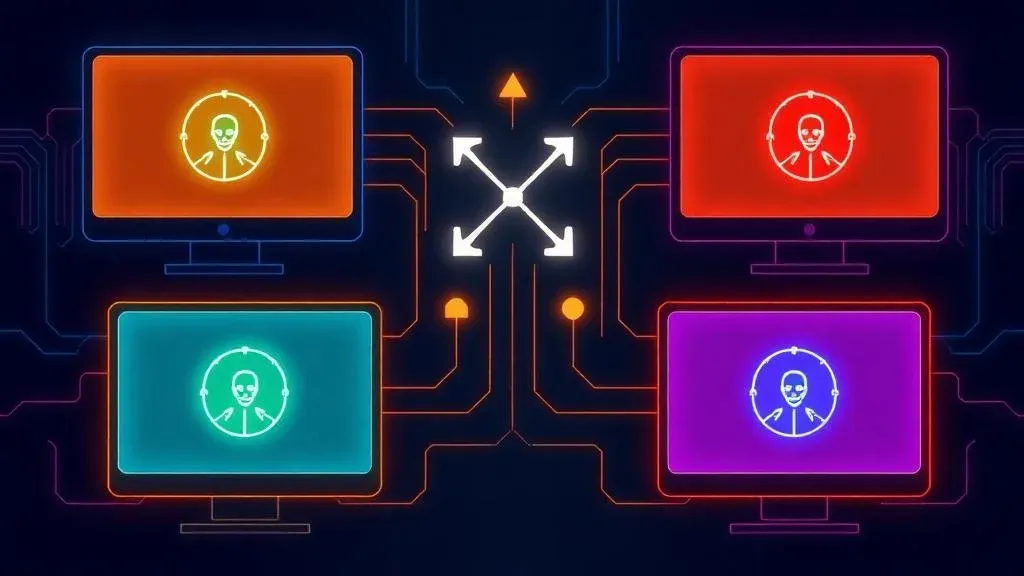
But here's what's actually interesting: three companies shipped local desktop agents within the same week. Perplexity first (everyone missed this), then Anthropic, then Meta's Manus. A product category formed in real time.
The Four That Qualify Right Now
I stepped back and applied a simple filter: autonomously execute multi-step tasks, access your local files, and connect to services you actually use. Four products qualify.
Cowork + Dispatch (Anthropic)
Real VM sandbox, default-deny networking, explicit folder grants. The only commercial product with actual local isolation.
But the agent can't run in the background. Close your laptop, tasks stop. That's a fundamental limitation that makes "delegate from your phone" feel more like a demo than a workflow.
Strengths: Security model, reasoning quality, structured sandbox. Weaknesses: No background execution, laptop-dependent, research preview stability.
Manus (Meta)
Strong general-purpose agent, $2B acquisition backing. But no sandbox. Every CLI command goes through an "Allow Once / Always Allow" prompt.
One "Always Allow" click and the guardrail is gone. That's not a security model – it's a liability waiver disguised as a permission dialog.
Strengths: General-purpose capability, Meta's resources and model ecosystem. Weaknesses: No isolation, permission model is security theater, provider lock-in.
Perplexity Computer
Background daemon (Mac-only), multi-model routing, cron-like recurring tasks, multi-day persistence. This is the feature set everyone wanted from Dispatch but didn't get.
Local sandbox situation is undocumented. That's either "we haven't built it yet" or "we built it but it's not ready for scrutiny." Neither is reassuring.
Strengths: Background execution, recurring tasks, multi-model routing, persistence. Weaknesses: Mac-only, undocumented security model, early-stage.
DIY (OpenClaw et al.)
The only option that can run fully local with local models. 13,700+ skills. Full control over everything.
But nothing is configured by default. No security, no sandbox, known CVEs, supply-chain attacks. If you can't run a command line, stay away.
Strengths: Full local execution, model choice freedom, maximum optionality, 13,700+ skills. Weaknesses: No default security, known vulnerabilities, requires deep technical skill.
The Comparison Matrix
| Capability | Cowork + Dispatch | Manus | Perplexity Computer | DIY (OpenClaw) |
|---|---|---|---|---|
| Local file access | ✅ Folder grants | ✅ Full | ✅ Full | ✅ Full |
| Sandbox isolation | ✅ VM-based | ❌ None | ❓ Undocumented | ❌ Manual setup |
| Background execution | ❌ Laptop must stay awake | ✅ | ✅ Daemon | ✅ Self-hosted |
| Multi-model routing | ❌ Claude only | ❌ Meta models | ✅ Multiple | ✅ Any model |
| Recurring tasks | ❌ | ❌ | ✅ Cron-like | ✅ Full control |
| Fully local option | ❌ | ❌ | ❌ | ✅ |
| Works out of the box | ⚠️ Research preview | ✅ | ✅ | ❌ |
| Security posture | 🟢 Strong | 🔴 Weak | 🟡 Unknown | 🔴 Your problem |
Two Paths, Not Four Products
The real choice isn't between four products. It's between two fundamental paths.
Path 1: DIY
Maximum optionality, maximum responsibility. You choose your model (local or cloud), your security posture, your privacy model, your integrations. The ceiling is highest. The floor is lowest. Every misconfiguration is on you.
This path makes sense if you:
- Need data to never leave your network
- Want to use specific local models (Qwen, Nemotron, etc.)
- Have the technical skills to configure and maintain the stack
- Value control over convenience
Path 2: Commercial
Opinionated, provider-locked, works out of the box. The provider chose the model (theirs), the security model (their sandbox or lack thereof), and the privacy posture (your data transits their cloud for reasoning). You get a working product fast, but you're constrained by their decisions.
This path makes sense if you:
- Need something working today
- Trust the provider's security model
- Don't need full local execution
- Value time-to-value over control
What This Means for Businesses
For our clients at Till Freitag, the advice is nuanced:
If you're exploring agents for the first time: Start with Cowork + Dispatch. The security model is real, and the friction will teach you what agents can and can't do yet.
If you need background automation: Watch Perplexity Computer closely. The daemon architecture is what production agent workflows actually need.
If data sovereignty is non-negotiable: DIY is your only option. But invest in the security layer first – not after you've been running unpatched for three months.
If you're evaluating for a team: Wait. None of these are enterprise-ready. The permission models, audit trails, and multi-user scenarios are all unsolved.
The Bottom Line
A product category formed in one week. No product leads on all four axes: security, background execution, model flexibility, and ease of use.
The category is weeks old. Pick the tradeoff you can live with, not the one that sounds best on a LinkedIn post.
→ Read our Anthropic Dispatch analysis → Privacy Router: How to route sensitive data locally → OpenClaw alternatives compared
Related Articles
 Deep Dive
Copilot vs. OpenClaw vs. Claude: Enterprise AI Agents Compared 2026
Three philosophies, one goal: AI agents in the enterprise. Microsoft Copilot (platform), OpenClaw (open source), Claude …
Read more
OpenClaw Audit 2026: What's Left of All Those Promises?
OpenClaw was the hot new thing in 2024, a LinkedIn religion in 2025, and supposedly dead in 2026. A sober audit: what he…
Read more
Coding-Agent Layer 2026: OpenCode, Aider, Continue.dev & Co. Compared
Deep dive into the coding-agent layer: which OpenClaw coding rival fits which workflow? OpenCode, Aider, Continue.dev, S…
Read moreMulti-Agent Layer 2026: AG2, LangGraph, SuperAGI & AWS Strands Compared
When one agent isn't enough: AG2, LangGraph, SuperAGI and AWS Strands compared. Which multi-agent stack fits which workf…
Read moreSelf-Hosted & Privacy Layer 2026: Ontheia, Anything LLM & Privacy Router
If you take GDPR seriously, there's no way around self-hosting. Ontheia, Anything LLM, NanoClaw and the Privacy Router c…
Read more
\"Claude Code Killed OpenClaw\" – Why This Comparison Is Complete Nonsense
On LinkedIn you increasingly read: \"Claude Code killed OpenClaw.\" That's like comparing apples with interstellar space…
Read more
OpenClaw Pricing Shock: How to Avoid the $500 Bill
Anthropic just killed third-party tool coverage under Claude subscriptions. If you're running OpenClaw without prep, you…
Read more
From Chat to Workflow: How Anthropic Is Turning Claude Into a Digital Coworker
Dispatch, Computer Use, persistent tasks – Anthropic is layering capabilities in an order that's no accident. A strategi…
Read more
Claude Dispatch: Your AI Agent Works While You're Away
Anthropic launched Dispatch – turning Claude from a chatbot into a digital coworker. Send a task from your phone, Claude…
Read more