
The CTO Role Is Changing – And That's a Good Thing

TL;DR: „The future CTO isn't either/or. They ship with AI and coach their team – if you can only do one, you have a problem."
— Till FreitagThe Debate: Technician or Team Leader?
A polarizing take is making the rounds on LinkedIn:
"Your CTO should have 10x'd their output in the last 6 months. If they didn't, something's wrong."
The argument: AI coding agents changed the game. CTOs who didn't adapt immediately are falling behind. More output, smaller teams, solving problems that were impossible a year ago.
At the same time, there's a counter-movement: the CTO as people leader, as coach of the engineering team. Less code, more enablement. Wellbeing, career development, psychological safety.
Both sides are right. And both are wrong – when viewed in isolation.
The 10x CTO: Why Tech Focus Alone Isn't Enough
Yes, a CTO in 2025 should be significantly more productive than in 2024. Claude Code, Cursor, Lovable – the tools exist. Ignoring them means leaving leverage on the table.
But here's the problem with the pure 10x thesis:
- Output ≠ Impact. 10x more code means nothing if it misses the market.
- Individual productivity doesn't scale. A CTO who ships 10x themselves but doesn't bring the team along has built a single point of failure.
- Technical debt also multiplies 10x. More speed without architectural thinking is a recipe for chaos.
The pure tech CTO becomes a brilliant lone wolf. That works with 5 people. Not with 50.
The Coach CTO: Why People Focus Alone Isn't Enough Either
The other side – CTO as team coach – sounds progressive. And it is. But:
- A CTO who no longer understands what their team builds loses credibility. Engineers immediately notice when someone only thinks in frameworks and wellbeing workshops.
- Enabling without technical depth becomes empty facilitation. You can't coach a team into AI-native development if you've never worked with Claude Code yourself.
- The best engineers want to learn from someone who masters the craft – not from someone who only moderates retros.
The 2025+ CTO: Tech AND People
Our thesis: the best CTOs do both. Not 50/50 – but situationally.
What This Looks Like in Practice:
Morning: You review a PR that an agent created. You spot an architecture issue the agent missed. You fix it yourself – in 10 minutes instead of 2 hours, because you understand the codebase AND master the AI tools.
Noon: You're in a 1:1 with a senior engineer who's wondering if AI makes their job obsolete. You don't offer empty motivation – you show them a concrete workflow that elevates their work instead of replacing it.
Afternoon: You build a prototype with Lovable that solves a client problem in 3 hours – something that last week would've needed a full sprint. You don't just show the team the result, you show them the path.
The Coach Model
Think of a football coach: the best ones were players themselves. They can still read the game. But they no longer stand on the pitch – they make their team better.
The 2025 CTO is exactly that:
- Technically deep enough to challenge AI-generated architecture decisions
- Humanly strong enough to hold a remote-distributed team together
- Pragmatic enough to ship themselves when things are on fire
- Wise enough to know when to let the team handle it
The Red Line: Adapt or Become Irrelevant
"Standing still isn't neutral. It's falling behind."
This applies to both sides:
- The CTO who doesn't use AI tools becomes technically irrelevant.
- The CTO who only uses AI tools and forgets their team becomes culturally irrelevant.
The question isn't tech OR people. The question is: Can you do both?
What We Believe at Till Freitag
We see this daily – internally and with our clients:
- AI multiplies your team's capabilities. But someone needs to enable the team to leverage that multiplication. That's the CTO's job.
- Wellbeing isn't a soft-skill nice-to-have. In remote teams, it's infrastructure. A CTO who doesn't understand this loses their best people.
- The best CTOs we know still code. Not all day. But enough to feel the pulse of the technology.
Conclusion: The CTO as Hybrid
The CTO role isn't fragmenting into two camps. It's fusing into something new:
A technical leader who uses AI as leverage – while building a team that's stronger than any individual.
Those who can do this have the most important job in the company in 2025. Those who can only do one have an expiration date.
Verwandte Artikel
Death by Clawd: Can a .md File Replace Your SaaS?
deathbyclawd.com scans SaaS products and rates whether they can be replaced by a Claude Skill. Satirical, brutally hones…
Weiterlesen
Hunter Alpha Unmasked: Not DeepSeek V4, but Xiaomi's MiMo-V2-Pro
Hunter Alpha wasn't DeepSeek V4 – it was Xiaomi's MiMo-V2-Pro. We correct our analysis, explain what happened, and look …
Weiterlesen Deep Dive
Is SaaS Dead? monday.com CEO on Vibe Coding, Agents and the Future of Enterprise Software
monday.com is under massive pressure – stock down 60% from IPO, Vibe Coding as a threat, AI agents as disruption. CEO Er…
Weiterlesen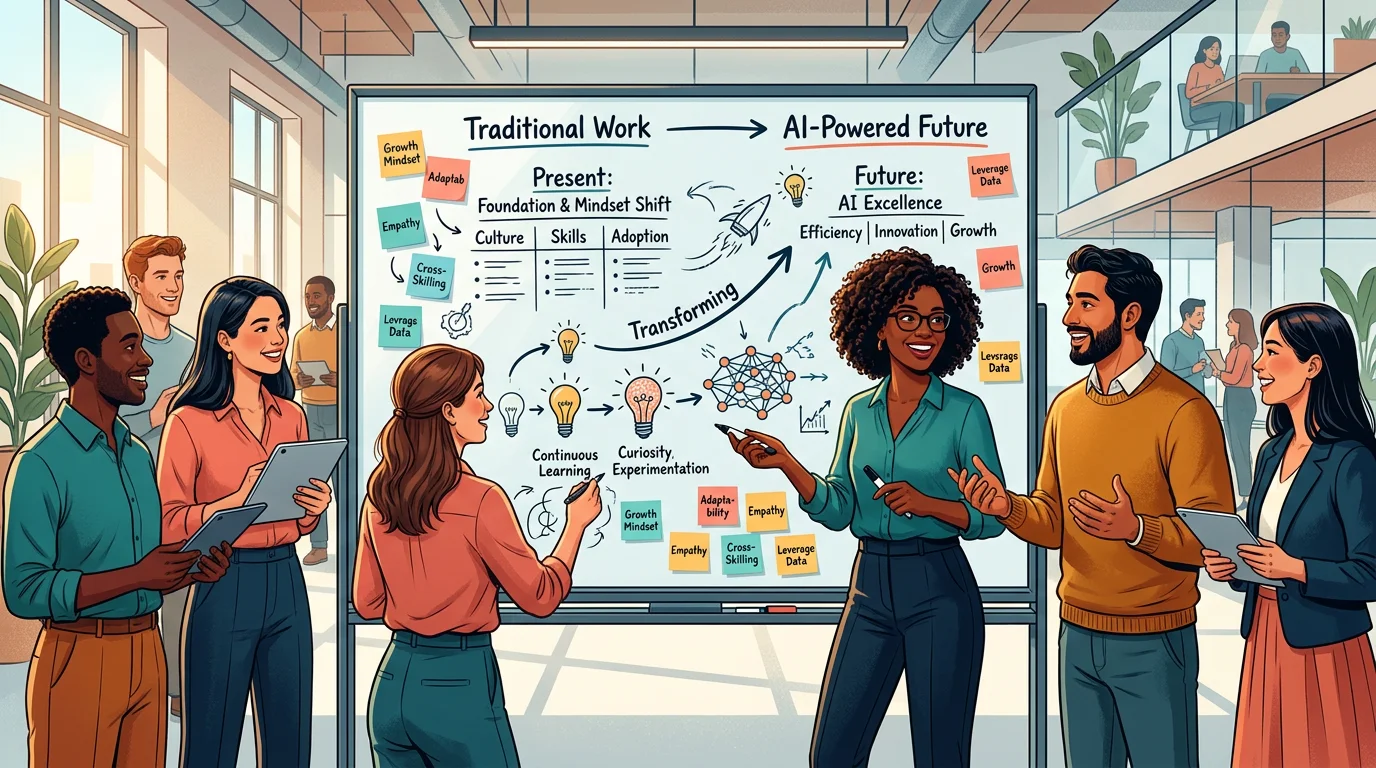
Why We Bet on Emotional Intelligence, Ownership and Independence
Tools and processes matter – but without the right team culture, they fall flat. Why we at Till Freitag prioritise emoti…
Weiterlesen
Entity extraction with LLMs – from document to knowledge graph
How does a knowledge graph actually get its entities? With LLMs in four steps: chunking, extraction, deduplication, reso…
Weiterlesen
GraphRAG vs. Vector RAG – when similarity stops being enough
Vector RAG is the default — but the moment questions go multi-hop, it falls apart. GraphRAG combines knowledge graphs wi…
Weiterlesen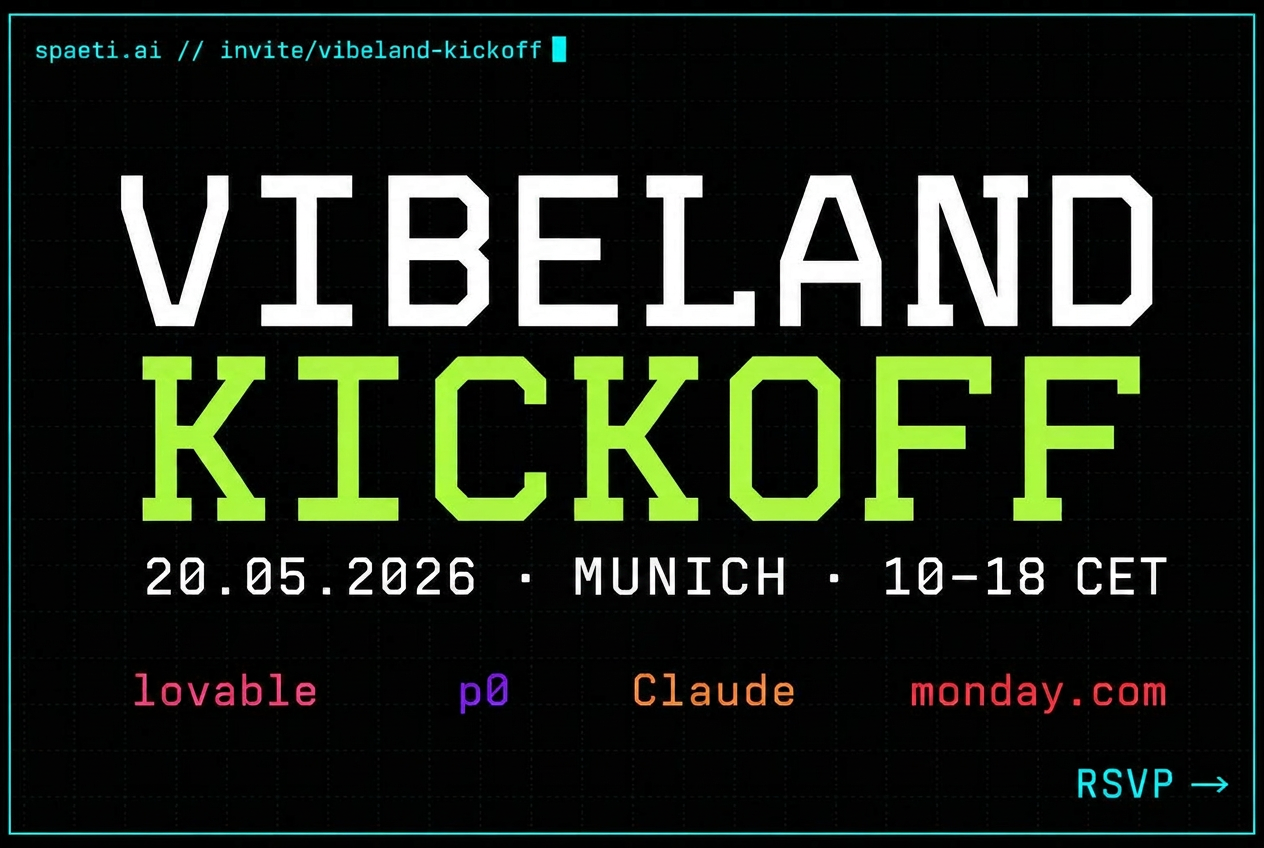
Vibeland Kickoff Munich – Recap: 50 People, 7 Teams, 7 Products
Recap of the Vibeland Kickoff in Munich: 50 guests, 7 teams, 7 products in a single day – from a web scraper to the Bla-…
Weiterlesen
Google's Agent Marketplace Goes Live – And monday.com Is Already Inside
Google just opened Gemini Enterprise to partner-built AI agents – and monday.com is one of the first in. What that means…
Weiterlesen
What Is a Knowledge Graph – and Why Is Everyone Talking About It?
Knowledge graphs are suddenly everywhere – from Google to Palantir to every other AI agent startup. What's behind the hy…
Weiterlesen