
Cofounder Mindset – How Builders Actually Work

TL;DR: „Cofounder Mindset isn't hustle culture – it's ownership over the outcome. It's why 'Builder' is more than just a title."
— Till Freitag"Whose Problem Is This?"
Monday, 9:14 AM. Slack message from a client: "The workflow is broken."
Response A: "That's not my area. I'll forward this."
Response B: "I'm looking into it. Right now."
The difference between these two responses isn't a skill difference. It's a mindset difference. And that exact difference defines how we work.
We call it Cofounder Mindset. Not because we're all founders – but because we think like ones. Every problem is our problem. Every outcome is our outcome.
What Cofounder Mindset Is NOT
Before anyone thinks "hustle culture" – no.
Cofounder Mindset is not:
- Glorifying 80-hour weeks as a lifestyle
- Sacrificing yourself for the company
- Having no boundaries
- Being "always on"
Cofounder Mindset is:
- Thinking like someone who owns the outcome
- Acting proactively, not reactively
- Taking responsibility – even when no one is watching
- Asking: "What would I do if this were my company?"
The difference is subtle but fundamental. Hustle culture optimizes for input (hours). Cofounder Mindset optimizes for output (results).
Four Differences in Daily Work
1. Scope: Define It Yourself Instead of Waiting
Classic: "Can you tell me exactly what I should do?"
Cofounder: "I've looked into this. Here's what I suggest – and why."
A Builder with a Cofounder Mindset doesn't wait for a requirements document. They understand the problem, define the solution space, and propose the path. Not because they're arrogant – but because speed matters and waiting is waste.
2. Decisions: Make Them Instead of Recommending
Classic: "Here are three options. What do you want?"
Cofounder: "I recommend Option B – for these reasons. If you agree, I'll start tomorrow."
Consultants present options. Cofounders make decisions. Not unilaterally – but with a clear opinion and the willingness to own the consequences.
3. Ownership: Stay With It Instead of Delivering and Moving On
Classic: "It's deployed. Here's the documentation."
Cofounder: "It's deployed. I'm monitoring the metrics this week and will optimize if needed."
Delivering is not the same as being done. A Cofounder stays with it until the outcome actually works – not until the task is closed.
4. Communication: Escalate Instead of Reporting
Classic: "We'll discuss the blocker in the next weekly."
Cofounder: "Hey, we have a problem. Here's the context, here's my suggestion. Can we resolve this in 10 minutes?"
Cofounders don't wait for meeting slots. When something's on fire, it gets addressed immediately – with context and a proposed solution.
Why This Fits "Builder"
We recently changed all titles from "Consultant" to "Builder." (Here's the story behind it.)
Builder + Cofounder Mindset – that's the combination that defines us:
- Builder describes what we do: build solutions, end-to-end.
- Cofounder Mindset describes how we do it: with ownership, proactivity, and outcome orientation.
One without the other doesn't work. A Builder without a Cofounder Mindset is a contractor. A Cofounder Mindset without Builder skills gets stuck at strategy.
How We Foster It
You can't mandate Cofounder Mindset. But you can create the conditions where it emerges.
What we actually do:
- Trust as default. Nobody needs to ask permission to make a decision. The default answer is: Yes.
- Results > Attendance. We don't measure who's online when. We measure what's standing at the end of the week.
- Mistakes are allowed – passivity is not. A wrong decision is better than no decision. You learn from mistakes. You learn nothing from passivity.
- Context over control. We share as much context as possible – about clients, strategy, numbers. Those who have context make better decisions.
- Ownership by design. Every person on the team has a clear area of responsibility – not a task list.
Cofounder Mindset Is Not a Title
It's not on any business card. It doesn't appear in any LinkedIn profile. But it's what separates our work from 90% of agencies and consultancies.
It's the reason clients say: "It feels like you're part of our team."
Because we are. Not contractually – but mentally.
And that's exactly what we mean when we say: We are Builders.
Verwandte Artikel

Why We Stopped Calling Ourselves Consultants – Behind the Scenes
We changed every job title from 'Consultant' to 'Builder'. Not a rebrand – an honest look at a decision that wasn't obvi…
Weiterlesen
The Cofounder Mindset: Why We Work Like Co-Founders – Not Vendors
Agencies deliver projects. We solve problems – with the same urgency as your co-founders. What that means in practice an…
Weiterlesen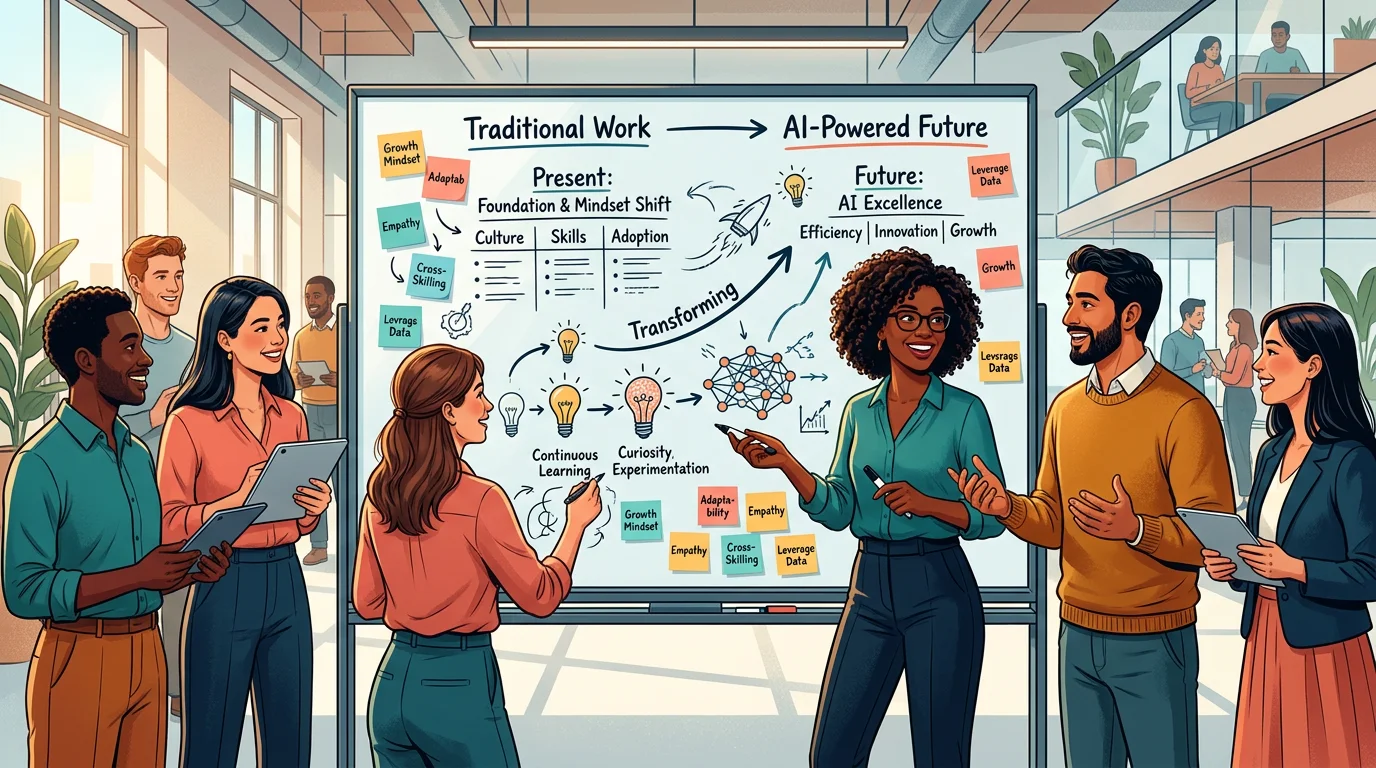
Culture & Mindset – How to Get Your Team Ready for the AI Era
Introducing AI tools is easy. Creating the culture for it is the real challenge. How to get your team ready for Working …
Weiterlesen
We Believe in Europe and the Power of Balance
We believe in Europe. In cultural diversity. In the power of balance. And against the extremes – no matter which directi…
WeiterlesenWe Care: Why Attitude Matters More Than Skills
We care. For our customers, partners, employees, society, nature and ourselves. Sounds soft. Is hard. And it decides who…
Weiterlesen
Scale Impact, Not Headcount: Why We Don't Want to Grow Endlessly
Growth isn't a goal in itself. We scale impact, not headcount – and here's why that's the better strategy.…
Weiterlesen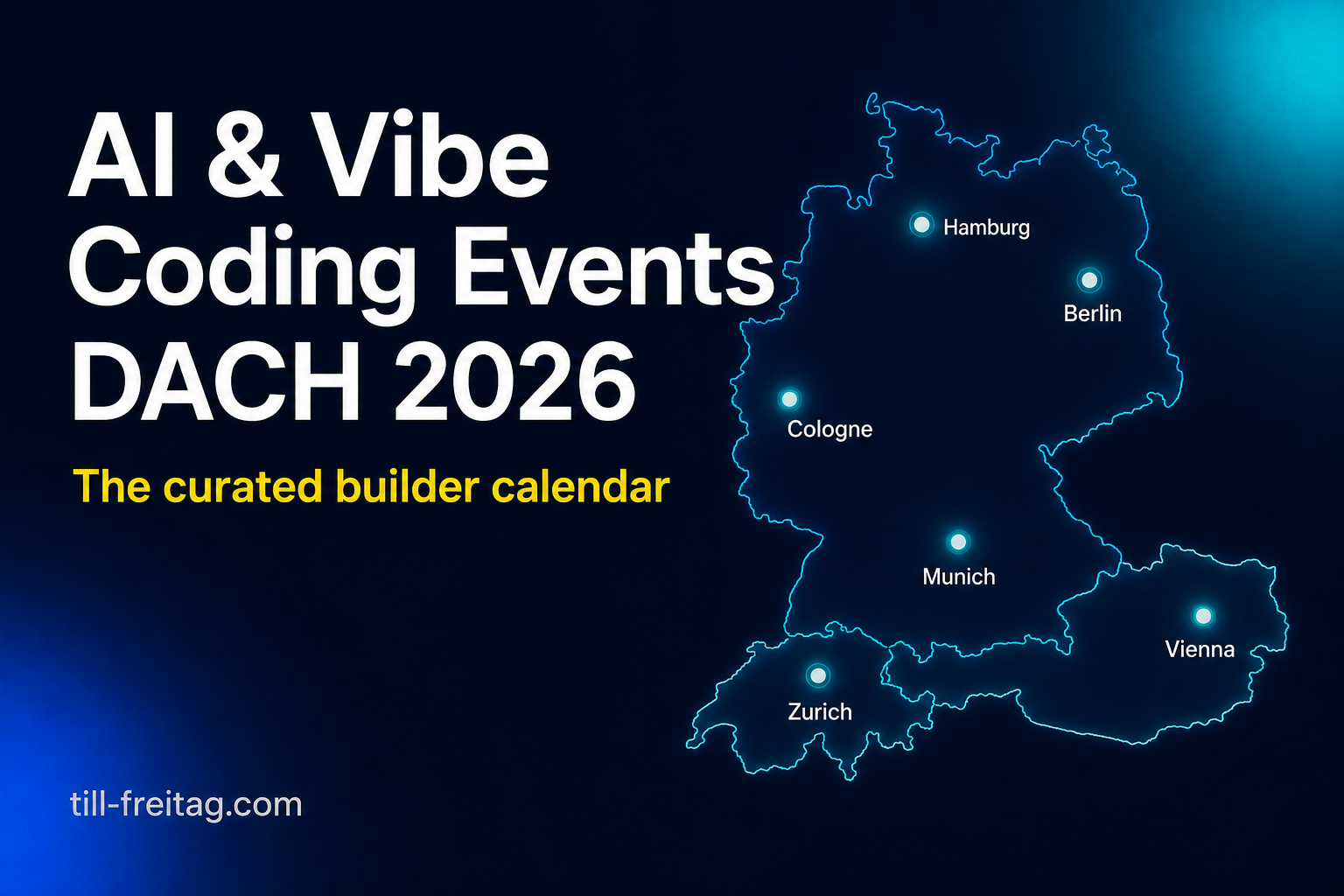
AI & Vibe Coding Events DACH 2026: The Best Events for Builders
From TokenMade to WeAreDevelopers: A curated overview of the most exciting AI, vibe coding, and builder events in the DA…
Weiterlesen
TokenMade: Why We Want to Demo as Builders
100 builders, 27 demos, no slides. TokenMade is the event we've been waiting for – and we applied as builders. Plus: Why…
Weiterlesen
AI First = People First: Why AI-Native Doesn't Mean Anti-Human
AI First sounds like a technology fetish. For us, it means the opposite: we use AI so people can do better work – not so…
Weiterlesen