Lean CRM Teams: The 3-Step Framework for 80% Less Manual Work

TL;DR: „Automate, build for scale, then grow – in that order. Not the other way around."
— Till Freitag📌 Update May 2026: The 3-step framework still applies – but the implementation layer has shifted. Where in 2025 we built everything through Make + monday Automations, in 2026 a lot runs natively inside monday via AI Blocks, monday Agents and the Sales Agent. The principle stays: automate, then scale, then grow – the tooling just got more native. Details: monday AI Credits Pricing and monday CRM AI Agents.
The Sentence We Hear Most in 2025
"We have too many people in our CRM team, we work inefficiently, and we have nothing going on with AI."
This isn't an edge case. It's the default at global companies operating in 4+ markets. CMOs aren't whispering it – they're saying it out loud, because the pain is real.
The symptoms are the same everywhere:
- Everything is manual and ad hoc. Every campaign is built, reviewed, and sent by hand.
- Time-to-market is 3–4 weeks. For an email. One email.
- The teams know there's a better way – but they can't stop executing long enough to find it.
Why "More People" Makes It Worse
The intuitive response to inefficiency is: more capacity. Another person for CRM. Another agency for campaigns. Another tool for compliance checks.
The result? More coordination, more handoffs, more errors. Complexity grows linearly with the team – productivity doesn't.
The companies that move fastest in 2026 won't have bigger teams. They'll have fewer manual steps.
The Framework: Three Steps, One Sequence
The sequence matters. Not because the steps depend on each other – but because each step makes the next one meaningful.
Step 1: Automate
Anything done twice should be automated. Period.
Sounds radical? It isn't. Most CRM teams spend 60–70% of their time on tasks a system could handle better:
Map Every Communication
Take a day and chart every single message a customer receives from sign-up to churn. Every email, every push notification, every in-app message.
What you'll find:
- Sales sends a welcome email. Marketing does too. Service as well.
- The same information is sent manually across three channels.
- Nobody has a full picture of what the customer actually receives.
Triggers, Not Tasks
A customer creates an account but doesn't convert? That's a trigger – not a task for someone's inbox. The difference: a trigger fires the right action automatically. A task waits until someone sees it, prioritises it, and works through it.
In monday.com, this looks like:
- Status change → automatic follow-up sequence
- No login for 7 days → re-engagement flow via Make
- Contract ends in 30 days → renewal campaign + Sales notification
Automate Compliance
The silent killer of every CRM operation: every campaign has to go through Legal. That takes days, sometimes weeks.
Our approach: a traffic light system where AI handles the initial assessment.
| Colour | Meaning | Action |
|---|---|---|
| 🟢 Green | Safe | Auto-approve |
| 🟡 Yellow | Needs review | Route to Legal |
| 🔴 Red | Critical | Block, escalate |
The result: Legal only reviews the 15% that actually matter – instead of bottlenecking 100% of all campaigns.
Step 2: Build for Scale
Structure everything so you grow without adding headcount.
The difference between a 10-person team producing 50 campaigns per month and a 3-person team producing 200? Not talent. Structure.
Separate Strategy from Execution
Most CRM teams mix two fundamentally different jobs:
| Type | Example | Who should do this? |
|---|---|---|
| Strategic | Which audience, which message | Senior CRM Manager |
| Operational | Building, QA, scheduling, sending | System / AI / Junior |
If your Senior CRM Manager is building emails in an editor, you're spending a 150k salary on a 40k task.
Run the AI Readiness Test
Walk through every remaining manual task and ask:
- Can AI do this? → Copy generation, subject lines, segmentation
- Can automation do this? → Scheduling, QA checks, reporting
- Does it truly need a human? → Strategy, creative direction, customer relationships
What's left is the real core of your team. Everything else is overhead.
Build a Roadmap – Not Just for CRM
The mistake most teams make: they only optimise CRM. But the bottlenecks are everywhere:
- Legal blocks campaigns → compliance automation
- Design needs 5 days per asset → template system + AI-generated variants
- QA is manual → automated testing via checklist workflows
Build a roadmap that covers everything touching campaign delivery.
Step 3: Growth
Growth isn't a strategy. It's the outcome of the first two steps.
When you've automated properly and structured properly, growth happens almost by itself:
- More campaigns at the same team size
- Faster market entry into new regions
- Higher quality, because people focus on strategy instead of execution
A Real-World Example
A client came to us with this situation:
- 15 people on the CRM team
- 10 hours per week per person on manual communications
- 4 markets, each with their own processes
What we did:
- Consolidated communications – everything into one platform, one rulebook
- Designed events – customer lifecycle events instead of ad-hoc campaigns
- Configured triggers – 80% of communications now run automatically
The Numbers
| Metric | Before | After |
|---|---|---|
| Operational costs | 100% | 20% (−80%) |
| Time-to-market | 3–4 weeks | < 1 day (−98%) |
| Team time on manual tasks | 70% | 15% |
| Campaigns per month | ~20 | 80+ |
Same team, same tools – different structure.
What This Means for Your CRM Team
You don't need more people. You need fewer manual steps.
That sounds simple, and it is – if you follow the sequence:
- First automate – remove the overhead
- Then structure – build for scale
- Then grow – with the team you already have
The CMOs who've understood this no longer ask "How many people do we need?" – they ask "How many steps can we eliminate?"
Sounds good? Let's talk – we'll show you where your quick wins are in 30 minutes.
Related Articles
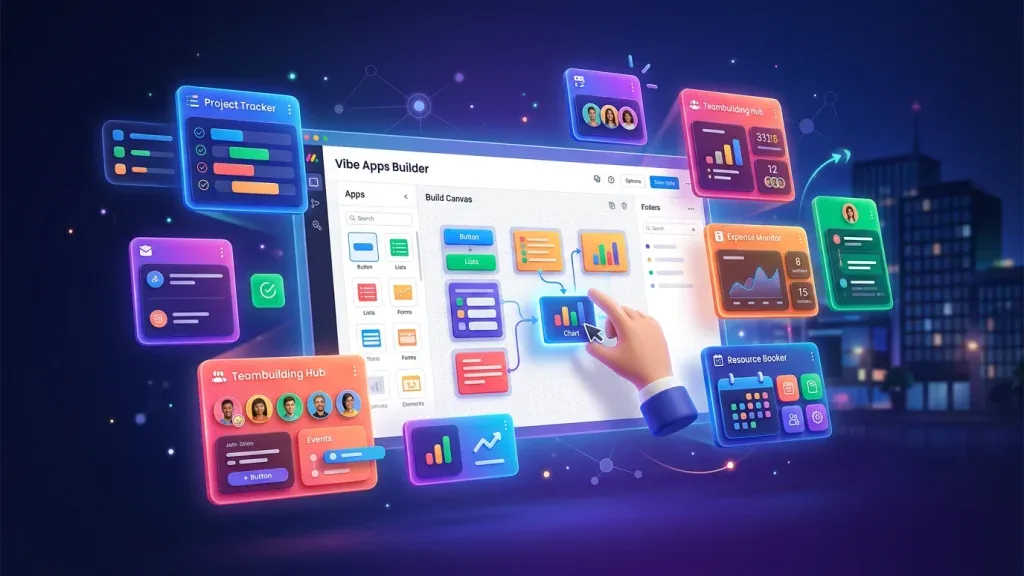
monday Vibe Apps – Build Custom Mini-Applications Without Code (2026 Guide)
monday Vibe Apps let anyone build custom mini-applications using natural language prompts – no code, directly within mon…
Read more
Why Founders Should Invest in Automation from Day 1
Automation isn't a luxury for scale-ups – it's the foundation every startup needs. How founders can build structure from…
Read more
AI in Project Management: Opportunities, Risks & Actionable Tips
How artificial intelligence makes your project management smarter – with concrete tips you can implement today.…
Read more
Web Scraping 2026: Classic vs. AI – And Why You Need Both
Web scraping isn't a niche topic anymore. Whether classic with selectors or AI-powered with LLMs – we compare both appro…
Read more
The 5 Biggest Time Wasters for CEOs – and How Automation Solves Them
Status meetings, reports, approvals – as a CEO, you spend more time on admin than on strategy. Here are the 5 most commo…
Read more
Odoo vs. monday.com – ERP Suite or Work OS? (Honest 2026 Comparison)
Odoo or monday.com? We compare both platforms honestly – ERP suite vs. Work OS, data model, pricing, AI, and which syste…
Read more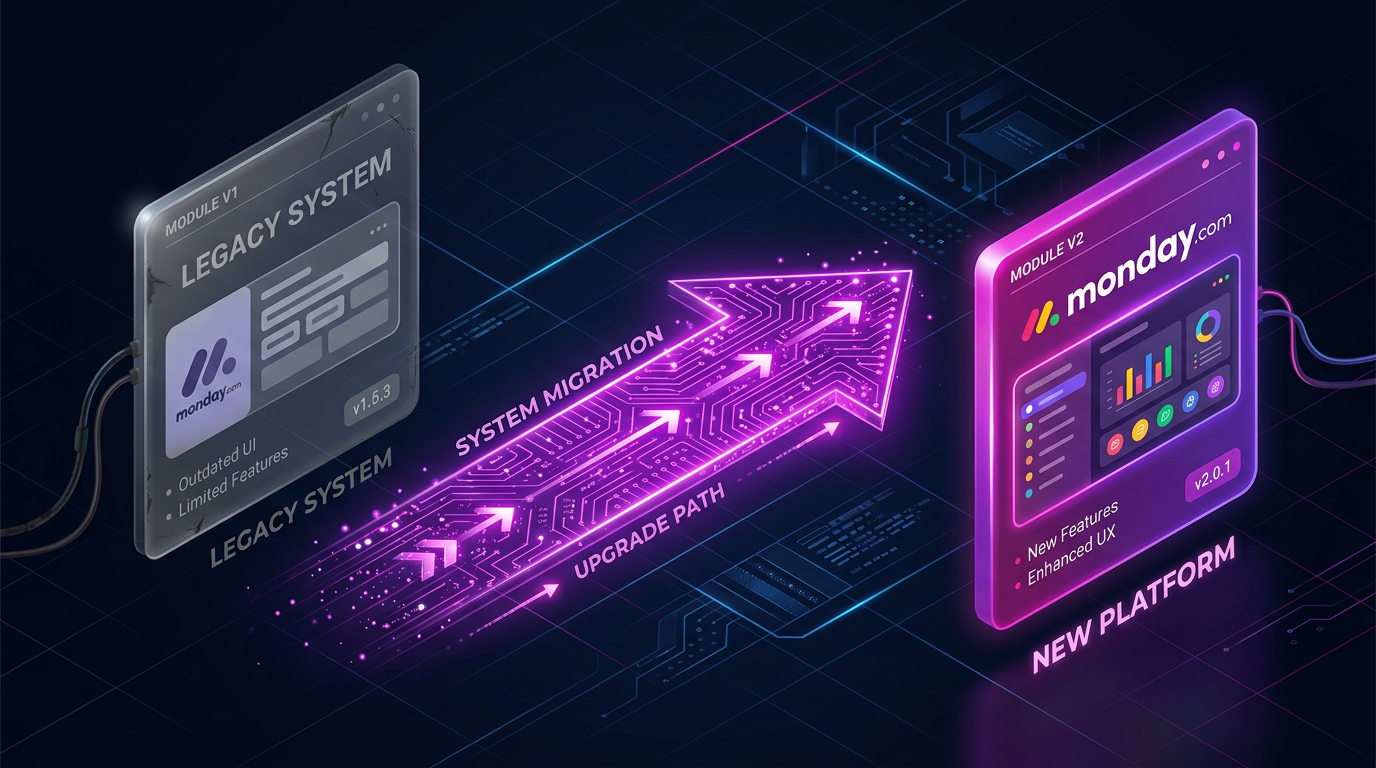
Make Module Migrator: monday.com V1 Is Gone – How to Fix Your Scenarios Now
monday.com's V1 API has been offline since May 1, 2026. If your Make scenarios are failing now: the Module Migrator help…
Read more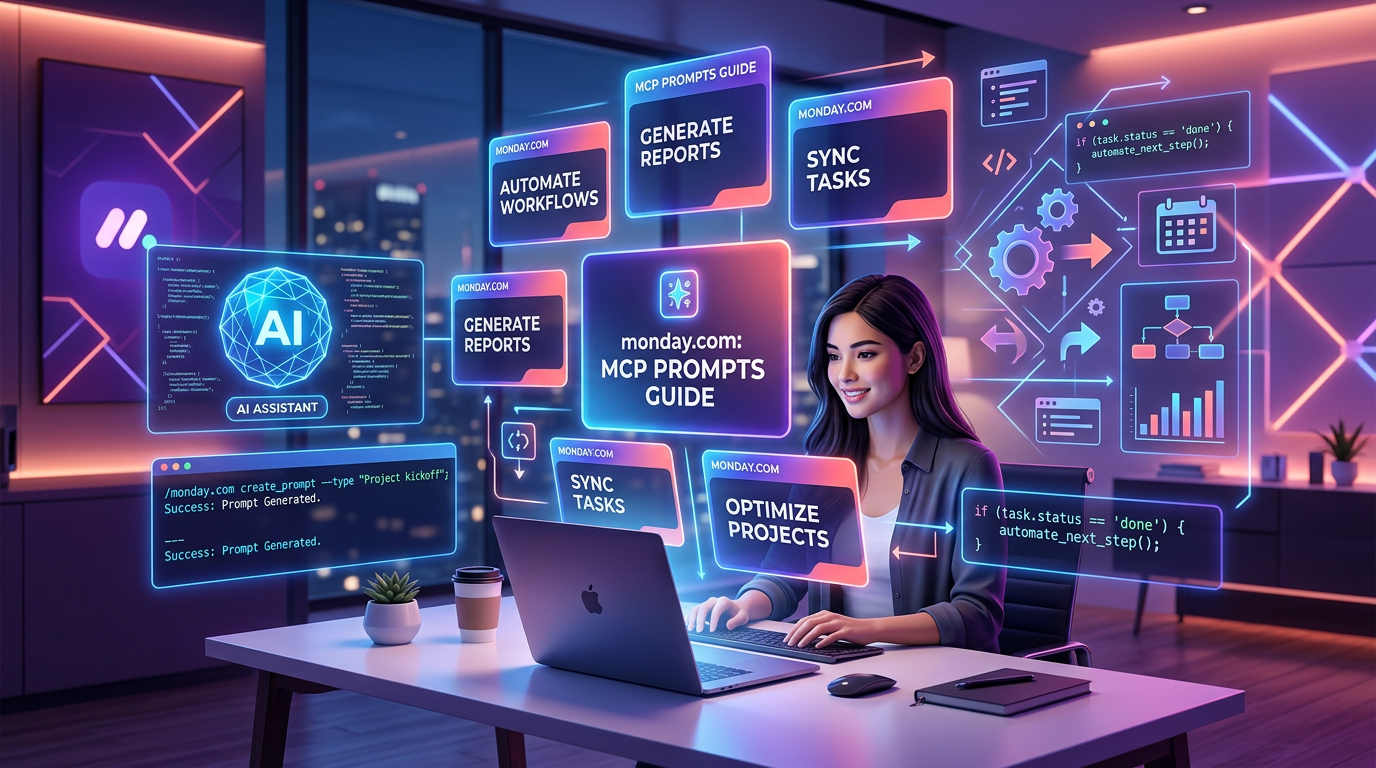
The 10 Best monday MCP Prompts for Your Daily Work
Copy-paste-ready prompts for Claude, Cursor, and ChatGPT – to control monday.com via natural language. From board creati…
Read more
monday.com MCP: All Available Tools and Integrations Overview
monday.com offers two powerful MCP servers – Platform MCP and Apps MCP – plus native integrations for Claude, Cursor, Ch…
Read more