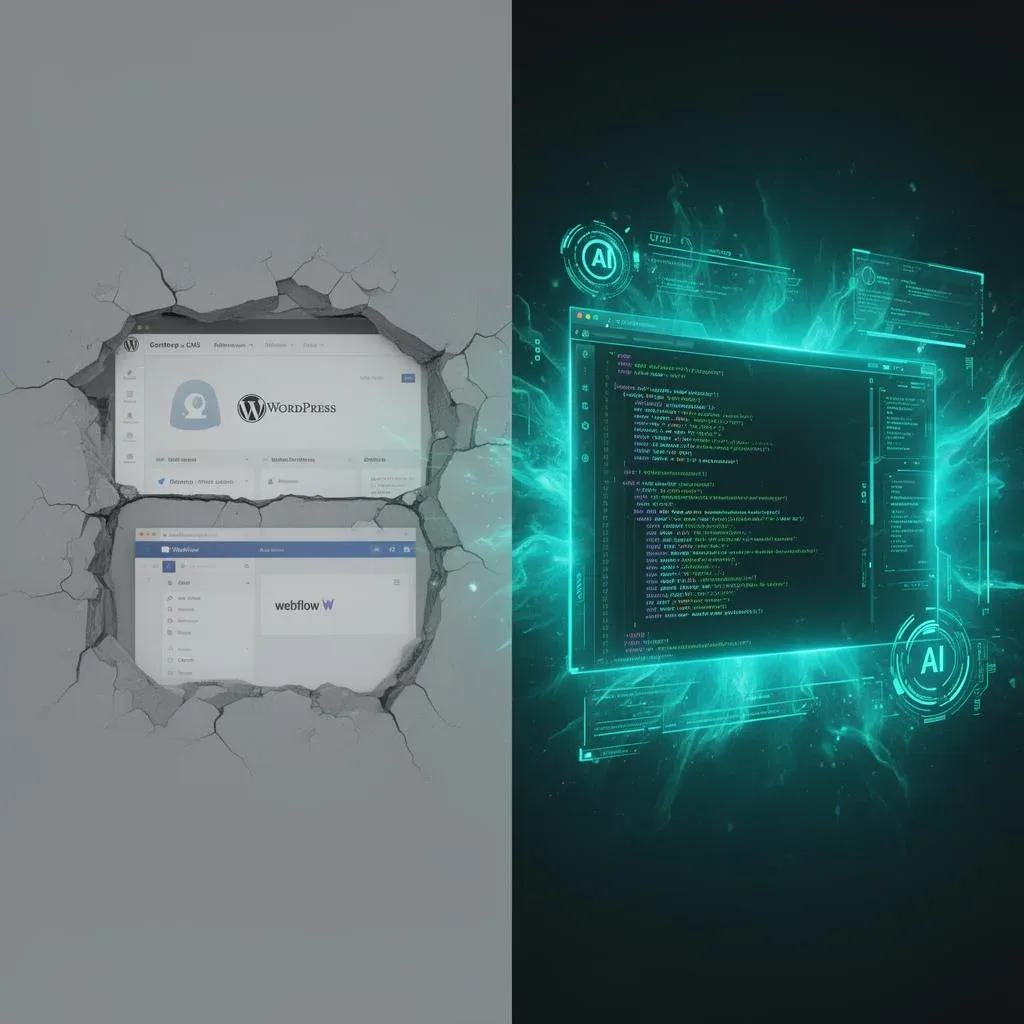
Warum in Zukunft niemand mehr mit WordPress und Webflow arbeiten wird

TL;DR: „WordPress und Webflow lösen Probleme von gestern. Lovable löst die von morgen – schneller, sauberer und ohne Plugin-Chaos."
— Till FreitagDas Ende einer Ära: WordPress und Webflow haben ausgedient
Lasst uns ehrlich sein: WordPress hat das Internet demokratisiert. Über 40% aller Websites laufen darauf. Webflow hat gezeigt, dass Designer ohne Code professionelle Seiten bauen können. Beide Tools haben ihre Ära verdient.
Aber ihre Ära ist vorbei.
Nicht, weil sie plötzlich schlecht geworden sind – sondern weil sich die Spielregeln fundamental verändert haben. AI-native Tools wie Lovable machen Webentwicklung so radikal einfacher, dass der traditionelle Ansatz schlicht nicht mehr konkurrenzfähig ist.
5 Gründe, warum WordPress am Ende ist
1. Plugin-Hölle und Sicherheitsrisiko
WordPress ist ein Plugin-Ökosystem mit angehängtem CMS. Eine durchschnittliche WordPress-Site nutzt 20–30 Plugins. Jedes einzelne ist ein potenzielles Sicherheitsrisiko, ein Performance-Killer und eine Quelle für Kompatibilitätsprobleme.
Fakt: 2025 wurden über 90% aller gehackten CMS-Websites mit WordPress betrieben.
2. Performance ist ein Kampf
Schnelle WordPress-Sites erfordern: Caching-Plugin, CDN, Bildoptimierung, Datenbank-Optimierung, PHP-Tuning. Das sind 5+ Baustellen, die eigentlich gelöst sein sollten. Eine mit Lovable gebaute Seite ist out of the box schneller als eine optimierte WordPress-Site.
3. Hosting-Abhängigkeit
WordPress braucht PHP, MySQL, einen Webserver. Das bedeutet: Managed Hosting (20–100€/Monat) oder eigene Server-Wartung. Lovable deployt auf moderne Edge-Infrastruktur – ohne dass du dich um Server kümmern musst.
4. Der Page Builder-Wahnsinn
Elementor, Divi, WPBakery, Beaver Builder, Gutenberg – WordPress hat fünf konkurrierende Paradigmen für die gleiche Aufgabe. Keines davon produziert sauberen Code. Alle generieren aufgeblähtes HTML mit Inline-Styles und unnötigem JavaScript.
5. Updates als Vollzeitjob
WordPress-Core, Theme, 25 Plugins – alle wollen regelmäßig aktualisiert werden. Ein vergessenes Update und du hast eine Sicherheitslücke. Ein Update mit Breaking Change und deine Seite ist kaputt. Wartung sollte kein Geschäftsmodell sein.
3 Gründe, warum auch Webflow nicht die Antwort ist
1. Vendor Lock-in vom Feinsten
Webflow generiert proprietären Code, der nicht portierbar ist. Du kannst dein Projekt nicht einfach exportieren und woanders hosten. Deine Website gehört faktisch Webflow – du mietest sie nur.
2. Preis-Leistung stimmt nicht mehr
Ab dem Moment, wo du CMS, E-Commerce oder Formulare brauchst, wird Webflow teuer – und bietet trotzdem weniger Flexibilität als eine echte Codebasis. Für 30–40$/Monat bekommst du ein goldenes Gefängnis.
3. Ceiling of Complexity
Webflow ist fantastisch für Marketing-Seiten. Aber sobald du Custom-Logik, Datenbankanbindung oder komplexe Interaktionen brauchst, stößt du an harte Grenzen. Dann brauchst du doch einen Entwickler – der dann lieber gleich richtig entwickelt.
Warum AI-native Tools wie Lovable das Frontend der Zukunft sind
Von Drag-and-Drop zu Describe-and-Build
Der fundamentale Shift: Statt Elemente manuell zu platzieren, beschreibst du, was du willst – und bekommst produktionsreifen Code. Nicht generiertes Template-Markup, sondern echtes React, TypeScript, Tailwind CSS.
Sauberer Code statt Black Box
Das ist der entscheidende Unterschied zu WordPress und Webflow: Der Output von Lovable ist lesbarer, wartbarer, echtel Code. Kein proprietäres Format, kein Plugin-Stack, keine Vendor-Abhängigkeit. Du besitzt deinen Code zu 100%.
Full-Stack in Minuten
Lovable beschränkt sich nicht auf Frontend. Mit integriertem Backend (Datenbank, Auth, API, Storage) baust du vollständige Anwendungen – nicht nur Websites. Von der Landing Page bis zum SaaS-Produkt, alles aus einer Hand.
Iteration in Echtzeit
Änderung beschreiben, Ergebnis in Sekunden sehen, weiterentwickeln. Der Feedback-Loop ist 100x schneller als bei WordPress (Plugin suchen, installieren, konfigurieren) oder Webflow (Panel öffnen, Element finden, Property ändern).
Der direkte Vergleich
| Kriterium | WordPress | Webflow | Lovable |
|---|---|---|---|
| Time to Launch | Tage–Wochen | Stunden–Tage | Minuten–Stunden |
| Code-Qualität | Plugin-Spaghetti | Proprietär | Sauberes React/TS |
| Performance | Mäßig (ohne Tuning) | Gut | Exzellent (SSG) |
| Wartungsaufwand | Hoch (Updates, Plugins) | Mittel | Minimal |
| Vendor Lock-in | Mittel (Hosting) | Hoch | Keiner (du besitzt den Code) |
| Full-Stack fähig | Via Plugins | Eingeschränkt | ✅ Nativ |
| Kosten | 20–200€/Monat + Plugins | 30–200$/Monat | Pay-as-you-go |
| Lernkurve | Steil (mit Plugins) | Mittel | Flach (natürliche Sprache) |
Wann WordPress oder Webflow noch Sinn machen (kurz)
Fairerweise: Es gibt noch Szenarien, in denen die alten Tools ihre Berechtigung haben:
- WordPress: Wenn du bereits ein großes, bestehendes WordPress-Ökosystem hast und Migration unverhältnismäßig wäre
- Webflow: Wenn du ein reines Design-Portfolio brauchst und keine Custom-Logik benötigst
Aber für jedes neue Projekt in 2026? Gibt es keinen rationalen Grund mehr, mit WordPress oder Webflow zu starten.
Fazit: Die Zukunft gehört AI-native Tools
Die Webentwicklung durchläuft gerade den gleichen Shift wie die Fotografie beim Übergang von analog zu digital. WordPress ist die Dunkelkammer, Webflow die Kompaktkamera – und Lovable ist das Smartphone mit AI-Kamera: Nicht unbedingt besser für jeden Edge Case, aber für 95% der Anwendungsfälle schneller, einfacher und gut genug bis herausragend.
Wer heute noch ein neues Projekt auf WordPress oder Webflow startet, baut auf einer Architektur, die für eine Welt ohne AI entworfen wurde. Das ist wie ein Reisebüro eröffnen, nachdem Booking.com live gegangen ist – technisch möglich, strategisch fragwürdig.
Die Frage ist nicht ob, sondern wann WordPress und Webflow ihre Dominanz verlieren. Und Tools wie Lovable liefern die Antwort: Es passiert jetzt.
SEO-Problem gelöst: Vibe Coding Apps sichtbar machen
Der Wechsel von WordPress zu AI-nativen Tools wie Lovable löst viele Probleme – aber ein neues entsteht: SPAs sind für Google unsichtbar. Wie du das mit unserem Stack löst, zeigt der Vibe Coding SEO Guide.
Verwandte Artikel

Lovable vs. Webflow vs. Framer – Welches Tool für dein nächstes Webprojekt?
Lovable, Webflow oder Framer? Wir vergleichen drei führende Website-Builder – mit ehrlicher Einschätzung, Preisen und kl…
Weiterlesen
Website-Baukasten vs. AI-Native Stack: Welcher Weg passt 2026?
Wix, Squarespace, Jimdo & Co. vs. AI-native Stack mit Lovable, Cloud und Edge-Hosting – wann lohnt sich was wirklich? Ei…
Weiterlesen
Wir sind keine Webagentur – und das ist der Punkt
Ihr sucht eine Webagentur? Dann seid ihr bei uns falsch. Ihr sucht jemanden, der euer digitales Problem löst? Dann seid …
Weiterlesen
Cloudflares Real Play – Warum EmDash kein CMS ist, sondern ein Infrastruktur-Trojanisches-Pferd
Cloudflare hat mit EmDash kein CMS gelauncht. Sie haben den Köder ausgelegt, um D1, R2 und Workers als Default-Backend d…
Weiterlesen Deep Dive
Vibe Coding Tools im Vergleich: Cursor vs. Lovable vs. Kiro vs. Claude Code vs. Trae (2026)
Welches Vibe-Coding-Tool ist das richtige für dich? Wir vergleichen 15+ Tools in 7 Kategorien – von AI-IDEs über App-Bui…
Weiterlesen
Was ist Vibe Coding? Software bauen mit KI – einfach erklärt
Vibe Coding revolutioniert die Softwareentwicklung: Du beschreibst, was du willst – KI schreibt den Code. Alles über den…
Weiterlesen
Cloudflare vs. Vercel – Was nutzt man wann?
Vercel oder Cloudflare? Beide hosten deine moderne Web-App am Edge – aber sie verfolgen grundverschiedene Strategien. Wi…
Weiterlesen
Brauchst du überhaupt ein CMS, wenn du mit Lovable baust?
Lovable hat eine Datenbank, einen Editor und Git-Integration. Brauchst du da überhaupt noch ein klassisches CMS? Ein ehr…
Weiterlesen
Headless CMS für Lovable-Sites: Wann lohnt es sich – und welches passt?
Du baust mit Lovable und überlegst, ein Headless CMS dazuzustecken? Hier kommt der ehrliche Guide: Welche CMS passen zu …
Weiterlesen