AI Benchmarks Explained: Arena, SWE-Bench, AutomationBench & Co.

TL;DR: „LMArena, SWE-Bench and Zapier's new AutomationBench measure three very different things: preference, coding skill, and end-to-end automation. Only the combination tells the honest story."
— Till FreitagWhat This Is About
Every time OpenAI, Anthropic, or Google ships a new model, the charts rain down: "SOTA on MMLU", "beats Claude on SWE-Bench", "#1 on Arena", "+8 points on AutomationBench". But what do these benchmarks actually measure – and which of them can you trust?
This piece unpacks it: how benchmarks are built, why LMArena became the most-watched public leaderboard, what new agent benchmarks like Zapier's AutomationBench do differently – and where even the best eval frameworks hit their limits.
Three Worlds: Static, Preference, Agent
In 2026, AI benchmarks split into three camps.
1. Static Benchmarks (Closed-Form Evals)
The classic model: a fixed test suite with questions and "correct" answers. The LLM produces an answer that gets checked via exact-match, multiple-choice, or a test runner.
| Benchmark | What it measures |
|---|---|
| MMLU / MMLU-Pro | Knowledge breadth across 57 subjects (multiple-choice) |
| GPQA Diamond | "Google-proof" physics/chem/bio at PhD level |
| SWE-Bench Verified | Solve real GitHub issues – verified subset |
| HumanEval / MBPP | Code generation with unit tests |
| MATH / AIME | Math competition problems |
| HellaSwag, ARC | Commonsense reasoning (mostly legacy now) |
Upsides: reproducible, cheap, automatable. Downsides:
- Contamination: training data often contains the test sets. If a model has "seen" MMLU before, 90 % isn't a feat.
- Saturation: top models score 90 %+ – the scale stops discriminating.
- Reality gap: multiple-choice ≠ how you actually talk to ChatGPT.
2. Human-Preference Benchmarks
Instead of defining a "correct" answer, you let humans compare: which answer is better, A or B? The gold standard for this is LMArena.
3. Agent & Workflow Benchmarks
The newest category – and in 2026 the most important one for anyone running LLMs in production. Instead of scoring individual answers, they measure whether a model can complete multi-step tasks with real tools end to end. SWE-Bench Verified, Terminal-Bench, τ-Bench – and now Zapier's AutomationBench – all live here.
How LMArena (Arena.ai) Works
LMArena launched in 2023 as "Chatbot Arena" at UC Berkeley (LMSYS) and is today the most-watched public benchmark for conversational AI.
The Loop
- You go to lmarena.ai and type a prompt.
- You get two answers from two anonymous models in parallel.
- You pick: A better, B better, tie, or both bad.
- Only after the vote do you see which models they were.
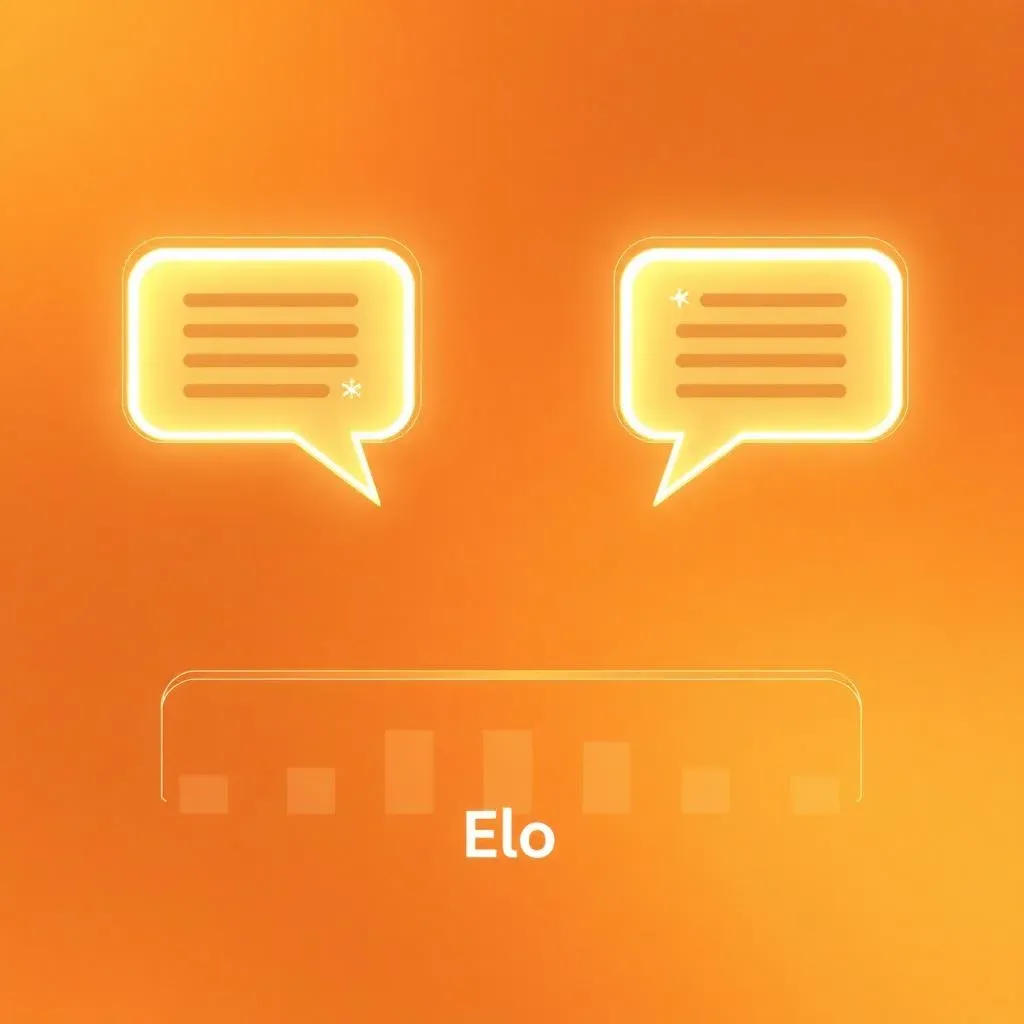
- The vote feeds into an Elo rating.
Elo – Borrowed from Chess
Elo was originally built for chess. The idea:
- Every player (here: model) has a score.
- Beating a stronger opponent wins lots of points.
- Beating a weaker one wins few.
- Across thousands of "matches", a stable ranking emerges.
LMArena uses a modified Bradley-Terry variant plus bootstrap confidence intervals. With millions of votes, each model's rank lands within ±5–10 Elo.
What LMArena Gets Right
- Open-ended prompts: real user questions, not multiple-choice.
- Blind comparison: brand bias removed.
- Scale: millions of votes per quarter.
- Sub-leaderboards: coding, math, hard prompts, vision, WebDev, style control.
Where It Breaks Down
- User bias: LMArena users skew tech-savvy – not representative of "the world".
- Style over substance: longer, nicely-formatted answers tend to win. That's why there's now a "Style Control" leaderboard that corrects for this exact effect.
- Prompt drift: what people type into the arena isn't necessarily what runs in production.
- Gameability: providers can train models to "Arena style". Cue Goodhart's Law – once a metric becomes a target, it stops being a good metric.
Zapier AutomationBench: The First Real Workflow Benchmark
Where LMArena asks "which answer do you like better?", Zapier's AutomationBench asks something much more concrete: "Did the model actually finish the job – end to end, with real SaaS tools, without stalling halfway?"
Setup
- ~600 multi-step workflows drawn from the real Zapier platform: Salesforce updates, outreach sequences, support escalations, pipeline hygiene.
- Each workflow has defined tools (Zapier Actions), an initial state, and an objectively checkable end state.
- The benchmark reports success rate (% of tasks solved) and cost per task in USD.
What the Benchmark Reveals
Wade Foster (Zapier's co-founder/CEO) recently shared Claude Sonnet 5's score publicly: a jump from 5.3 % to 13.5 % vs. Sonnet 4.6 – more than double on multi-step workflows. The current leaderboard top is Claude Fable 5.0 (Max) at ~17.4 % and ~$3.67 per task.
Sounds low? It is – and that's the point: even the best models in the world reliably finish fewer than one in five real business workflows today. Every 5–10 percentage points changes agent economics dramatically.
What AutomationBench Captures That MMLU and Arena Don't
- Tool use under real conditions – real SaaS APIs, real auth, real data models.
- Stall behavior – do models lose the plot after 5–20 tool calls? Zapier sees it directly.
- Hallucinated endpoints – Foster's example: Sonnet 4.6 gave up after 5 steps because it kept hunting for an "escalation procedures" endpoint that obviously never existed.
- Cost per task – finally a metric comparing models by economics, not just score.
Where AutomationBench Also Has Limits
- One platform – Zapier-specific tools and actions aren't every stack.
- Closed dataset – we see the leaderboard, not the prompts or tool schemas in detail.
- Vendor framing – Zapier has a clear interest in workflow automation being the yardstick.
Still: for anyone building agents in sales, support, or RevOps, AutomationBench is closer to the truth than any classic benchmark.
Specialty Benchmarks That Matter in 2026
Beyond Arena, AutomationBench, and the classics, a few specialty evals have become essential:
- SWE-Bench Verified – real software engineering, re-verified by OpenAI.
- Terminal-Bench – agents in real shell sessions.
- τ-Bench (tau-bench) – tool-use and multi-turn agents in simulated customer-service scenarios.
- LiveCodeBench – coding tasks released after training cutoffs (anti-contamination).
- GAIA – General Assistant Benchmark for agentic workflows.
- BullshitBench – who catches plausible-sounding nonsense?
- HLE (Humanity's Last Exam) – PhD-level questions designed to stump top models.
Anyone picking models for a real product never looks at Arena alone. Example: for a coding agent, SWE-Bench, Terminal-Bench, and LiveCodeBench matter more; for a sales-ops agent, AutomationBench is the more honest signal than any overall Arena rank.
The Meta-Trap: Benchmarks Aren't Reality
Three things we regularly see in client work at Till Freitag:
- The top Arena model isn't necessarily the best for your use case. A model leading the coding sub-leaderboard can flop in your CRM workflow because your prompt style is different.
- Eval against your own data beats any public leaderboard. We typically build small domain-specific eval sets (50–200 examples) with real inputs and a defined "good enough" bar.
- Latency, cost, and tool-use aren't fully captured by any public benchmark – but in production they often matter more than 2 % more MMLU. AutomationBench's "cost per task" is one of the first metrics that takes economic reality seriously.
How to Read a Leaderboard Properly
Next time you see an Arena or AutomationBench screenshot in a launch tweet:
- Which sub-leaderboard? Overall vs. Coding vs. Hard Prompts can look dramatically different.
- Style Control on or off? Without Style Control, the "chattiest" models often win.
- Check the confidence interval. If #1 and #4 overlap, the ranking is statistical noise.
- Benchmark cutoff vs. model training cutoff. Contamination risk shoots up fast.
- Read cost per task. A 2 % lead at 2× the cost is usually the worse production model.
- Number of votes / runs. New models often have unstable scores in the first weeks.
Bottom Line
LMArena is still 2026's most important public benchmark for "which model feels better?". But for the question that matters in production – "Does this model reliably and affordably do my work?" – workflow benchmarks like AutomationBench, SWE-Bench, and τ-Bench are the more honest answer.
The rule of thumb: no single benchmark should decide your model choice. Look at the mix – and complement it with your own eval set built on real inputs.
→ LMArena Leaderboard → Zapier AutomationBench → SWE-Bench → Related: BullshitBench
Related Articles
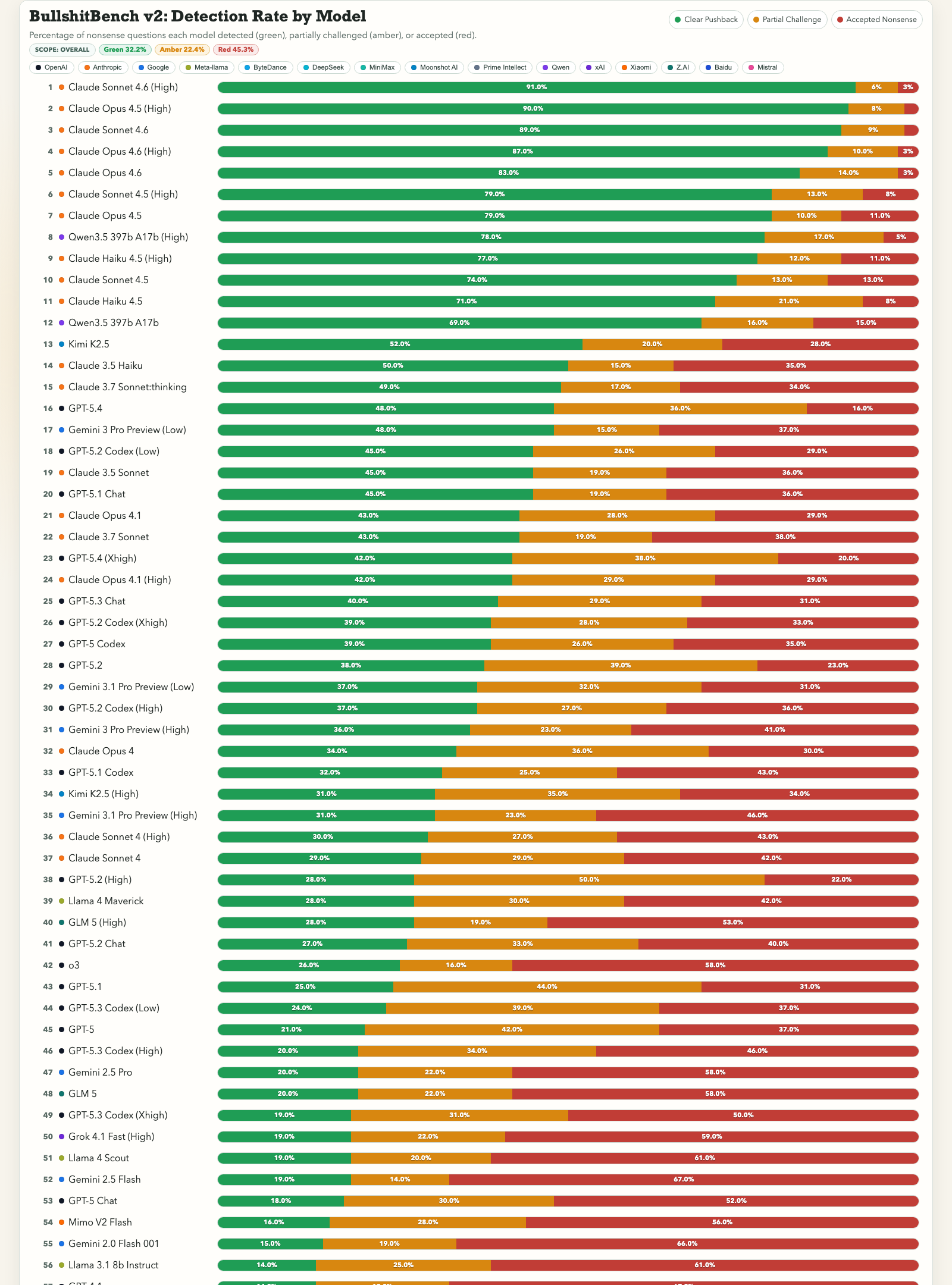
BullshitBench – Which AI Detects Nonsense?
BullshitBench tests whether AI models detect plausible-sounding nonsense – or just go along with it. The results are sur…
Read more Deep Dive
Claude Sonnet 5: Agentic AI Goes Mainstream
Anthropic ships Claude Sonnet 5 – a Sonnet model that gets close to Opus 4.8 performance at a fraction of the price. Aug…
Read more
GLM-5.2 vs. Kimi K2.7 Code: Two Open-Weight Releases in One Week – Two Very Different Bets
Within four days in June 2026, Z.ai (GLM-5.2) and Moonshot AI (Kimi K2.7 Code) shipped their next-generation open-weight…
Read more
Gemma 4 12B Coder: Local Code Generation Becomes the Default
Google ships the Gemma 4 12B Coder — the specialized coding variant of the Gemma 4 stack. 12B parameters in GGUF format,…
Read more
Claude Fable 5 & Mythos 5: When AI Shifts from Tasks to Responsibilities
Anthropic launches Claude Fable 5 and Mythos 5 – SOTA on almost all benchmarks. More interesting than the numbers: The s…
Read more
Mistral 3, Large 3 & Vibe: Why the Latest Update Puts Europe's AI Hope Back in the Game
Mistral flipped the script in six months: Mistral 3 with Large 3 (675B MoE) as open weights, Medium 3.5 as the new defau…
Read more
Nex-N2-Pro: How the Open-Model Frontier Shrunk 75 % in Six Weeks
Six weeks ago, DeepSeek-V4-Pro with 1.6 trillion parameters was the largest open-weight model ever released. Today, Nex-…
Read more Deep Dive
Kimi K2.6: The Most Interesting AI Optimization in 2026 Isn't Intelligence – It's Duration
Moonshot AI open-sourced Kimi K2.6 yesterday. 1 trillion parameters, 300 sub-agents, 13 hours of autonomous code refacto…
Read more Deep Dive
China's AI Offensive: From Hunter Alpha to DeepSeek V4 on Huawei Chips
An anonymous 1T model, a DeepSeek mix-up, and the reveal that Xiaomi was behind it. Meanwhile, DeepSeek V4 on Huawei chi…
Read more