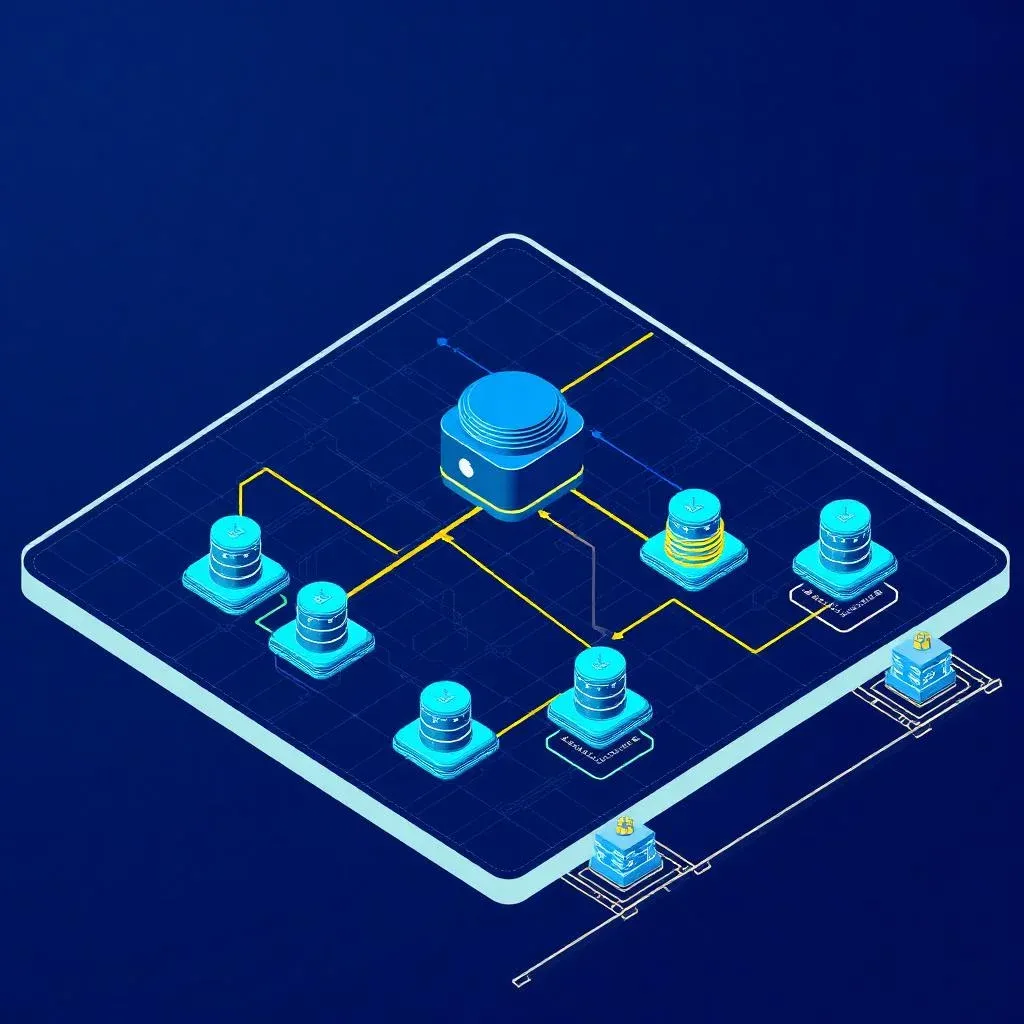
Antigravity in Practice: Multi-Agent Pipelines for Mid-Market Clients


TL;DR: „Antigravity isn't a new LLM, it's an orchestration layer. For mid-market projects it's the first multi-agent stack that doesn't smell like a lab demo. Here's the architecture we currently recommend — cost model and honest limits included."
— Till FreitagWhy this article now
Antigravity finally graduated from the lab in 2026. The NotebookLM 3.5 integration made it visible in a mainstream product for the first time, and Google has since shipped an Antigravity SDK layer for third-party pipelines.
We've been running Antigravity in production for three weeks across two mid-market projects — a research pipeline for a trade publisher and a reporting workflow for a B2B service provider. This article is the CTO view from those projects.
What Antigravity is, conceptually
Antigravity is not an LLM. It's an orchestration layer that chains multiple agents into a pipeline, carries state between steps and handles failure modes. The right comparison isn't Claude or GPT — it's LangGraph, AutoGen or Temporal with agent adapters.
What makes Antigravity stand out:
- Native tool use over MCP — pipelines can embed MCP servers as steps
- Memory with citation trace — each step can show which source influenced an output
- Sandbox execution — steps run in isolated sandboxes with controlled network access
- Replay & forking — any run can be forked at any step and replayed with different parameters
That combination lifts multi-agent setups out of the "takes a week to debug" bucket.
A pipeline we currently run
For the publisher, we built a research pipeline that runs weekly and gathers new sources on a defined topic area. Simplified:
┌────────────────────────────────────────────────────┐
│  Trigger (cron, webhook or Slack command)          │
└─────────────────────┬──────────────────────────────┘
                      ▼
        ┌─────────────────────────┐
        │  1. Scope agent         │  → defines: what exactly are we searching for?
        └────────────┬────────────┘
                     ▼
        ┌─────────────────────────┐
        │  2. Discovery agents    │  → 4-8 parallel web searches
        └────────────┬────────────┘
                     ▼
        ┌─────────────────────────┐
        │  3. Dedupe & rank       │  → MCP call against existing data
        └────────────┬────────────┘
                     ▼
        ┌─────────────────────────┐
        │  4. Extraction agents   │  → structured fields per source
        └────────────┬────────────┘
                     ▼
        ┌─────────────────────────┐
        │  5. Reviewer agent      │  → quality filter, citation check
        └────────────┬────────────┘
                     ▼
        ┌─────────────────────────┐
        │  6. Sink                │  → MCP call into editorial CMS
        └─────────────────────────┘
Six steps, two parallelized. Runtime per week: ~8 minutes, cost: well under what a working student would have cost for the same work — with better citation discipline.
Architecture choices that paid off
1. Skills instead of one giant system prompt
We define each agent as a small skill with a clear job, a clear input/output schema, and its own tool list. That makes debugging and replay much easier because each step is testable in isolation.
2. MCP as the only outer edge
Pipelines talk to the outside world exclusively through MCP servers. Database access, CMS updates, source repositories — all MCP. That gives us:
- A unified auth model
- Unified audit logs
- Swappable backends without pipeline changes
If you don't have a production MCP server yet, this is a good time — see our retrieval layer article.
3. Reviewer agent is mandatory
The second-to-last step of every pipeline is a reviewer agent. Its job isn't "make it better" — it's to reject when citation trace is missing, fields are empty, or a source is flagged unreliable. That alone cut "weird" production outputs dramatically.
4. Replay-ability from day one
Every pipeline run gets an ID, every step is logged with input/output. If step 4 fails, we can replay steps 1-3 without re-executing them. That cuts debugging time roughly in half.
Cost model — honest numbers
For the research pipeline above:
| Component | Tokens / run | Cost / run |
|---|---|---|
| Scope agent (Gemini 2.5 Flash) | ~3k | < €0.01 |
| Discovery (6× parallel, Gemini 2.5 Pro) | ~60k | ~€0.30 |
| Dedupe & rank (Gemini 2.5 Flash) | ~10k | ~€0.02 |
| Extraction (8× parallel, Claude Haiku 4) | ~80k | ~€0.40 |
| Reviewer (Claude Sonnet 4.5) | ~20k | ~€0.15 |
| Sink (no LLM) | – | – |
| Total | ~173k | ~€0.90 |
That's a weekly run for a full editorial research cycle. Even with a 4-5x safety margin we're under €5/month. This is the order of magnitude where multi-agent setups become economically viable for mid-market.
Where Antigravity (still) doesn't fit
- Real-time answers under 2 seconds. Pipelines have orchestration overhead. For chat latency, use direct LLM calls.
- Highly regulated data flows. Cloud sandbox execution means cloud. If data can't leave, look at Local AI.
- Pipelines with fewer than 3 steps. Antigravity overhead outweighs the benefit. A direct tool-use call is enough.
Anti-patterns we've seen
- "One agent per micro-task." Pipelines with 20+ steps become unmaintainable. We stay below 8.
- No output schema. When agents return free text, the next step breaks. JSON schemas are mandatory.
- Pipelines without a reviewer. A final quality gate is not optional.
- Models picked by gut feel. We benchmark every step with 2-3 models before committing. The cost table above came from two days of measurement.
How we introduce Antigravity in client projects
Our default path:
- Workshop: identify a use case that runs manually today and has well-defined input/output
- Prototype (2-3 days): stand up the pipeline without production hardening
- Eval setup: 20-50 test inputs that every pipeline version runs against
- MCP integration for the most important backends
- Reviewer layer and replay logging
- Soft launch with human approval before the sink step
- Auto-run after 2-3 weeks of stable soft-launch behavior
Not spectacular, but it's the path that has reliably produced pipelines clients actually trust.
Bottom line
In 2026, Antigravity is the first multi-agent stack we're willing to take into mid-market client projects with a clear conscience. The combination of MCP-nativeness, sandbox execution and replay-ability moves the conversation past "interesting lab demo" into daily production use.
If you're considering multi-agent seriously, two prerequisites matter: a production MCP layer and a clear sense of which manual workflow should go first. With those in place, the pipeline is the fast part.
Have a workflow that screams multi-agent pipeline? Let's talk →
Related Articles
Agent Swarm Architectures Compared: Kimi K2.5 vs. Airtable HyperAgent vs. CrewAI
Three fundamentally different approaches to multi-agent AI: model-native swarms, platform orchestration, and developer f…
Read more Deep Dive
Airtable Superagent: The First Multi-Agent System That Delivers Finished Work
Airtable launches Superagent – a multi-agent system that orchestrates specialized AI agents in parallel to deliver finis…
Read more
Agent Harness as a Category: Why the Harness Is the New Product
The harness — skills, sandbox, subagents, memory, channel routing — is the real product layer above the model. A map of …
Read more
Token Maxxing: When AI Stops Being a Search Engine and Becomes Infrastructure
Most teams use AI like Google. The winners treat it like electricity. Token maxxing means pushing every doc, every call,…
Read more
LangGraph vs. CrewAI vs. AutoGen: Which Multi-Agent Framework in 2026?
Three frameworks, three philosophies: LangGraph gives you state machines, CrewAI gives you teams, AutoGen gives you conv…
Read more
Perplexity Computer: 19 AI Models, One System – The End of Single-Model Thinking
Perplexity just launched Computer – a multi-model agent that orchestrates 19 AI models to complete complex workflows aut…
Read more
NotebookLM 3.5: From Preprocessor to Agentic Research Partner
Google upgraded NotebookLM to Gemini 3.5, added a secure cloud computer for autonomous web research, and plugged in Anti…
Read more
Gemma 4 12B Coder: Local Code Generation Becomes the Default
Google ships the Gemma 4 12B Coder — the specialized coding variant of the Gemma 4 stack. 12B parameters in GGUF format,…
Read more
Multi-Agent Layer 2026: AG2, LangGraph, SuperAGI & AWS Strands Compared
When one agent isn't enough: AG2, LangGraph, SuperAGI and AWS Strands compared. Which multi-agent stack fits which workf…
Read more