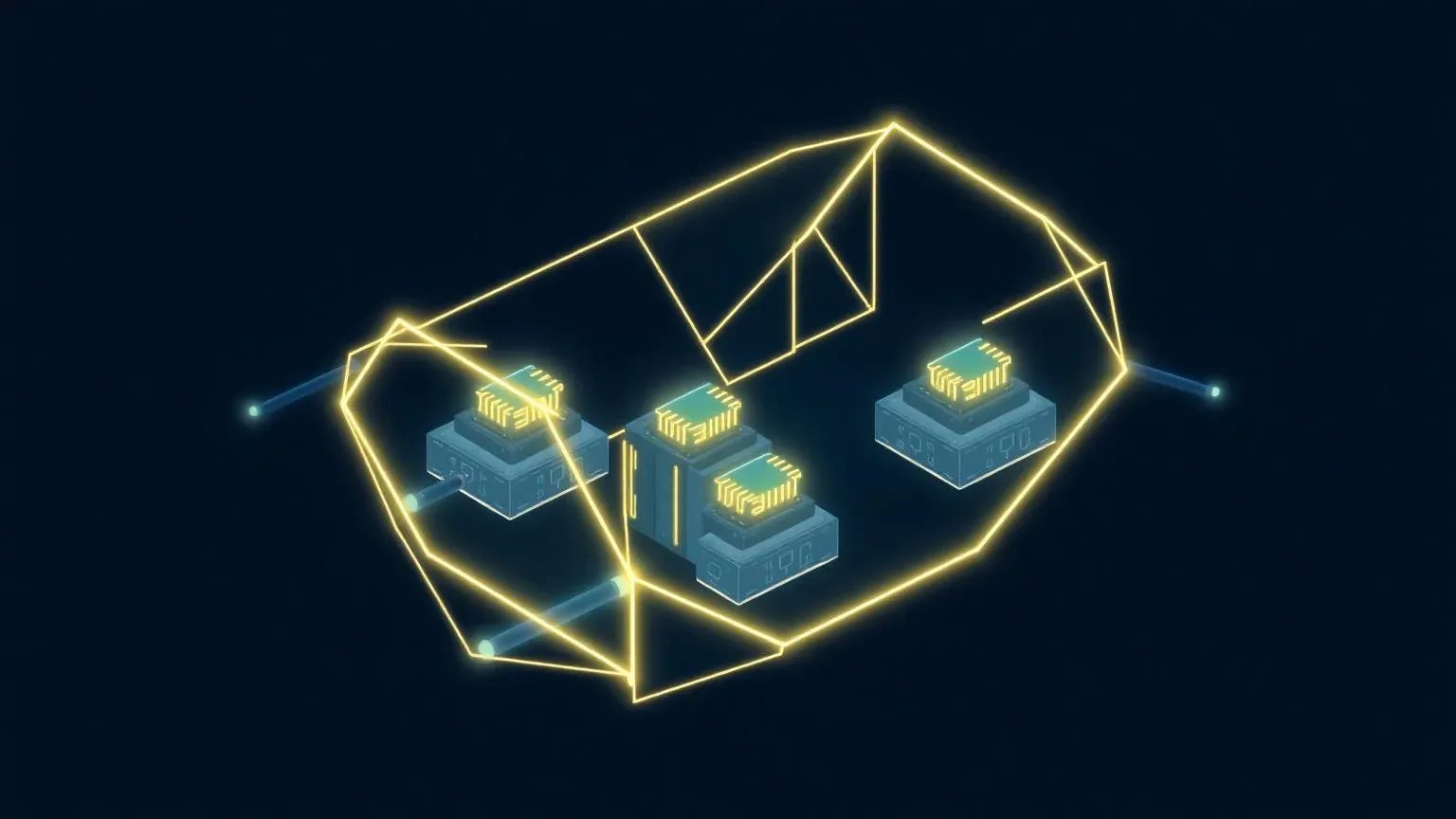
Agent Harness as a Category: Why the Harness Is the New Product


TL;DR: „An agent harness is the runtime layer above the model: skill loading, subagent orchestration, sandbox isolation, memory, channel routing, artifact handoff. In 2026, harness has become its own product category — and it drives outcomes more than the model choice does."
— Till FreitagThe model is no longer the product
For two years the interesting question was which model? MMLU score, context window, reasoning loop. That conversation is largely settled in 2026. The top models are interchangeable on 80% of tasks — and the performance gap between first and third place is smaller than the gap between the same model in a good harness and the same model in a bad harness.
That moves the product up a layer.
What is an agent harness?
A harness is the runtime and orchestration layer that turns a model into a usable agent. Six components show up in every serious harness:
- Skill loading — progressive loading of tools, prompt fragments, and domain knowledge depending on the task. Anthropic established this as a standard with Agent Skills.
- Subagent orchestration — the main agent delegates to specialised subagents that run in parallel or in sequence.
- Sandbox isolation — code execution, browser, file I/O happen in isolated containers, not in the main context.
- Memory — persistent state across turns: vector store, episodic memory, working memory.
- Channel routing — the agent communicates across multiple channels simultaneously (chat, status, artifact stream, tool calls).
- Artifact handoff — something finished comes out at the end: a PR, a deck, a report, a site, a video. Not just text.
If one of those six is missing, it isn't a harness — it's a chatbot with tools.
Why harness became its own category
Three forces made harness a product category in 2026:
1. Model commoditisation. When GPT, Claude, Gemini and GLM are at parity on 90% of tasks, you can't differentiate on the model anymore. You differentiate on what you build around it.
2. Skills are portable. Agent Skills have settled into an industry standard — a skill written for Claude Code runs with minor changes in DeerFlow or Antigravity. The harness becomes the swappable layer, not the skill.
3. Sandbox costs are non-trivial. Running agent-authored code in a browser needs real isolation. That's infrastructure work no individual team wants to own.
The landscape, June 2026
Four clusters separate cleanly:
Cluster 1: Coding harnesses
Claude Code, Cursor Agents, Aider, OpenHands. Optimised for repository work. Long contexts, strong diff generation, Git integration. Subagents here are mostly task splitters (Plan → Implement → Test → Review). Sandbox is the dev container.
→ More: The Agentic Coding Tools Landscape
Cluster 2: Super-agent harnesses
DeerFlow 2.0, Manus, AutoGen Studio. Generalists. Input is a prompt, output is an artifact (report, slides, site, video). Subagents here are actual specialists — researcher, writer, reviewer, designer. Memory is persistent across sessions.
→ Deep dive: DeerFlow 2.0 — The Super-Agent Harness
Cluster 3: Build harnesses
Lovable Subagents, Antigravity, Bolt, v0. Output is deployable software. The harness manages project structure, branches, preview deployments. Subagents take UI, backend, tests, migrations in parallel.
→ Comparison: Antigravity in Practice
Cluster 4: Agent runtimes (bring-your-own-harness)
LangGraph, CrewAI, AutoGen, LlamaIndex Agents. Frameworks for building your own harness. Full control, but you also own sandbox, memory, channel routing.
→ Context: Agent Runtimes Compared
What this means for builders
Don't pick the model first. Pick the harness that matches your output (code? artifact? software? roll-your-own?). The model is a slot in the harness — swappable.
Invest in skills, not prompts. Skills are portable across harnesses, prompts are not. Every hour you put into a reusable skill pays off across multiple harness migrations.
Treat the harness like infrastructure. You will swap it in 12 months — either because a better one arrives or your requirements grow. Write your skills, memory schemas, and artifact formats so the swap stays expensive-but-doable.
What's next
Three shifts are taking shape for H2 2026:
- Harness marketplaces. Once skills are portable, skill marketplaces become the next wave — similar to what npm was for JavaScript. Anthropic, ByteDance and a few startups are building toward this.
- Local harnesses. With GLM-5.2 and Kimi K2.7 on workstation GPUs, local harnesses become relevant — especially for regulated industries. See Local AI kills the SaaS wrapper.
- Harness-as-a-service. Anthropic Skills + Sandbox + Memory as a managed stack. Collapses the build-vs-buy question into: Which harness vendor?
Bottom line
In 2026, harness is to AI what frameworks were to the web in 2014: the layer that decides how fast you build and how far you get. Anyone who ignores the category and keeps debating models is optimising a variable that has almost no spread left.
Today the harness picks the model. Not the other way around.
Related Articles
DeerFlow 2.0: ByteDance's 68k-Star Super-Agent Harness That Ships Finished Artifacts
ByteDance's open-source super-agent harness ships skills for research, reports, slides, web pages, image and video gen. …
Read more
Vibe Coding with Subagents: How We Parallelize Lovable Projects
Subagents in Lovable change how we approach large projects. A CTO view: what shifted in architecture, prompting and PR r…
Read more
Lovable Subagents: Parallel Research, One Orchestrating Head Agent
Lovable introduces subagents: read-only helpers that explore your codebase and the web in parallel, each with its own co…
Read more
Lovable Skills: Repetition Turns Into Reusable Playbooks
Lovable just rolled out Skills – Anthropic's format for reusable agent instructions. What Skills are, how they differ fr…
Read more
Agent Skills Are Becoming an Industry Standard: What Teams Need to Know
Agent Skills are reusable capabilities for AI agents – and they're becoming the new standard. What sets them apart from …
Read more
What Is Vibe Coding? Building Software with AI – Simply Explained
Vibe Coding is revolutionizing software development: describe what you want – AI writes the code. Everything about the t…
Read more Deep Dive
Lovable Feature Roundup: What actually mattered in May and June 2026
Subagents, native Claude MCP, the Preview Toolbar, Publish-from-chat, slow-query analysis in Lovable Cloud: in six weeks…
Read more
Lovable Model Routing: Why Output Quality Has Slipped for Builders
Lovable now routes chat requests across different models depending on the task. From a builder's perspective, output qua…
Read more
Claude Opus 4.7 Is Here: What Premium Teams Need to Know About the Tokenizer, xhigh, and Spend Controls
Anthropic just released Claude Opus 4.7. Same price as 4.6, but noticeably better at coding, agents, and visual output. …
Read more