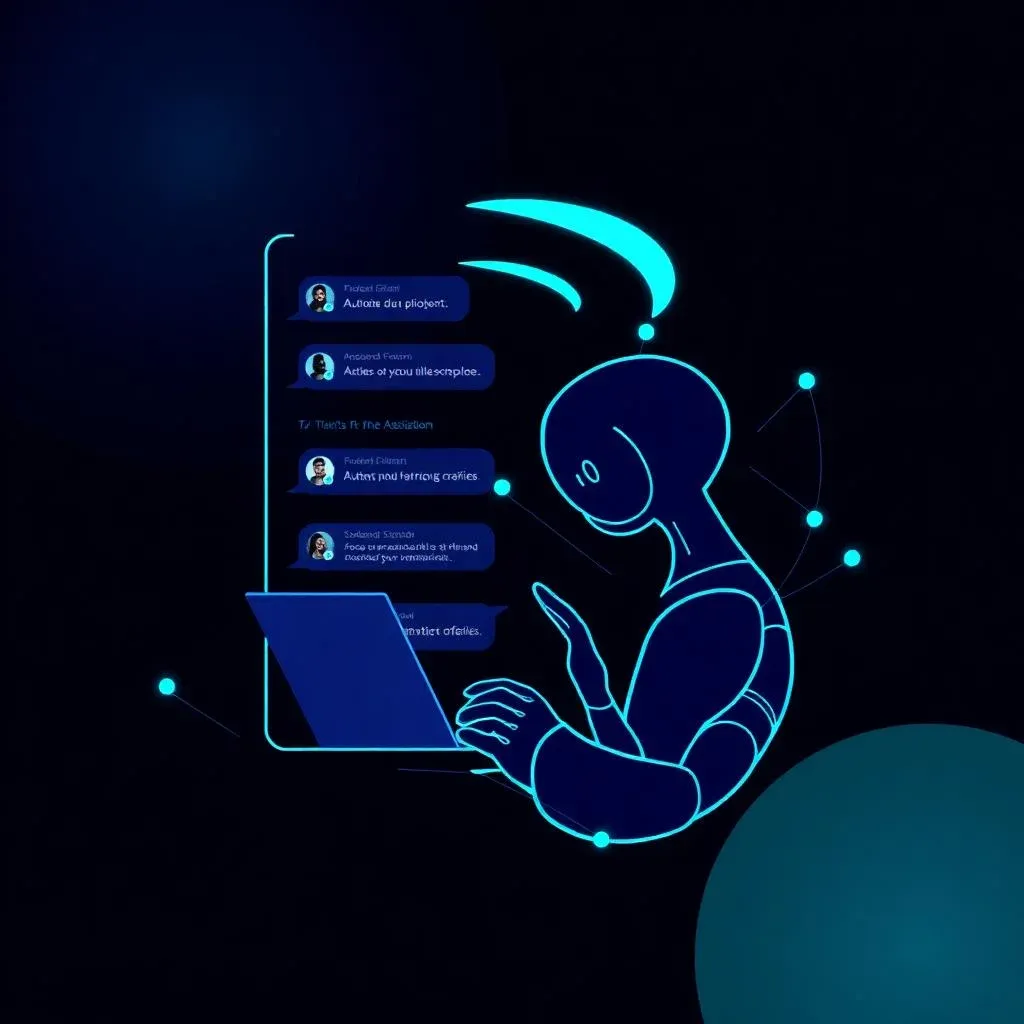

TL;DR: „AutoClaw (autoclaw.z.ai) is Z.ai's agentic layer on top of GLM-5.2: describe the goal in a chat, AutoClaw decomposes, executes and returns the result with context. Paired with our Agent Cluster and the Hermes self-evolution loop it's a surprisingly mature setup – and real competition for the Claw family."
— Till FreitagWhat AutoClaw Actually Is
AutoClaw is Z.ai's agent layer – the same company behind GLM-5.2. The pitch is sharp: „Your AI Partner That Does the Work." Not a chatbot replying to you. An agent that executes.
The interaction model is deliberately boring:
- Describe the goal in a chat – no dashboard maze, no setup wizard.
- AutoClaw decomposes and runs it – with real tools, without constant back-and-forth.
- Result lands back in the chat – with context and next steps in the same thread.
Underneath runs GLM-5.2 in the open trial, and – the part we care about most – AutoClaw supports Hermes Self-Evolution, the loop where the agent iteratively refines its own strategies.
What Can AutoClaw Do?
Z.ai highlights four primary use cases that hold up in practice:
| Area | What AutoClaw handles |
|---|---|
| Spreadsheets & data | analyze sheets, build pivots, surface outliers |
| Investing & financial planning | portfolio checks, scenarios, asset research |
| Business operations | orchestrate recurring multi-tool workflows |
| Social media operations | posting pipelines, research, on-brand drafting |
What sets AutoClaw apart from „ChatGPT with tools" is that it keeps the task in mind across multiple steps, without you nudging it every time. That's exactly the long-horizon discipline where GLM-5.2 sits surprisingly close to Claude Fable 5.
The Value – Honestly Framed
We've been building agent infrastructure for years (OpenClaw, TillClawn 🤡, NanoClaw). From that angle, the honest upside of AutoClaw:
- Zero-setup agent for end users. No self-hosting, no MCP servers to wire up.
- Solid default routing. Tasks land on GLM-5.2 – cheap, on-prem capable, quality close to the US frontier. Our default for ~80% of coding tasks right now.
- Hermes loop without DIY. Self-improving agents are usually a stack project. Here they're a toggle.
- Chat as the interface. No extra tool for organizing work. The task lives where it's discussed anyway.
What AutoClaw doesn't solve: enterprise wiring into internal systems with audit, RBAC, SSO and GDPR-compliant self-hosting. OpenClaw / TillClawn 🤡 remain the layer of choice there – AutoClaw is much closer to „personal AI coworker" than to „agent backbone for the enterprise."
Example: AutoClaw + Our Agent Cluster
Real setup from a live project – non-sensitive market research with handoff to internal tools.
Prompt to AutoClaw:
„Research all DACH providers for local AI inference with GPU hosting, compare pricing per 1M tokens for 70B models, and write the result as a table into our Notion board ‚AI Infra Watch'."
What happens:
- AutoClaw breaks the task into three steps: research → normalization → handoff.
- Research runs through GLM-5.2 with web tools – output: raw list of vendors and prices.
- Normalization happens inside the Agent Cluster: one sub-agent harmonizes token prices (per 1M input/output), a second fills missing values via targeted follow-up searches.
- Hermes evolution kicks in inside the cluster: strategies that produced clean results get preferred on the next run.
- Handoff to our internal Notion via an OpenClaw skill – RBAC, audit log, markdown format.
- AutoClaw reports back in chat: „Table created, 14 vendors, 3 flagged with missing values."
The point: AutoClaw owns the frontend loop, the Agent Cluster + OpenClaw own the operational, auditable part. They compose because GLM-5.2 is the same model under both layers and tool calls route identically.
Comparison to the Other Claws
| AutoClaw | OpenClaw | TillClawn 🤡 | NanoClaw | ZeroClaw | |
|---|---|---|---|---|---|
| Vendor | Z.ai (managed) | Open source | Us (enterprise layer on OpenClaw) | Community (MIT) | Community (Rust) |
| Primary use case | Personal AI partner in chat | Agent infrastructure for teams | Make OpenClaw enterprise-ready | Local Claude agent on Pi/Mac | Lean Rust agent for edge |
| Hosting | Cloud (managed) | Self-hosted or cloud | Self-hosted, enterprise | Self-hosted (Pi, Mac) | Self-hosted, minimal |
| Default model | GLM-5.2 | Multi-LLM | Multi-LLM with routing | Claude (Agent SDK) | Multi-LLM |
| Self-evolution | Hermes built-in | via skills/plugins | Hermes + audit layer | manual | not primary |
| Enterprise features | limited | medium | high (RBAC, audit, SSO) | low | low |
| Onboarding | seconds | minutes to hours | days (guided) | minutes | minutes |
| When to pick it | when you want a managed partner | when you build your own agent backbone | when the backbone needs to be enterprise-grade | when everything must stay local | when every MB matters |
The mental model: AutoClaw is the end-user layer, OpenClaw / TillClawn 🤡 are infrastructure, NanoClaw and ZeroClaw are edge variants. They compete less than the naming family suggests – they occupy different layers of the same agent stack.
When AutoClaw Is Worth It Today
Useful if:
- you need a productive agent fast without running infrastructure,
- your tasks are non-sensitive (research, reporting, social, market analysis),
- you need to keep cost in check – GLM-5.2 is meaningfully cheaper than US top models,
- you want to try Hermes evolution without building a self-improving stack.
Less useful if:
- you process GDPR-critical data and don't self-host,
- you need deep integrations into internal systems with audit requirements,
- you have latency-critical voice or live workflows.
Bottom Line
AutoClaw is the clean end-user manifestation of what Z.ai is building underneath: an agent layer that doesn't pretend to be a chatbot. Together with GLM-5.2 it actually delivers on what many pricier tools only promise – take the task and return the result.
For our own work AutoClaw shows up wherever the frontend loop matters and no enterprise wiring is required. We still build the backbone on OpenClaw and TillClawn 🤡. Combined, it's a picture that no longer needs to hide behind the US stacks.
Further reading:
Related Articles
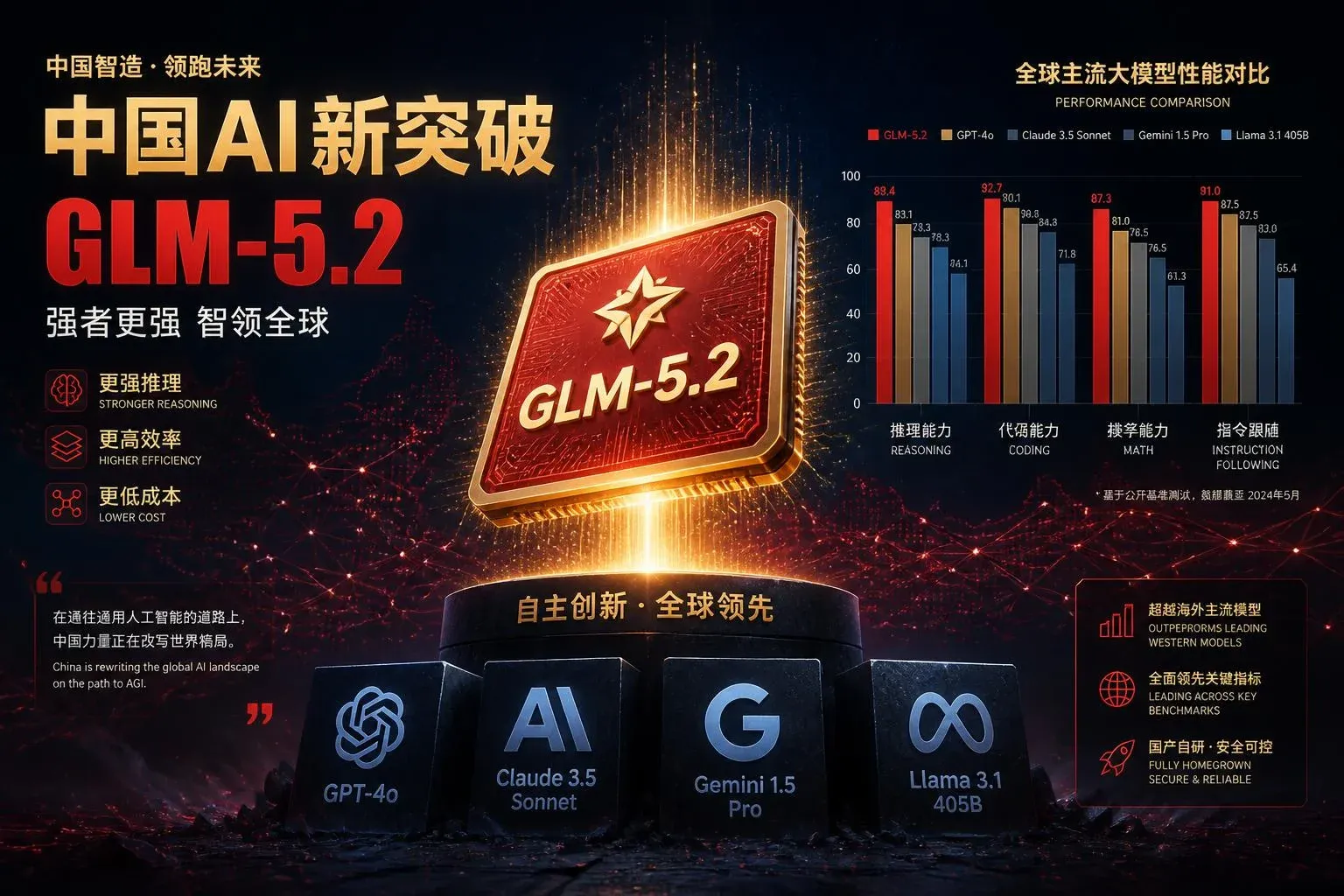
Z.ai GLM-5.2 – why the next frontier leap comes from China
Z.ai ships GLM-5.2 – more than doubling GLM-5.1, close to Claude Fable 5, cheaper, deployable on-prem. While US frontier…
Read more
OpenClaw Audit 2026: What's Left of All Those Promises?
OpenClaw was the hot new thing in 2024, a LinkedIn religion in 2025, and supposedly dead in 2026. A sober audit: what he…
Read more
Self-Hosted & Privacy Layer 2026: Ontheia, Anything LLM & Privacy Router
If you take GDPR seriously, there's no way around self-hosting. Ontheia, Anything LLM, NanoClaw and the Privacy Router c…
Read more
Microsoft Scout Runs on OpenClaw – Not „OpenClaw-like", It Is the Gateway
Microsoft just showed off a new Copilot agent called Scout at Build. The tech bubble calls it „OpenClaw-like" – in reali…
Read more
\"Claude Code Killed OpenClaw\" – Why This Comparison Is Complete Nonsense
On LinkedIn you increasingly read: \"Claude Code killed OpenClaw.\" That's like comparing apples with interstellar space…
Read more
Paperclip: If OpenClaw Is the Employee, Paperclip Is the Company
Paperclip is open-source infrastructure that lets you run an entire AI company — org chart, budgets, approvals, audit tr…
Read more
Globster: monday.com Enters the Personal AI Agent Game – on NVIDIA's NemoClaw
monday agent labs just launched Globster: personal AI agents built on OpenClaw, secured by NVIDIA's NemoClaw runtime. Wh…
Read more
OpenClaw Pricing Shock: How to Avoid the $500 Bill
Anthropic just killed third-party tool coverage under Claude subscriptions. If you're running OpenClaw without prep, you…
Read more Deep Dive
Copilot vs. OpenClaw vs. Claude: Enterprise AI Agents Compared 2026
Three philosophies, one goal: AI agents in the enterprise. Microsoft Copilot (platform), OpenClaw (open source), Claude …
Read more