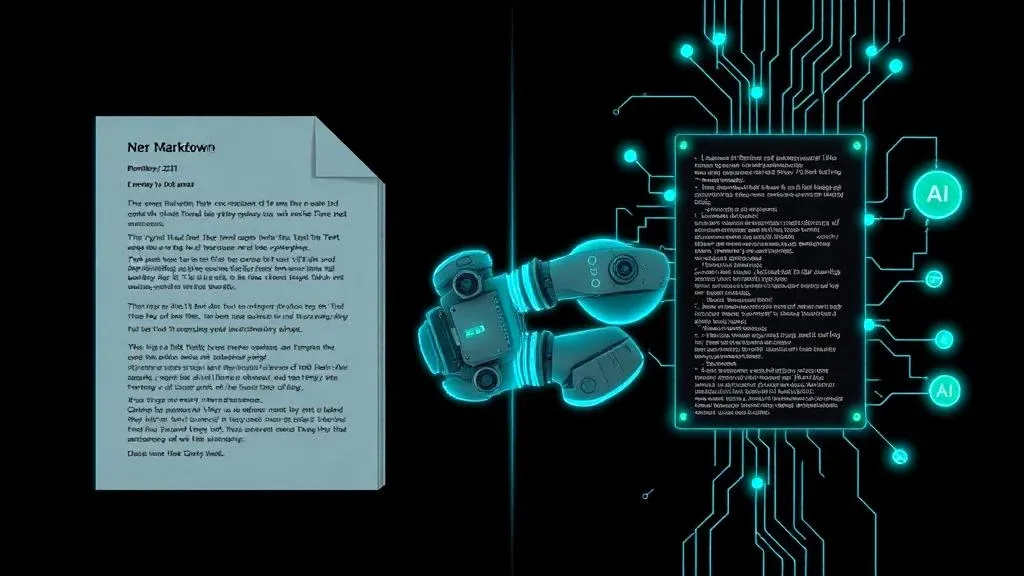
Skills Made Documentation Sexy: Why Developers Suddenly Love Writing Docs

TL;DR: „Agent Skills turn documentation from a chore into a strategic asset. When you document, you're now programming your agent – and that's motivating."
— Till FreitagSoftware Engineering's Oldest Problem
Documentation has been the stepchild of software development for decades. Everyone knows it's important. Nobody wants to write it. The reason is simple: documentation had no immediate return on investment.
You write a README, a Confluence page, a wiki article. Then what? It gets read – maybe. It stays current – probably not. It influences the code – definitely not.
Agent Skills have fundamentally shifted this equation.
Documentation That Works
An Agent Skill is essentially a Markdown document. But unlike a README, something crucial happens with a Skill: the agent reads it and acts on it.
# API Design Skill
## Trigger
When new endpoints are created
## Rules
- REST conventions per OpenAPI 3.1
- Error responses always with Problem Details (RFC 9457)
- Rate limiting headers in every response
- Versioning via URL path (/v1/, /v2/)
This document isn't a passive description. It's an active instruction that the agent follows for every relevant task. Documentation becomes code.
Why Developers Suddenly Love Writing Docs
1. Instant Feedback
With traditional docs, you write into the void. With Skills, you immediately see whether the agent understands and executes the instruction. Output wrong? Adjust the skill, test again. It feels like programming, not writing.
2. Documentation as a Superpower
Whoever writes the best Skill has the most productive agent. This creates a gamification effect: teams start optimizing their Skills like code – with reviews, iterations, and benchmarks.
3. Cumulative Value
Every Skill you write makes your agent permanently better. Unlike prompts that disappear after a session, Skill knowledge accumulates over months and years.
4. Versioned and Reviewable
Skills live in the Git repository. They go through code reviews, have a history, and can be rolled back. For developers, this is a familiar workflow – and not an extra process.
From README to Skill: The Paradigm Shift
Before: Documentation as Obligation
docs/
├── README.md          ← rarely read
├── CONTRIBUTING.md    ← even more rarely read
├── architecture.md    ← outdated for 6 months
└── api-guide.md       ← describes an API that no longer exists
After: Documentation as Executable Knowledge
.skills/
├── code-review/SKILL.md      ← agent checks against these standards automatically
├── deployment/SKILL.md        ← agent knows how to deploy
├── api-design/SKILL.md        ← agent creates APIs following these conventions
└── testing/SKILL.md           ← agent writes tests following these patterns
The difference: the first structure describes how work should be done. The second enforces it.
Docs-to-Skills: The New Pipeline
Companies like Mintlify and Inkeep have recognized that existing documentation is the best raw material for Skills. The idea:
- Tag existing docs – Which documents contain executable workflows?
- Generate Skills – Automatically extract SKILL.md files from docs
- Load into agents – Skills are recognized by Claude Code, Cursor & others
- Keep in sync – Docs change → Skills are automatically updated
The result: documentation written once that works across 20+ coding agents simultaneously.
The Psychological Turning Point
The real breakthrough isn't technical – it's psychological:
- Old: "I need to document so others understand my code."
- New: "I document so my agent writes better code for me."
Motivation shifts from altruistic (for others) to selfish (for myself). And selfish motivation is stronger – anyone who's tried to get a team to write docs knows this.
Best Practices: Skills That Actually Work
1. Specific Over Generic
❌ "Write good code" ✅ "Use TypeScript strict mode, name interfaces with I-prefix, export only via index.ts"
2. Define Triggers Clearly
❌ "Always apply these rules" ✅ "Activate this skill when files in /src/api/ are edited"
3. Include Examples
Agents learn better from examples than abstract rules. A concrete code block says more than ten sentences.
4. Use Anti-Patterns
Show the agent what it should not do. Anti-patterns are just as instructive as best practices.
5. Refine Iteratively
A Skill is never finished. Observe agent behavior, identify errors, sharpen the instructions.
Skills as an Onboarding Tool
An underestimated effect: Skills document not just for agents, but also for humans. New team members can read a project's Skills and immediately understand:
- How the team works
- Which conventions apply
- How deployments work
- What counts as best practice
Skills become the living onboarding document – one that's guaranteed to be current because the agent uses it daily.
Conclusion: The Documentation Renaissance
Agent Skills have achieved what generations of engineering managers failed at: getting developers to write documentation voluntarily. The trick? Documentation no longer feels like documentation. It feels like programming – with instant feedback, measurable impact, and cumulative value.
The best documentation has always been the kind that actually gets used. With Skills, every document is read and followed during every agent interaction. That's not an incremental improvement – it's a paradigm shift.
Related Articles
From SKILL.md to SkillOps: Scaling Agent Skills Across Teams
Writing one Skill is easy. Managing 50 across 5 teams? That's where SkillOps comes in – from governance and versioning t…
Read more
Lovable Skills: Repetition Turns Into Reusable Playbooks
Lovable just rolled out Skills – Anthropic's format for reusable agent instructions. What Skills are, how they differ fr…
Read more
Agent Skills Are Becoming an Industry Standard: What Teams Need to Know
Agent Skills are reusable capabilities for AI agents – and they're becoming the new standard. What sets them apart from …
Read more
Ponytail: The Best Code Is the Code You Never Wrote
A dev built Ponytail because his AI agents wrote 500 lines for a 5-line problem. The result: 80-94% less code, 47-77% ch…
Read more
Why 🦞 Became the Secret Handshake of the Agentic AI Movement
How a crustacean became the tribal emoji of the agentic AI scene – from Anthropic memes to X bios full of lobster claws.…
Read more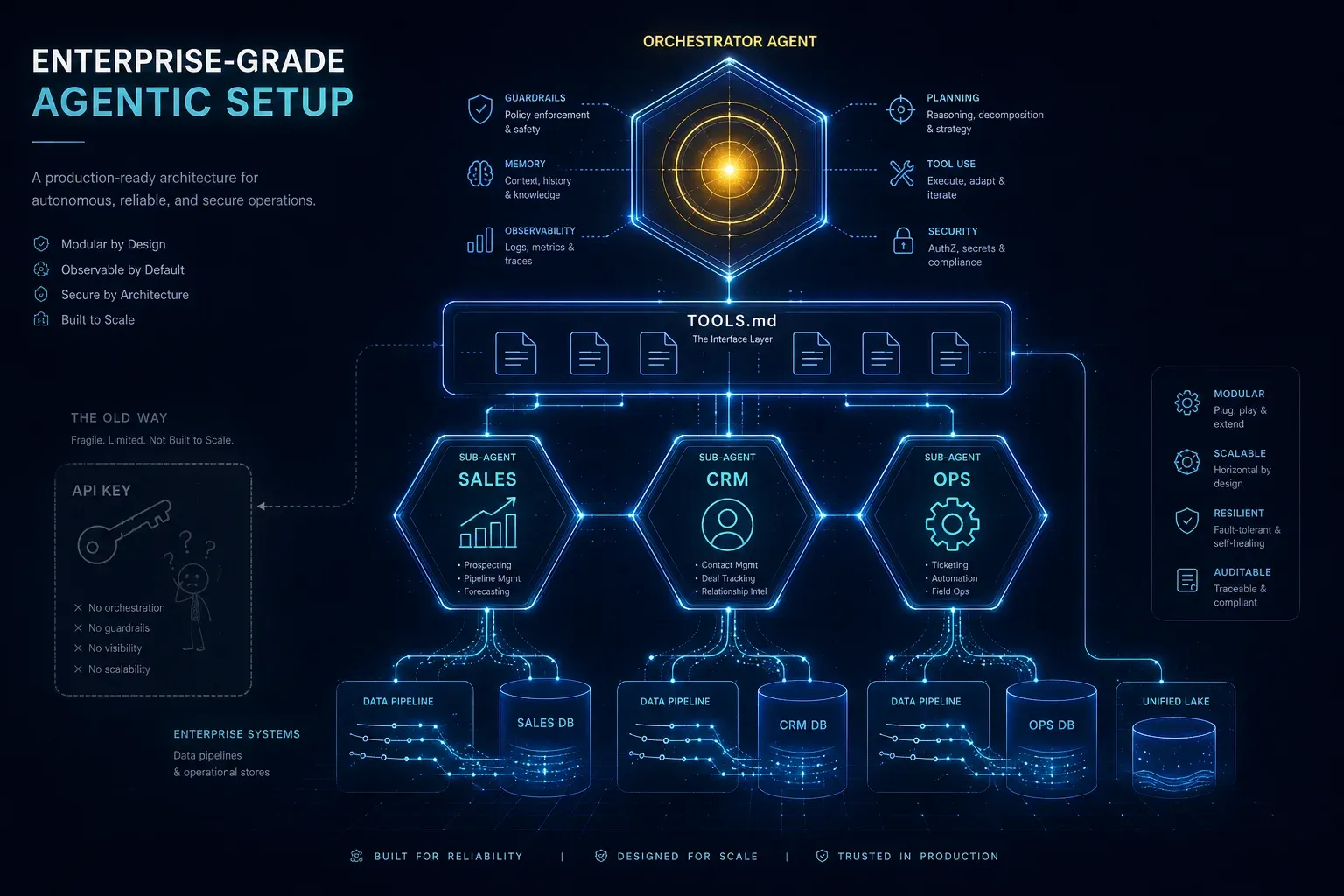
Enterprise-Grade Agentic Setup: Why an API Key Is Not an AI Strategy
An API key on your website is child's play. An agentic setup with specialised sub-agents, TOOLS.md, clean system prompts…
Read more
LangGraph vs. CrewAI vs. AutoGen: Which Multi-Agent Framework in 2026?
Three frameworks, three philosophies: LangGraph gives you state machines, CrewAI gives you teams, AutoGen gives you conv…
Read more
Claude Code Is No Longer a Dev Tool – It's a GTM Layer
With Opus 4.6, Claude Code has fundamentally changed: from a developer tool to an autonomous Go-To-Market layer. What we…
Read moreWhat Is Agentic Engineering? The Next Step Beyond Vibe Coding
Agentic Engineering goes beyond Vibe Coding: AI agents plan, decide, and implement autonomously. What this means for tea…
Read more