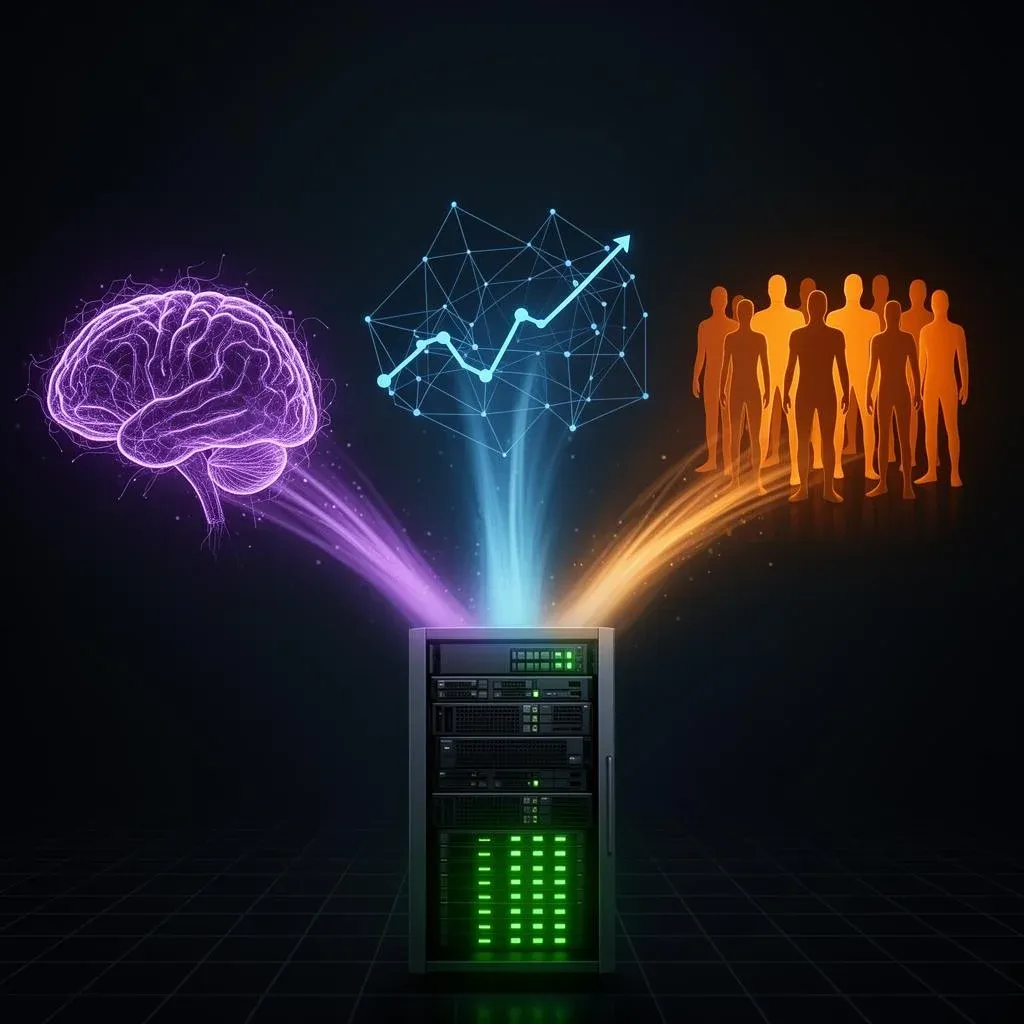
Claude Managed Agents vs. LangGraph vs. CrewAI: Agent Runtimes for Production Compared

TL;DR: „Claude Managed Agents: Zero-infra, best-in-class for Claude-only. LangGraph: Maximum control with graph-based orchestration. CrewAI: Fastest prototype with role-based team design. The right choice depends on your model lock-in appetite."
— Till FreitagThe Problem: Agent Infrastructure Eats Teams
Every team building production agents in 2026 faces the same decision: How much infrastructure do you want to manage yourself?
The agent logic – system prompt, tools, guardrails – is 20% of the work. The other 80% is state management, sandbox isolation, error handling, context engineering, and scaling.
Three approaches have emerged:
- Claude Managed Agents – Anthropic hosts everything
- LangGraph – Graph-based orchestration, self-hosted or via LangSmith
- CrewAI – Role-based agent teams, self-hosted or via CrewAI AMP
We've evaluated all three in production scenarios. Here's our comparison.
Architecture Overview
Claude Managed Agents: The "Agent OS"
Managed Agents is a hosted agent runtime – you define Agent, Environment, Session, and Events. Anthropic handles the rest.
The core innovation is the Brain ↔ Hands decoupling: Reasoning (Brain) runs separately from tool execution (Hands). Containers are cattle, not pets. If one dies, a new one spins up. The session log lives outside the context window.
execute(name, input) → stringEvery tool implements this interface. The harness doesn't know what's on the other end – container, MCP server, or smartphone.
Result: P50 time-to-first-token -60%, P95 -90%.
LangGraph: Maximum Control
LangGraph models agent workflows as directed graphs. Nodes are compute steps (LLM calls, tool invocations, logic), edges define the flow – including conditional branches and loops.
from langgraph.graph import StateGraph

graph = StateGraph(AgentState)
graph.add_node("reason", reasoning_node)
graph.add_node("act", tool_node)
graph.add_edge("reason", "act")
graph.add_conditional_edges("act", should_continue)
LangGraph 1.0 (October 2025) brought production stability: deterministic state machines, checkpointing, human-in-the-loop, and the Deploy CLI for LangSmith deployments.
34.5M monthly PyPI downloads – the largest agent framework ecosystem.
CrewAI: Fastest Prototype
CrewAI thinks in roles and teams. You define agents with personality and expertise, give them tasks, and let them collaborate.
from crewai import Agent, Task, Crew

researcher = Agent(role="Researcher", goal="Find latest data", tools=[search])
writer = Agent(role="Writer", goal="Write report", tools=[file_write])

crew = Crew(agents=[researcher, writer], tasks=[research_task, write_task])
crew.kickoff()
~20 lines for a working multi-agent workflow. CrewAI is the fastest path from concept to prototype.
CrewAI AMP (Agent Management Platform) offers hosted deployment, but with significantly less maturity than Managed Agents.
Comparison Matrix
| Dimension | Claude Managed Agents | LangGraph | CrewAI |
|---|---|---|---|
| Type | Hosted runtime | Framework + optional hosting | Framework + optional hosting |
| Orchestration | Anthropic-managed loop | Explicit state graph | Role-based teams |
| Model support | Claude only | Multi-model | Multi-model |
| State management | Built-in (Session Log) | Checkpointing, persistence | Built-in (Memory) |
| Sandbox isolation | Built-in (Container) | Self-managed | Self-managed |
| Security model | Credentials never in sandbox | Self-managed | Self-managed |
| MCP support | Native | Via integration | Via integration |
| Deployment | Zero-infra (API) | LangSmith or self-hosted | CrewAI AMP or self-hosted |
| Observability | Session Events | LangSmith Tracing | Own dashboard |
| Human-in-the-loop | Events API | Interrupt/Resume | Task Delegation |
| Multi-agent | Research Preview | Native (Sub-Graphs) | Core feature |
| Learning curve | Low | High | Low |
| Vendor lock-in | High (Claude-only) | Low | Low |
| Production maturity | Public Beta (April 2026) | GA (since October 2025) | GA |
| Cost model | Token-based (API) | Self-hosted + optional LangSmith | Self-hosted + optional AMP |
Deep Dive: What Actually Matters
1. Security – Where Do Your Credentials Live?
Managed Agents has the clearest approach: Generated code runs in sandboxes that never have access to credentials. Git tokens are injected during init, MCP/OAuth tokens live in a vault. A proxy makes calls on the agent's behalf.
With LangGraph and CrewAI, you're on your own. You need to implement secrets management, container isolation, and token rotation yourself. It works – but it's work that has nothing to do with your actual agent logic.
2. The Harness Problem
Anthropic articulated an important insight:
Harnesses encode assumptions that go stale as models improve.
Claude Sonnet 4.5 had "context anxiety" – workaround in the harness. Opus 4.5 arrived, problem gone, workaround dead code.
Managed Agents solves this as a meta-harness: the harness implementation can change without breaking your integration.
With LangGraph and CrewAI, the harness lives in your code. Every model upgrade can make graph logic or agent roles obsolete. It's manageable, but it's maintenance work that scales.
3. Multi-Model vs. Best-of-Breed
The strongest argument against Managed Agents: It's Claude-only.
If your stack needs GPT-4o for vision, Claude for reasoning, and Gemini for long contexts – Managed Agents can't do that. LangGraph and CrewAI let you choose the model per node/agent.
Our perspective: For most teams, multi-model orchestration is theoretically valuable, practically over-engineering. Claude covers 95% of agentic use cases. But there are legitimate exceptions.
4. Control vs. Convenience
LangGraph gives you maximum control. Every edge, every condition, every state transition is explicit. That means more code, but also determinism – you know exactly what happens.
Managed Agents is a black box in the best sense: you define the what, Anthropic handles the how. As long as the abstractions hold, it's faster. When they don't, you have fewer levers.
CrewAI sits between – more declarative than LangGraph, less opaque than Managed Agents.
When to Choose Which Framework
Choose Claude Managed Agents when:
- ✅ Your stack is Claude-only (or should be)
- ✅ You want zero-infra – no sandbox management, no state handling
- ✅ Security is critical – credentials isolation out of the box
- ✅ You want to benefit from Anthropic's harness optimizations without changing code
- ✅ Time-to-production matters more than framework flexibility
Choose LangGraph when:
- ✅ You need multi-model support in one workflow
- ✅ Deterministic, auditable agent flows are mandatory
- ✅ You want maximum control over every state transition
- ✅ Your team has internalized graph thinking
- ✅ You're already running LangSmith for observability
Choose CrewAI when:
- ✅ Rapid prototyping is the priority
- ✅ Your use case maps naturally to roles and teams
- ✅ Multi-model support matters
- ✅ Your team thinks in personas, not graphs
- ✅ You want the lowest barrier to entry
Our Recommendation
For teams already committed to Claude – and we think Claude is the right choice for agentic work – Managed Agents is the clear winner.
The architecture is thoughtful. Security is structurally solved, not patched. And the meta-harness approach means your integration benefits from every model upgrade without changing code.
For multi-model scenarios, LangGraph remains the strongest framework – but with significant infrastructure overhead.
CrewAI is ideal for prototyping and simple multi-agent scenarios. For production-scale deployments, it lacks the maturity that LangGraph and Managed Agents offer.
| Scenario | Recommendation |
|---|---|
| Claude-only, production-scale | Managed Agents |
| Multi-model, complex workflows | LangGraph |
| Rapid prototype, role-based | CrewAI |
| Enterprise, maximum security | Managed Agents |
| Existing LangChain ecosystem | LangGraph |
What's Next?
Managed Agents is in public beta. Features like Outcomes (success criteria), multi-agent orchestration, and Memory (learning across sessions) are in research preview. When Anthropic brings these to GA, the gap to self-hosted frameworks will widen further.
The strategic question remains: How much agent infrastructure do you want to own? In a world where models change fundamentally every 3 months, there's a strong argument for outsourcing harness complexity to the model provider.
The agent runtime war has just begun. And Anthropic has made the most ambitious play.
Interactive Decision Matrix
Not sure which framework fits your team? Use our Agent Runtime Decision Matrix below – 6 questions, clear recommendation.
Evaluating agent runtimes for your team? Let's talk →
Which Framework Fits You?
6 questions – and you'll know if Managed Agents, LangGraph, or CrewAI is your match.
What's your model strategy?
Related Articles
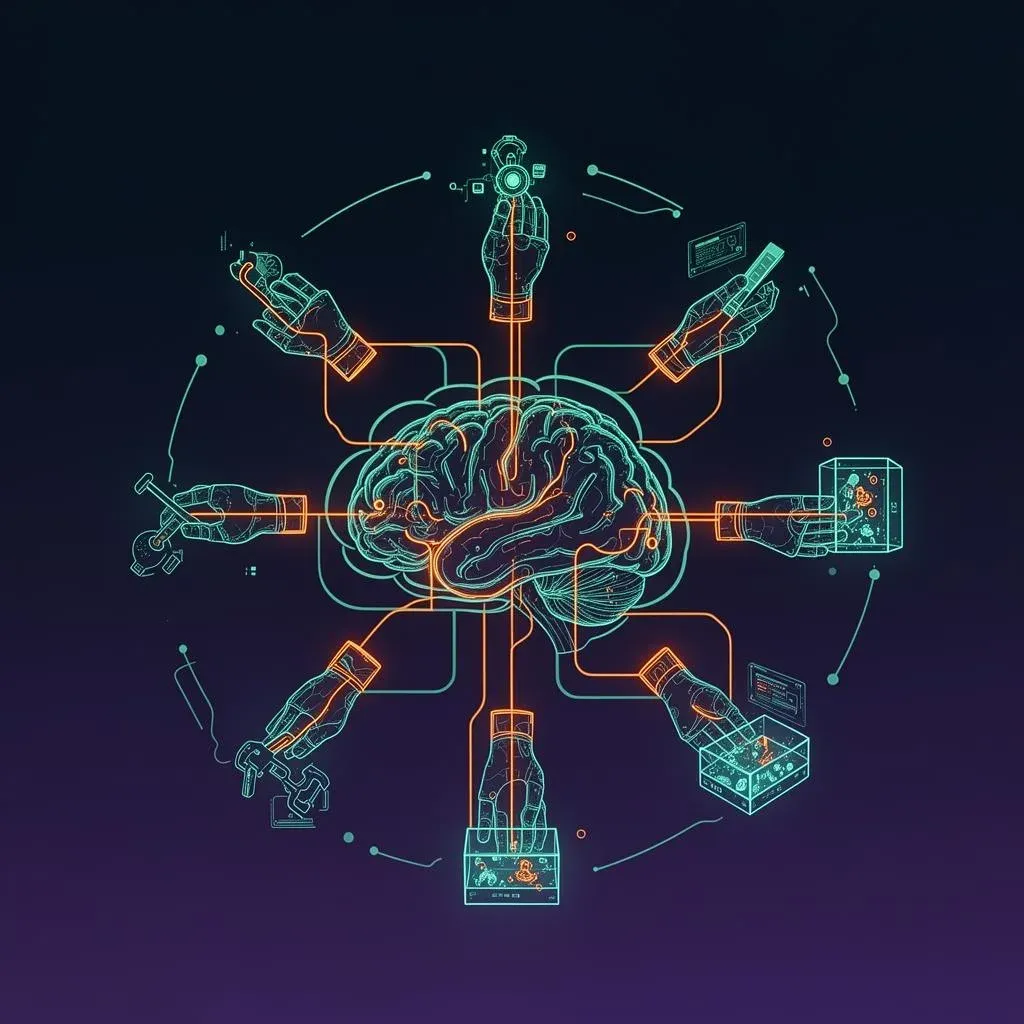
Claude Managed Agents: Anthropic's Play to Own the Agent Runtime
Anthropic launches Managed Agents in public beta – a hosted runtime that decouples the 'brain' from the 'hands.' No more…
Read more Deep Dive
Copilot vs. OpenClaw vs. Claude: Enterprise AI Agents Compared 2026
Three philosophies, one goal: AI agents in the enterprise. Microsoft Copilot (platform), OpenClaw (open source), Claude …
Read more
Ponytail: The Best Code Is the Code You Never Wrote
A dev built Ponytail because his AI agents wrote 500 lines for a 5-line problem. The result: 80-94% less code, 47-77% ch…
Read more
Agent Swarm Architectures Compared: Kimi K2.5 vs. Airtable HyperAgent vs. CrewAI
Three fundamentally different approaches to multi-agent AI: model-native swarms, platform orchestration, and developer f…
Read more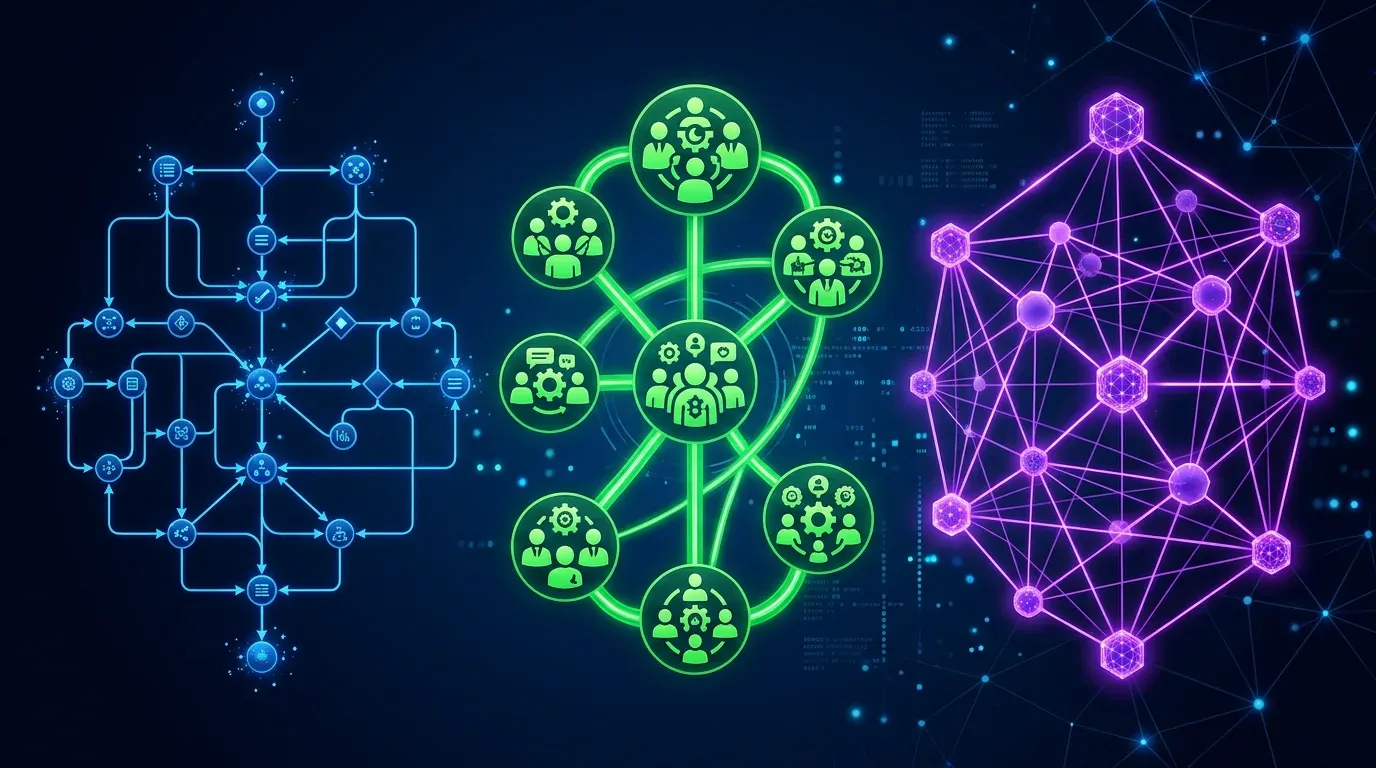
LangGraph vs. CrewAI vs. AutoGen: Which Multi-Agent Framework in 2026?
Three frameworks, three philosophies: LangGraph gives you state machines, CrewAI gives you teams, AutoGen gives you conv…
Read more
Multi-Agent Layer 2026: AG2, LangGraph, SuperAGI & AWS Strands Compared
When one agent isn't enough: AG2, LangGraph, SuperAGI and AWS Strands compared. Which multi-agent stack fits which workf…
Read more
monday.com MCP: All Available Tools and Integrations Overview
monday.com offers two powerful MCP servers – Platform MCP and Apps MCP – plus native integrations for Claude, Cursor, Ch…
Read more
Death by Clawd: Can a .md File Replace Your SaaS?
deathbyclawd.com scans SaaS products and rates whether they can be replaced by a Claude Skill. Satirical, brutally hones…
Read more
Make vs. Claude Code vs. OpenClaw – Picking the Right Orchestration Layer (2026)
Make.com, Claude Code, or OpenClaw? Three tools, three layers of the stack. Here's when to pick which orchestration tool…
Read more