Claude Managed Agents: Anthropic's Play to Own the Agent Runtime

TL;DR: „Claude Managed Agents is Anthropic's hosted agent runtime – define tasks, tools, and guardrails, they handle infrastructure. Public beta since April 2026. Notion, Sentry, and Rakuten are already building with it."
— Till FreitagThe Agent Infrastructure Problem
Every team building production AI agents hits the same wall: the agent logic is 20% of the work. The other 80% is infrastructure.
State management. Sandbox isolation. Context engineering for long-running sessions. Security boundaries between generated code and credentials. Recovering from crashes mid-task. Scaling from one agent to many.
Anthropic just shipped their answer: Claude Managed Agents, now in public beta on the Claude Platform.
What Managed Agents Actually Is
At its core, Managed Agents is a hosted agent runtime. You define what your agent should do – its tasks, tools, guardrails, and system prompt – and Anthropic handles everything else: the agent loop, tool execution, sandbox management, state persistence, and scaling.
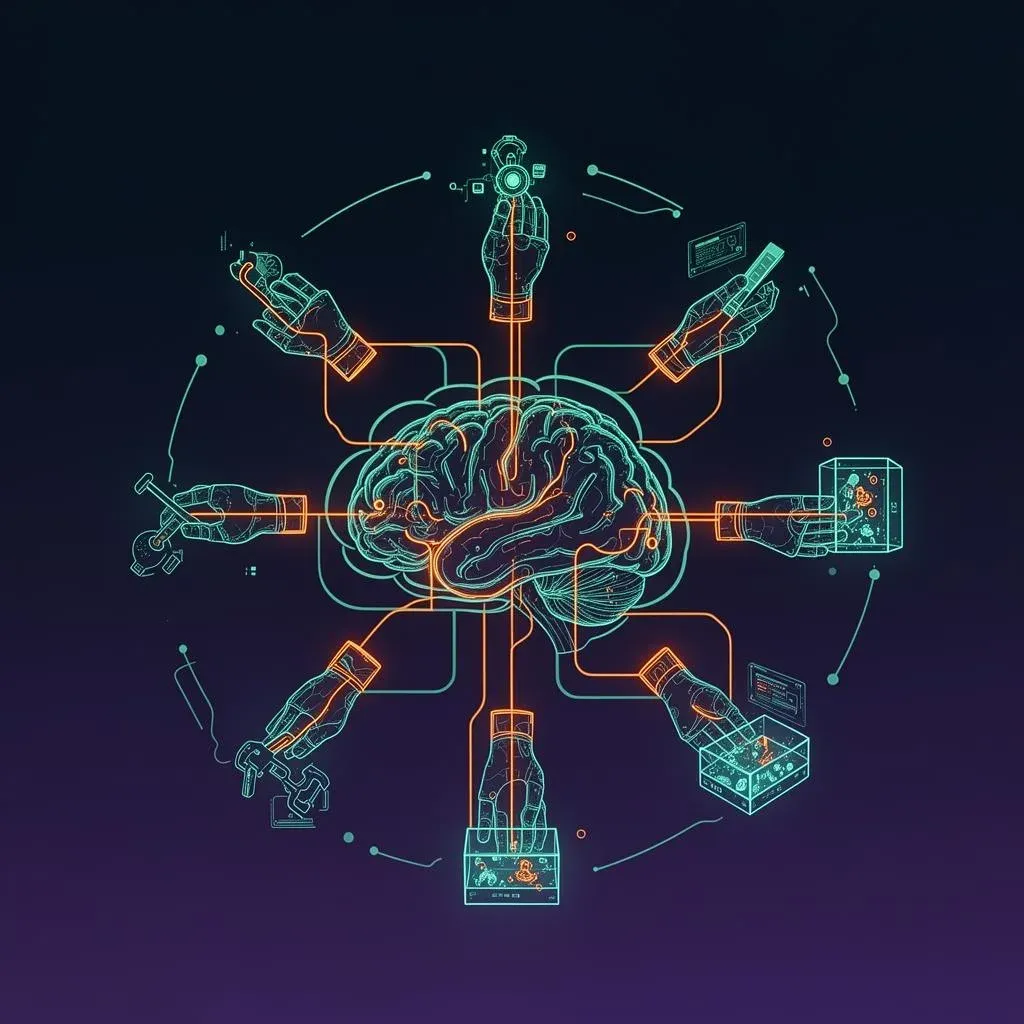
The key architectural insight, detailed in their engineering blog, is the decoupling of "brain" from "hands":
| Component | What It Does |
|---|---|
| Agent | Model, system prompt, tools, MCP servers, skills |
| Environment | Configured container template (packages, network access) |
| Session | Running agent instance with persistent state and event log |
| Events | Messages between your application and the agent |
This separation means each component can fail, scale, or be replaced independently. The brain (Claude + harness) doesn't live inside the sandbox container. If a container dies, the harness catches it as a tool-call error and spins up a new one. If the harness itself crashes, a new one picks up from the session log.
Why This Matters: The Harness Problem
Here's the insight that makes Managed Agents strategically important:
Harnesses encode assumptions that go stale as models improve.
Anthropic discovered this firsthand. Claude Sonnet 4.5 had "context anxiety" – it would wrap up tasks prematurely near its context limit. They built harness workarounds (context resets). When Claude Opus 4.5 arrived, the behavior was gone. The workarounds became dead weight.
Managed Agents is designed as a meta-harness – opinionated about interfaces, not about the specific harness implementation. As models get smarter, the harness can change without breaking your integration.
The Technical Architecture
Brain ↔ Hands Decoupling
In the old design, everything lived in one container – a "pet" that had to be nursed back to health when things broke. The new architecture treats containers as cattle:
execute(name, input) → stringEvery tool – whether it's a container sandbox, an MCP server, or a phone – implements this interface. The harness doesn't know or care what's on the other end.
Result: P50 time-to-first-token dropped ~60%. P95 dropped over 90%.
Security Model
Generated code runs in sandboxes that never have access to credentials. Two patterns:
- Git tokens are injected during container init and wired into local git remotes – the agent never handles tokens directly
- MCP/OAuth tokens live in a secure vault. A proxy fetches credentials and makes calls on the agent's behalf
This is structurally different from "just scope the token narrowly" – it eliminates the attack surface entirely.
Session as External Context
The session log lives outside Claude's context window, serving as durable, queryable context storage. The harness can interrogate it via getEvents() – rewinding, slicing, or transforming events before passing them to Claude. Context engineering happens in the harness layer, while the session guarantees nothing is permanently lost.
Built-in Tools
Managed Agents ships with:
- Bash – Shell commands in the container
- File operations – Read, write, edit, glob, grep
- Web search & fetch – Search the web, retrieve URLs
- MCP servers – Connect any external tool provider
Plus research preview features: outcomes (defining success criteria), multi-agent orchestration, and memory (learning across sessions).
Who's Already Using It
Teams at Notion, Sentry, Rakuten, and vibecode.dev are building with Managed Agents. The beta header (managed-agents-2026-04-01) is required but access is enabled by default for all API accounts.
Our Take: What This Means for the Market
1. Anthropic Is Building the Agent OS
The engineering blog explicitly draws the analogy to operating systems: "How to design a system for programs as yet unthought of." They're virtualizing agent components the way Unix virtualized hardware into process and file. The abstractions are meant to outlast any specific model or harness.
This isn't just an API product. It's a platform play.
2. The "Many Brains, Many Hands" Architecture
The ability to connect multiple brains to multiple hands – and pass hands between brains – is the foundation for multi-agent systems at scale. One agent decomposes a feature, spawns sub-agents for each task, each gets their own sandbox. This maps directly to the Agentic Dev Platforms (ADPs) layer in our taxonomy.
3. The Dependency Moat Deepens
We've written about Anthropic's strategy of building a dependency moat rather than a fee moat. Managed Agents is the next logical step: once your agent infrastructure runs on Claude's runtime, switching costs become significant. Not through lock-in fees, but through the sheer convenience of not having to rebuild your agent loop, sandbox isolation, and state management.
4. Impact on Existing Agent Frameworks
Tools like LangGraph, CrewAI, and AutoGen provide the orchestration layer that Managed Agents now handles natively. The question for these frameworks: what value do you add on top of a runtime that already handles the hard parts?
The answer might be "multi-model support" – the ability to orchestrate agents across Claude, GPT, and Gemini. But if your agents are Claude-only (which, for good reasons, many are), Managed Agents removes a lot of middleware.
How to Get Started
# Install the SDK
pip install anthropic

# Create an agent
curl -X POST https://api.anthropic.com/v1/agents \
  -H "x-api-key: $ANTHROPIC_API_KEY" \
  -H "anthropic-beta: managed-agents-2026-04-01" \
  -d '{
    "name": "my-agent",
    "model": "claude-sonnet-4-5-20260514",
    "system": "You are a helpful coding assistant.",
    "tools": [{"type": "bash"}, {"type": "file_editor"}]
  }'
Full docs: platform.claude.com/docs/en/managed-agents
Bottom Line
Shipping a production agent used to mean months of infrastructure work. Managed Agents compresses that to days. The architecture is sound – the brain/hands decoupling solves real problems we've seen in every agent deployment.
The strategic question isn't whether Managed Agents is good (it is). It's whether you want your agent infrastructure to be Anthropic-native. For teams already committed to Claude – and we think Claude is the right choice for agentic work – this is a no-brainer.
For everyone else: watch this space. The agent runtime war just started.
Building AI agents and need help choosing the right architecture? Let's talk →
Related Articles
Claude Managed Agents vs. LangGraph vs. CrewAI: Agent Runtimes for Production Compared
Three paths to production agents: Anthropic's hosted runtime, LangGraph's graph orchestration, or CrewAI's role-based te…
Read more
Agent Skills Are Becoming an Industry Standard: What Teams Need to Know
Agent Skills are reusable capabilities for AI agents – and they're becoming the new standard. What sets them apart from …
Read more
\"Claude Code Killed OpenClaw\" – Why This Comparison Is Complete Nonsense
On LinkedIn you increasingly read: \"Claude Code killed OpenClaw.\" That's like comparing apples with interstellar space…
Read more
Claude Opus 4.7 Is Here: What Premium Teams Need to Know About the Tokenizer, xhigh, and Spend Controls
Anthropic just released Claude Opus 4.7. Same price as 4.6, but noticeably better at coding, agents, and visual output. …
Read more
monday.com MCP: All Available Tools and Integrations Overview
monday.com offers two powerful MCP servers – Platform MCP and Apps MCP – plus native integrations for Claude, Cursor, Ch…
Read more Deep Dive
Copilot vs. OpenClaw vs. Claude: Enterprise AI Agents Compared 2026
Three philosophies, one goal: AI agents in the enterprise. Microsoft Copilot (platform), OpenClaw (open source), Claude …
Read more
Copilot Cowork: Microsoft Bets on Claude – and What It Means for OpenAI
Microsoft launches Copilot Cowork – powered by Anthropic's Claude. 400M+ users get an autonomous agent for emails, calen…
Read more
Why We Switched from ChatGPT to Claude – and What We Learned About LLMs Along the Way
We worked with ChatGPT for 18 months – then switched to Claude. Here's our honest comparison of all major LLMs and why C…
Read more
Ponytail: The Best Code Is the Code You Never Wrote
A dev built Ponytail because his AI agents wrote 500 lines for a 5-line problem. The result: 80-94% less code, 47-77% ch…
Read more