
AI Token Economics: The New Oil – And Why Your CFO Needs to Get It

TL;DR: „Tokens are getting cheaper – yet spending is exploding. That's not a bug, it's Jevons Paradox. Understanding token economics leads to smarter build-vs-buy decisions."
— Till FreitagForget Bitcoin. The Real Currency of AI Is Called a Token.
There's a tiny unit of value sitting at the centre of the most expensive infrastructure race in human history. It's not on a blockchain. It's not in any portfolio. It's called a token – and once you understand it, AI finally makes sense.
The $600 billion in data centres. The satellites in orbit. The chips that cost more than sports cars. It all comes down to tokens.
What Is a Token?
A token is the smallest unit of thought for an AI. Not quite a word, not quite a letter – somewhere in between.
- 750 words ≈ 1,000 tokens
- A quick chat with Claude = a few hundred tokens
- An AI agent running overnight = millions of tokens
Every single token costs real money to produce. Behind each one: specialised chips costing $25,000–$400,000 each. Thousands of them. In buildings that cost billions to construct.
The Biggest Price Drop in Technology History
| Year | Price per 1M Tokens |
|---|---|
| 2022 | $20.00 |
| Late 2024 | $0.07 |
| 2026 | < $0.02 |
280x cheaper in under two years. Solar panels took 40 years for a comparable drop. AI did it in two.
So companies must be spending less on AI now, right?
Wrong.
Jevons Paradox: Cheaper = More, Not Less
Enterprise AI spending in 2024: $11.5 billion. In 2025: $37 billion. That's a 320% increase – while prices were collapsing.
- Average company: $85,000/month on AI
- 45% of companies spend over $100,000/month – that figure doubled in one year
This isn't an anomaly. It's an economic law that's been known since 1865.
The Steam Engine Parallel
When the steam engine made coal more efficient, the assumption was simple: less consumption. Reality: coal consumption exploded. Because cheaper energy unlocked new factories, new machines, entirely new industries.
That's exactly what's happening with AI tokens. Every price drop makes ten new use cases economically viable:
- Contracts that would never have been AI-reviewed
- Research that would never have been funded
- Products that would never have been built
- Automation projects that would never have cleared the business case
We're watching the Industrial Revolution – for intelligence.
AI Agents: Pouring Petrol on the Fire
Normal AI chat uses a few hundred tokens. AI agents are a fundamentally different category.
An agent doesn't just respond. It thinks, acts, checks the result, rethinks, and acts again – in loops, for hours, sometimes overnight.
| Use Case | Token Consumption |
|---|---|
| Normal chat | 200–500 tokens |
| Coding agent (one bug) | 50,000–500,000 tokens |
| Research & build task | 1–5 million tokens |
Agents consume 10–100x more tokens than a normal conversation. And they're going mainstream fast. This is why infrastructure spending is exploding – not the chatbot on your website.
The Infrastructure Arms Race in Numbers
| Year | Hyperscaler AI Infrastructure |
|---|---|
| 2024 | $260B |
| 2025 | $450B |
| 2026 | $600B+ |
| 2027 (projected) | $1.15 trillion |
These aren't PowerPoint fantasies. These are real buildings, real chips, real capital deployed:
- Elon Musk: ~$18B for three buildings in Memphis, 500,000 chips
- Stargate project (OpenAI + SoftBank + Oracle): $500B over four years
- SpaceX: Filed for 1 million computing satellites in orbit – data centres in space, solar-powered, cooled by the coldness of space
The Inflection Point: Inference > Training
For the first time ever in 2026, running AI costs more than building it.
- Inference (generating responses) = 55% of all AI cloud spending
- Projected to reach 70–80% by 2030
- The factory is built. Now it's running at full capacity.
The industry has shifted from "creating intelligence" to "delivering intelligence at massive scale." This tipping point changes everything – from pricing models to build-vs-buy decisions.
What This Means for Your Business
This is where it gets practical – and where good advisory separates from PowerPoint consulting:
1. Not Every Task Needs the Most Expensive Model
Validating a form? A mini model can do it for 0.001 cents. Analysing a contract? You need Claude Opus. Model routing is the new skill.
2. Agent Costs Scale Exponentially
Deploy an AI agent without actively tracking what it consumes, and you'll wake up to a five-figure bill. Token monitoring isn't optional – it's mandatory.
3. Per-Seat Pricing Is Dying
monday.com is leading the way with AI credits: usage-based billing is replacing fixed license fees. By 2028, seat-based pricing for AI-enabled workflows will be obsolete.
4. Build vs. Buy Becomes a Token Question
When you know what a token costs and how many your use case consumes, you can decide in 10 minutes whether to build or buy. Without token understanding, every AI strategy is guesswork.
The Bottom Line
Token prices keep falling. Demand keeps exploding – just like coal in the 19th century. Agents multiply that demand by 10–100x. And infrastructure investment is responding at a scale the world has never seen.
The Industrial Revolution lasted over 150 years. We're two years into the AI version.
Follow the tokens. Everything else follows from there.
🧮 Want to crunch the numbers yourself? Our AI Token Calculator shows you what you get for your budget across OpenAI, Anthropic, Google & more – free, no signup required.
📋 Which model for which task? The Model Routing Guide shows how smart routing saves 80% of AI costs.
Want to understand what token economics means for your specific setup? Talk to us – we'll run the numbers with you. No PowerPoint required.
Related Articles
Europe's Compute Crunch: Why There's Barely Any Capacity Left in 2026
B200 clusters with months of lead time, sold-out EU regions, hyperscalers openly talking 'capacity constraints': Europe …
Read more
The History of AI, Part 4: AI Becomes Infrastructure (2024–2025)
From chatbots to agents, from text to multimodal: How AI became the infrastructure of the working world in 2024 and 2025…
Read more
Microsoft Scout Runs on OpenClaw – Not „OpenClaw-like", It Is the Gateway
Microsoft just showed off a new Copilot agent called Scout at Build. The tech bubble calls it „OpenClaw-like" – in reali…
Read more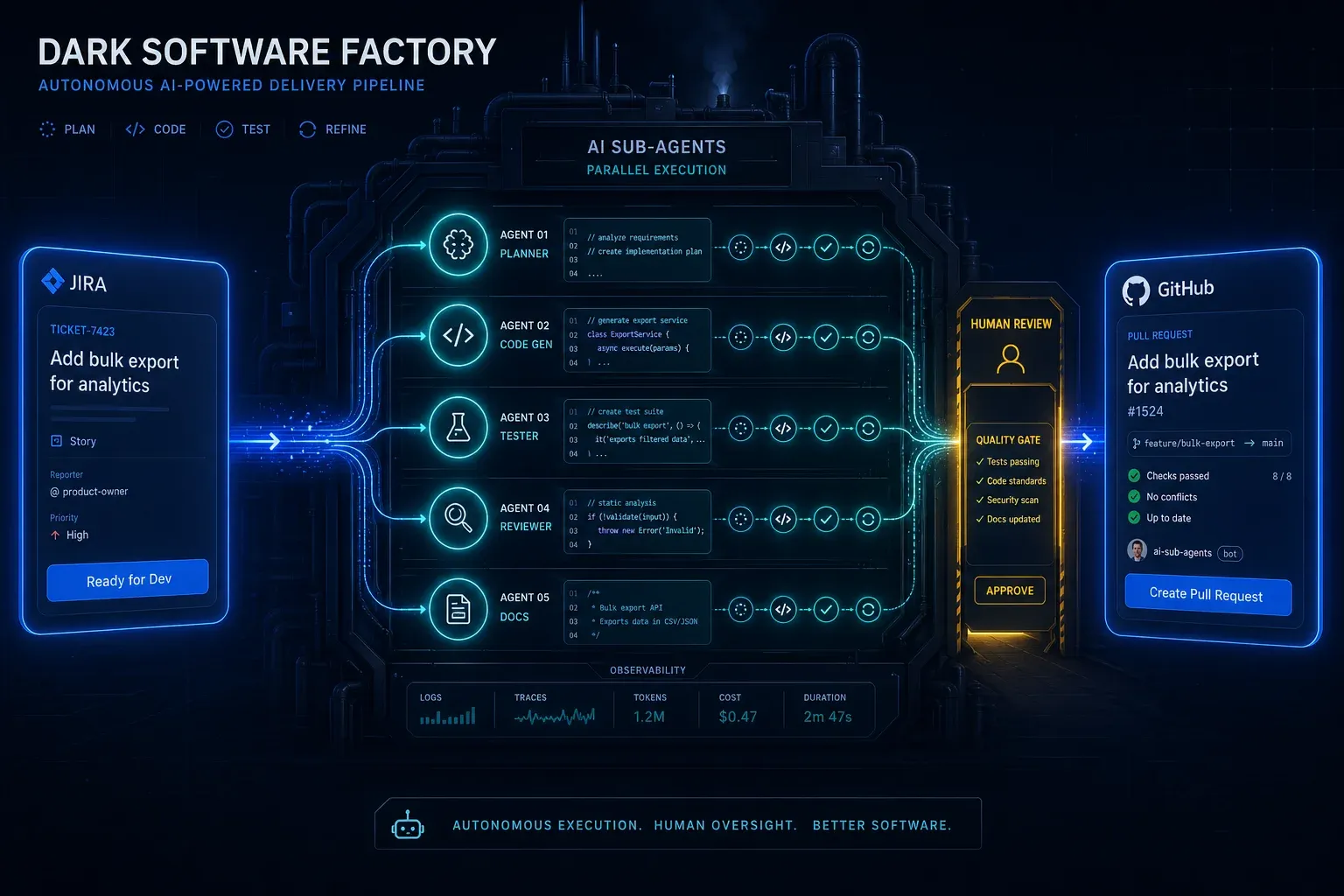
AI Agentic First at Groupon: What Ales Drabek's Dark Software Factory Teaches Us
Ales Drabek, CTIO at Groupon, runs two patterns in production: Dark Software Factory and Speedboats. What that reveals a…
Read more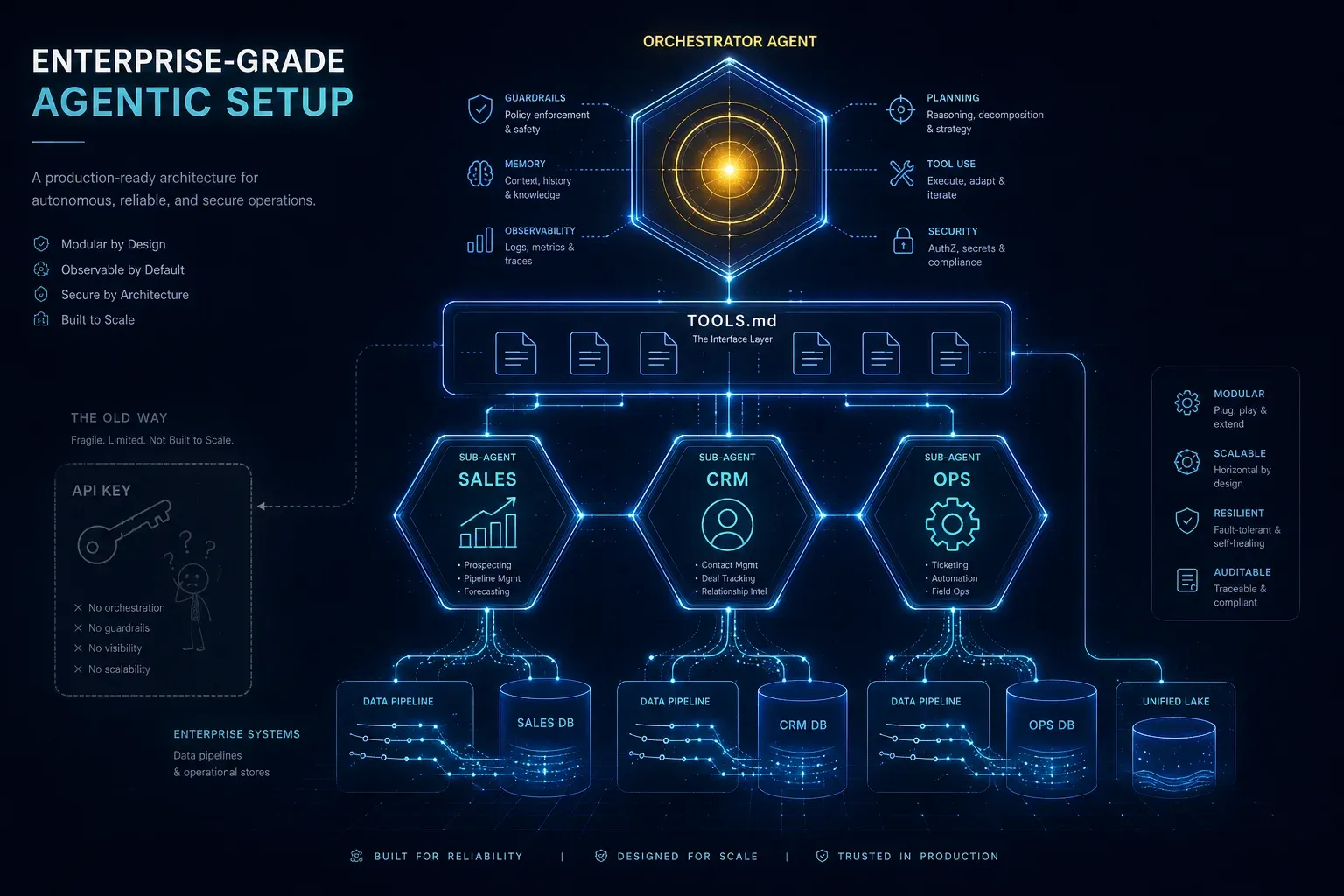
Enterprise-Grade Agentic Setup: Why an API Key Is Not an AI Strategy
An API key on your website is child's play. An agentic setup with specialised sub-agents, TOOLS.md, clean system prompts…
Read more Deep Dive
Copilot vs. OpenClaw vs. Claude: Enterprise AI Agents Compared 2026
Three philosophies, one goal: AI agents in the enterprise. Microsoft Copilot (platform), OpenClaw (open source), Claude …
Read more Deep Dive
Is SaaS Dead? monday.com CEO on Vibe Coding, Agents and the Future of Enterprise Software
monday.com is under massive pressure – stock down 60% from IPO, Vibe Coding as a threat, AI agents as disruption. CEO Er…
Read more
Perplexity Computer: 19 AI Models, One System – The End of Single-Model Thinking
Perplexity just launched Computer – a multi-model agent that orchestrates 19 AI models to complete complex workflows aut…
Read more
Copilot Cowork: Microsoft Bets on Claude – and What It Means for OpenAI
Microsoft launches Copilot Cowork – powered by Anthropic's Claude. 400M+ users get an autonomous agent for emails, calen…
Read more