
Digital Transformation: The Complete Guide for Businesses 2026

TL;DR: „Digital transformation isn't an IT project – it's a cultural shift with technology as the enabler."
— Till FreitagWhat Does Digital Transformation Really Mean?
Digital transformation is more than just adopting tools. It's about fundamentally changing business processes, company culture, and customer experiences – with digital technology as the enabler.
According to studies, 70% of digitalization projects fail – usually not because of the technology, but due to a lack of strategy and insufficient change management. And in 2026, a new factor comes into play: those who miss the AI shift fall behind even faster.
The 5 Pillars of Successful Digitalization
1. Digitize and Automate Processes
Replace paper-based and manual workflows with digital ones. Quick win: Start with the processes that consume the most time. AI-powered automation can now fully handle repetitive tasks like data entry, classification, and routing.
2. Use Data Instead of Just Collecting It
Data-driven decisions instead of gut feeling. Dashboards and reporting tools make data accessible to everyone on the team. In 2026, successful companies go further: AI copilots analyze trends and deliver proactive recommendations.
3. Empower Your People
Training, change management, and a culture of innovation. The most important pillar – because technology without adoption is worthless. A key focus in 2026 is AI literacy: teams need to learn how to use AI tools productively, rather than fearing them.
4. Optimize the Customer Experience
Identify and improve digital touchpoints along the customer journey. From the first inquiry to after-sales support. AI-driven personalization and chatbots are setting new standards for response times and service quality.
5. Build the Right Technology Stack
Select the right tools, integrate them, and continuously optimize. Less is more – 5 well-integrated tools beat 20 isolated ones. Look for native AI features and open APIs for seamless integration.
Common Pitfalls and How to Avoid Them
| Pitfall | Solution |
|---|---|
| No clear strategy | Define goals and processes before selecting tools |
| Tool overload | Consolidate instead of buying more tools |
| Team resistance | Involve early, explain the value |
| No executive sponsorship | Get leadership on board from day one |
| Big bang instead of iteration | Start with small pilots, then scale |
| AI hype without substance | Identify concrete use cases first, then evaluate tools |
Our Proven 4-Phase Approach
- Analysis – Where are you today? Process audit and maturity assessment
- Strategy – Where do you want to go? Roadmap with prioritized initiatives
- Implementation – Execute step by step, test, iterate
- Optimization – Continuous monitoring and improvement
Digitalization isn't a project with a deadline – it's a continuous journey. The best time to start is now.
Conclusion
Successful digital transformation requires strategy, the right tools, and above all people who are on board. Start small, iterate fast, and never lose sight of the big picture. In 2026, that also means leveraging AI as a strategic enabler – not as an end in itself, but as a driver for real productivity gains.
Related Articles
Technology Isn't the Problem Anymore. Adoption Is.
Most digital transformations fail not because of bad tools – but because nobody uses them. Why change management matters…
Read more
OpenClaw Audit 2026: What's Left of All Those Promises?
OpenClaw was the hot new thing in 2024, a LinkedIn religion in 2025, and supposedly dead in 2026. A sober audit: what he…
Read more
AI Transformation: Roadmap, Change Management & Implementation Phases for Companies
AI Transformation is more than handing out ChatGPT licenses. An honest roadmap with five phases, change management princ…
Read more
Meta Muse Spark: Impressive at Health, Weak at Coding – and a Strategic Problem
Meta's first model from the Superintelligence Labs is here. Muse Spark shines at health benchmarks and multimodal vision…
Read more
The AI Race in 43 Milestones: The Complete OpenAI vs. Anthropic Timeline
From GPT-4o to Project Glasswing: Every acquisition, model launch, and product release from OpenAI and Anthropic on an i…
Read more
Google's $185 Billion Bet: How Gemini 3.1 Pro, Vertex AI, and the Largest Infrastructure Offensive in Tech History Are Reshaping the AI Race
Alphabet is investing up to $185 billion in AI infrastructure – more than the GDP of 140 countries. Gemini 3.1 Pro doubl…
Read more
OpenAI Buys a TV Show. Anthropic Builds the Future of Software. And Google? It's Playing a Different Game Entirely.
OpenAI buys TBPN, a Jony Ive hardware startup, and builds a desktop superapp. Anthropic turns Claude into a Developer OS…
Read more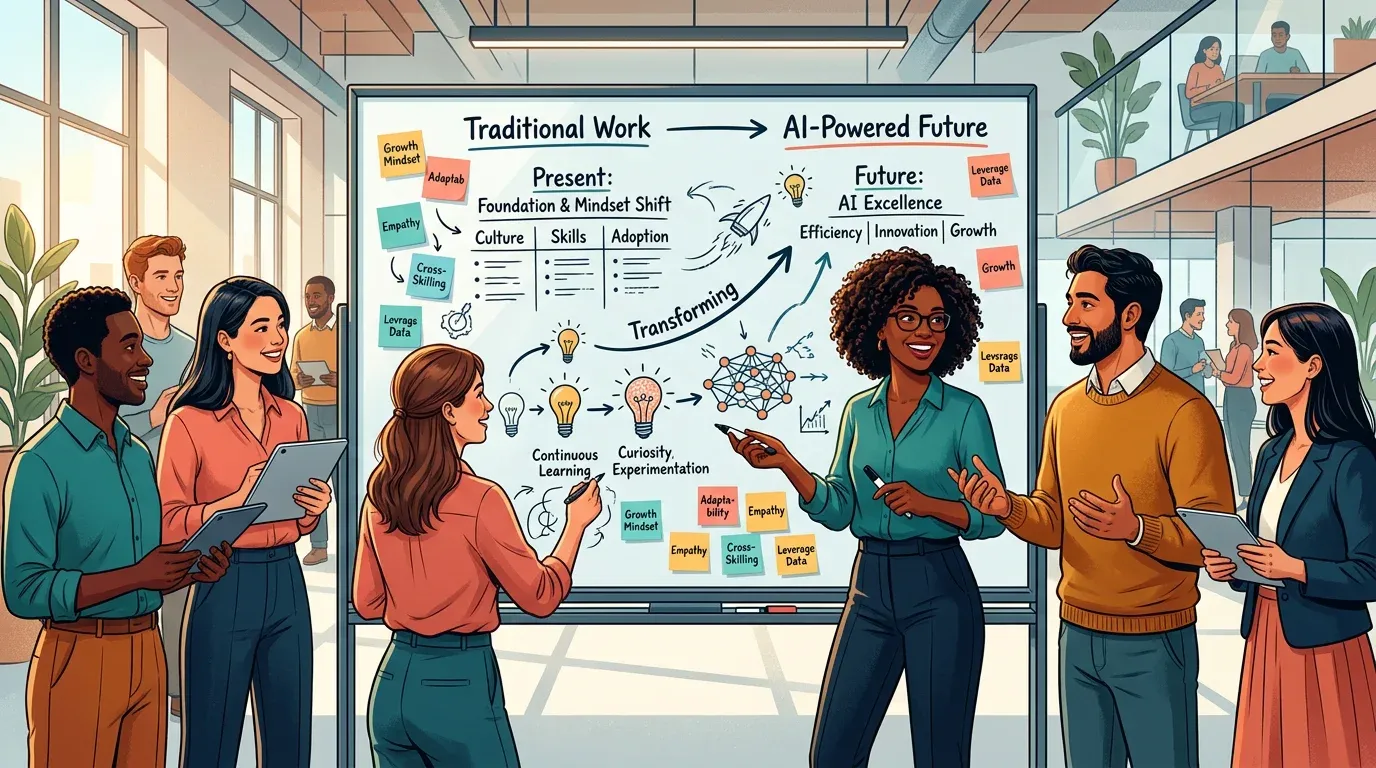
Rethinking Processes – How AI Fundamentally Transforms Your Workflows
AI doesn't just change individual tasks – it transforms entire processes. How to make your workflows ready for Working 2…
Read more
SOP Design: How to Create Standard Operating Procedures and Implement Them in monday.com
SOPs are the backbone of scalable teams. How to create Standard Operating Procedures and keep them alive in monday.com –…
Read more