
Is Local AI Killing the AI-SaaS Startups? An Honest View From the Engine Room

TL;DR: „Local AI doesn't kill every AI-SaaS – but it kills the thin wrappers. Whoever builds privacy-sensitive automation locally today will be better positioned in 24 months than the next 'GPT wrapper for X'."
— Till FreitagWhat This Is About
In our team chat today, a simple question came up: if an open-source tool like Meetily records and summarizes meetings entirely locally – why would I still pay 30 €/user/month for one of the twelve hyped AI-notetaker SaaS tools?
And if it works for notetakers – doesn't it apply to half the AI-startup landscape?
Three things are happening at once:
- Meetily and similar open-source projects aren't perfect yet – but they're good enough for sensitive topics where you can't use the cloud anyway.
- Local LLMs like Qwen3.5 beat the hyperscalers' mini models in benchmarks – and run on a MacBook.
- NVIDIA RTX Spark brings DGX-class inference into notebooks in 2026 – 1,700 tokens/s locally, sub-50ms latency.
Are All the AI Startups Getting Killed?
Short answer: No. But the thin wrappers are.
| Startup type | Risk from Local AI | Why |
|---|---|---|
| GPT wrappers without own data/workflow ("ChatGPT for X") | 🔴 High | The moment local is "good enough", the cloud premium vanishes |
| Vertical SaaS with data + workflow + compliance | 🟡 Medium | Must offer local option or lose regulated industries |
| Infrastructure (vector DBs, gateways, routing) | 🟢 Low | Becomes more important locally |
| Foundation model providers (OpenAI, Anthropic) | 🟡 Medium long-term | Frontier stays cloud, but mid-tier business migrates |
| Layer-2 tools like Cursor, Lovable | 🟢 Low | Model-agnostic, benefit from every leap |
"It'll still take 5 years before local compute is affordable enough at scale." True for the broad market. But for privacy-sensitive use cases, the moment is already now.
Where Local AI Wins Today
Fields where we actively recommend Local-First:
- Meeting notes with confidential content – M&A calls, HR, legal, board meetings. Cloud notetakers are a GDPR grenade here.
- Document analysis with personal data – job applications, patient records, client files.
- Code review on proprietary codebases – when "no source code to third parties" is mandatory.
- Internal knowledge bases – embeddings + retrieval fully on-prem.
- High-volume classification – when the per-employee token bill goes into three figures per day.
More: NVIDIA RTX Spark & Local AI First · Qwen on a laptop · OpenClaw Self-Hosting & GDPR.
Where Cloud Still Wins
Being honest:
- Frontier reasoning (Claude Opus, GPT-5-class) – not even close locally
- Multimodal (image, video, audio in one model)
- Huge context windows (1M+ tokens with real recall quality)
- Scaling peaks – 500 employees querying simultaneously
The answer isn't either/or. The answer is routing: decide per request whether local or cloud. That's exactly why we built the Privacy Router.
How We Position Ourselves
A teammate nailed it in chat: "We could focus on highly privacy-sensitive automation – that's probably where this becomes relevant first."
That's exactly our play:
- Local-AI-First architecture as default recommendation for regulated industries
- Hybrid stacks with clear routing between local and cloud
- Gateway layer (OpenClaw) for permissions, audit, and tool routing
- Own tools built on Lovable / Layer-2 stack – because we know: in 5 years "local" is the default, but today you ship speed only with cloud models
We don't sell "the next AI platform". We build the architecture that still works in 24 months, when half the AI-wrapper startups are in the deadpool.
What Companies Should Do Now
- Data classification first. Which workloads must never leave the machine? Those are Local-AI candidates #1.
- Wrapper diet. Audit every AI-SaaS subscription: does this tool do something open-source + local can't do equally well in 12 months?
- Pilot with a real use case. Meetily for internal strategy meetings. Qwen for document analysis. Start small, measure honestly.
- Architecture, not tool. Set up gateway + router + runtime – don't buy the next favorite SaaS.
Bottom Line
Local AI doesn't kill "the AI startups". It kills the assumption that every AI feature must live in the cloud.
The winners of the next 5 years aren't those with the fattest OpenAI contract. They're those whose architecture lets them deploy any model – local or cloud – at the right moment.
Whoever builds privacy-sensitive automation locally today has no catching up to do in 2028. Whoever buys the twelfth ChatGPT wrapper today has a replacement project in 2027.
Want an honest assessment of where Local AI makes sense for you today – and where it doesn't? Talk to us.
More on this topic: NVIDIA RTX Spark & Local AI First · Qwen on a laptop · OpenClaw Self-Hosting & GDPR · Privacy Router with OpenClaw · What is OpenClaw?
Related Articles

Gemma 4 12B Coder: Local Code Generation Becomes the Default
Google ships the Gemma 4 12B Coder — the specialized coding variant of the Gemma 4 stack. 12B parameters in GGUF format,…
Read more
PewDiePie's Odysseus: The real question isn't AI sovereignty – it's the AI workplace
PewDiePie's open-source project Odysseus hit 30,000 GitHub stars in 48 hours. The more interesting question behind it: w…
Read more
NVIDIA RTX Spark: When the Laptop Becomes the AI Cloud – Local AI First Gets Real
DGX Spark was the prelude, RTX Spark is the rollout. Why NVIDIA's RTX Spark platform flips the cloud-default assumption …
Read more
Gemma 4: Frontier Intelligence Goes Laptop-Sized – The Hype Is Real
Google's Gemma 4 delivers GPT-4 level intelligence in 14 GB. 85 tokens per second on consumer hardware, 256K context, na…
Read more Deep Dive
Open-Source LLMs Compared 2026 – 25+ Models You Should Know
From Llama to Qwen to Gemma 4: all major open-source LLMs at a glance – with GitHub stars, parameters, licenses, and cle…
Read more Deep Dive
The Best OpenClaw Alternatives 2026 – from NanoClaw to NullClaw
OpenClaw has 200,000+ GitHub stars – but not everyone needs 430,000 lines of code. We compare 22 alternatives in mid-202…
Read more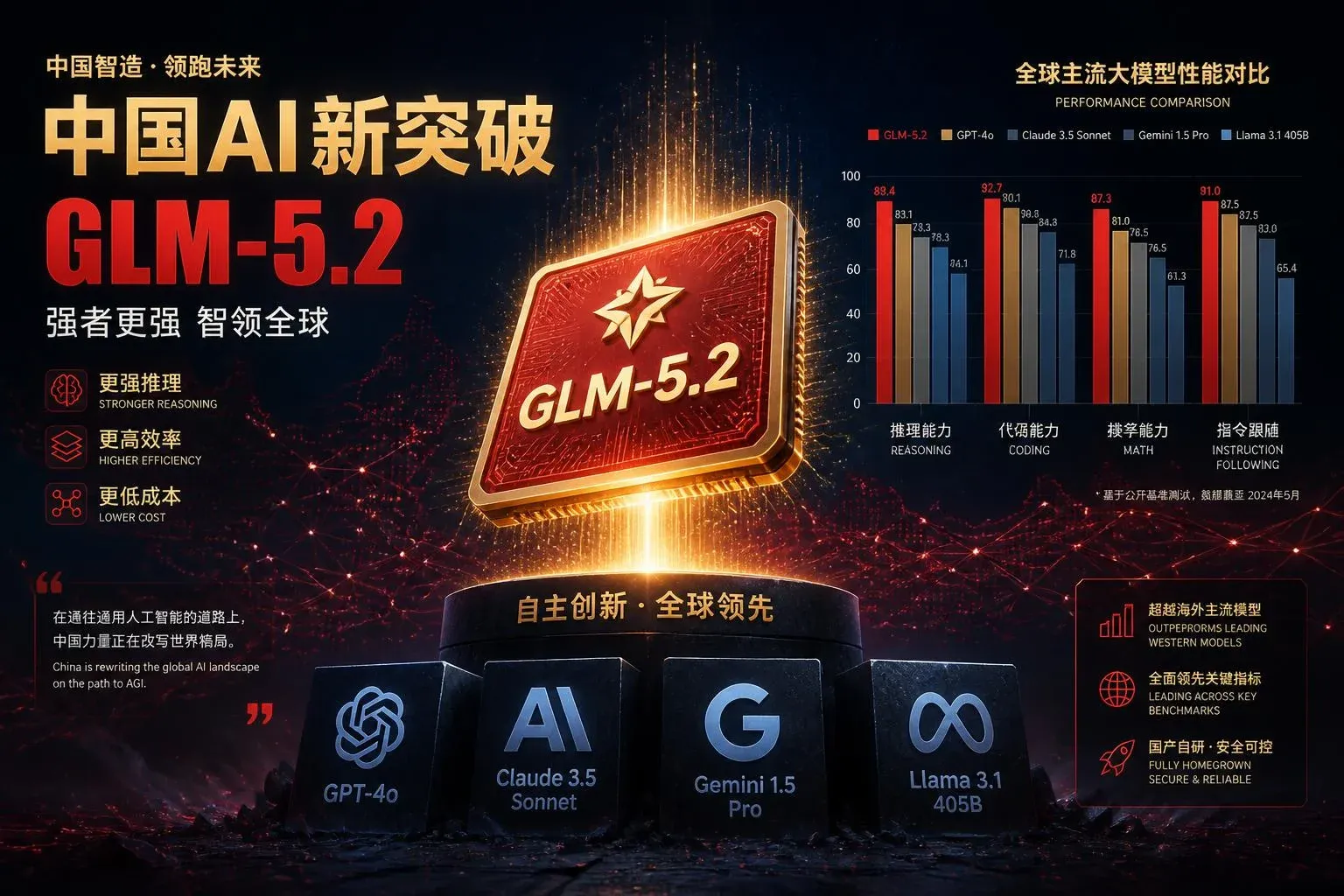
Z.ai GLM-5.2 – why the next frontier leap comes from China
Z.ai ships GLM-5.2 – more than doubling GLM-5.1, close to Claude Fable 5, cheaper, deployable on-prem. While US frontier…
Read more
Sakana Fugu: Orchestrator, Not Monolith
Sakana AI ships Fugu – not another foundation model, but an orchestrator that routes prompts across specialised LLMs. Th…
Read more
SearXNG: The Underrated Search Infrastructure for Agents
31.8k stars, AGPL-3.0, one self-hosted endpoint instead of the next commercial search API. Why SearXNG keeps showing up …
Read more