PewDiePie's Odysseus: The real question isn't AI sovereignty – it's the AI workplace

TL;DR: „Odysseus collected 30,000 GitHub stars in 48h. Local models (Ollama, llama.cpp, vLLM) or external APIs (OpenAI, OpenRouter) – all via a self-hosted surface. The interesting question isn't the model, it's where your teams work with AI every day."
— Till FreitagTL;DR
🚀 The open-source project Odysseus collected over 30,000 GitHub stars within days. Initiator: PewDiePie (Felix Kjellberg), 100 million subscribers, launched with "The war on big tech has just begun".
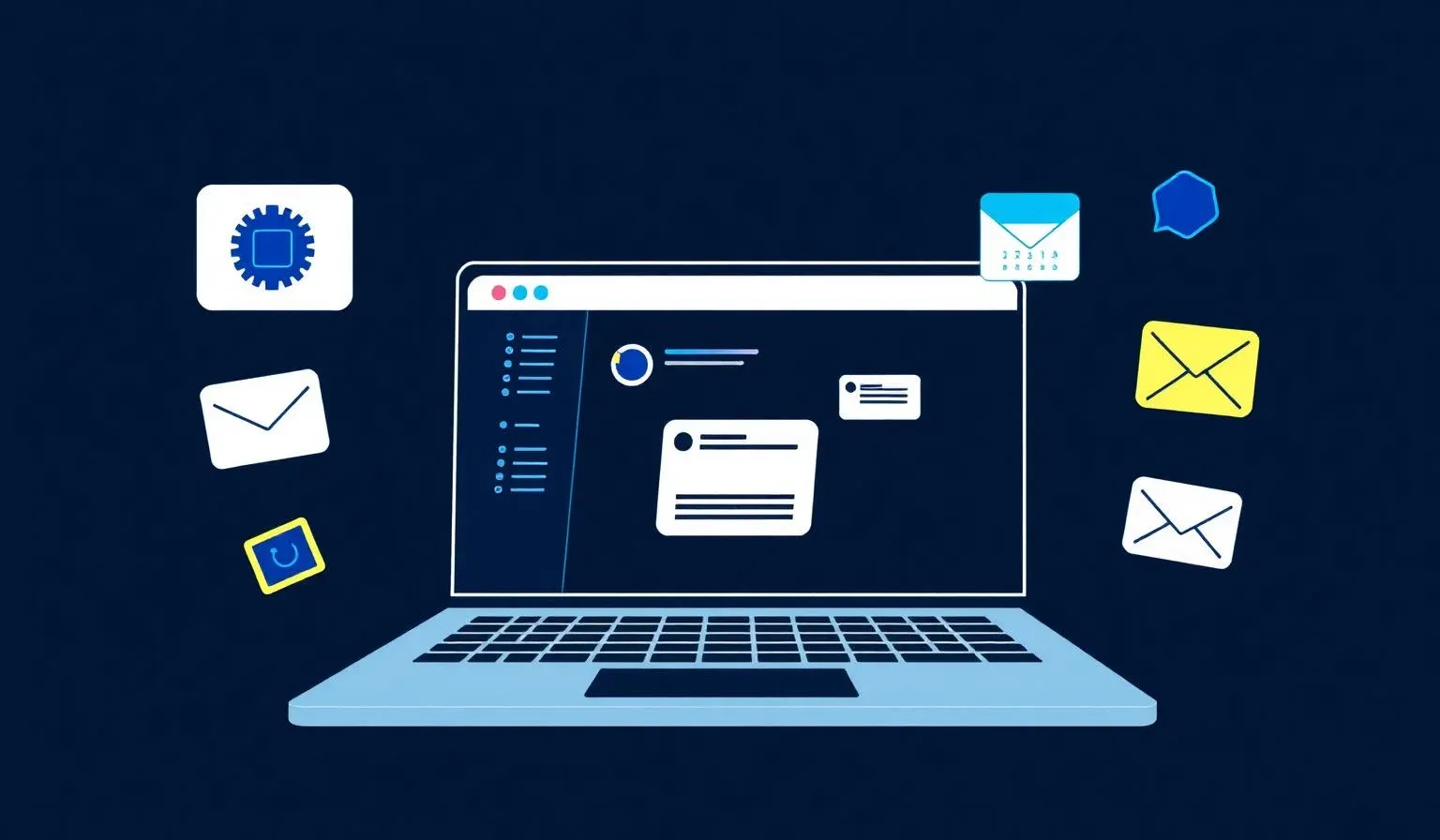
Odysseus is a self-hostable AI workspace with chat, agents, documents, email and calendar integration. Local models run via Ollama, llama.cpp or vLLM, external models via OpenAI or OpenRouter.
From our point of view, the project highlights a trend that the current debate keeps missing.
The AI sovereignty debate stops too early
Right now everyone is arguing about the model question: OpenAI, Anthropic, Gemini, Qwen, OpenRouter – or sovereign via providers like Mittwald AI Hosting?
Important, yes. But it skips the question that matters far more in daily work:
Where exactly is the AI workplace of your employees?
That is, the surface where people chat, research, store knowledge and work with AI. That's where lock-in, data leakage and shadow IT actually happen – not in the model layer.
What Odysseus shows
Odysseus is not a new AI model and not a chatbot. It's a surface that bundles several things:
- Multi-model: local (Ollama, llama.cpp, vLLM) or remote (OpenAI, OpenRouter)
- Autonomous agents based on opencode
- MCP support for tools and data sources
- Cookbook: scans your hardware, recommends from 270+ models
- Deep Research and memory powered by ChromaDB
- MIT licensed, self-hostable, email and calendar integration
The privacy promise only holds as long as users stick to local models. Anyone calling OpenAI through Odysseus has the same data flows as before – just behind a different UI.
Why this is strategic
We see three typical states with our clients:
- Shadow ChatGPT: everyone uses their personal account, data ends up uncontrolled in foreign models.
- Enterprise license without a plan: Copilot or Enterprise ChatGPT bought, but no knowledge, no agents, no workflows connected.
- Own surface: one workspace where model, prompt, tools and knowledge stay under your control.
Odysseus pushes the conversation toward option 3. Not because PewDiePie's code is enterprise-ready – but because 30,000 stars in 48 hours show how big the demand for a controllable AI surface really is.
What this means for AI-First teams
For our AI-First Builder logic this means:
- Clarify the model question (sovereignty, hosting, region) – but don't treat it as the main axis.
- Make the workspace question explicit: which surface is the default for your teams? Who is allowed to connect what? Where do chats, documents, agent configs live?
- Take MCP as the integration layer seriously – whether it's Odysseus, Claude Desktop, Cursor or a custom frontend.
- Build custom frontends wherever standard tools fall short – e.g. with monday Vibe or Vibe Coding.
What remains
Odysseus is a statement project, not an enterprise product. But it makes a shift visible: in 2026, the most interesting layer of the AI stack isn't the model – it's the surface where humans work with AI.
Anyone leaving that layer to someone else is giving up sovereignty in a very different place than the current debate suggests.
Related Articles

Is Local AI Killing the AI-SaaS Startups? An Honest View From the Engine Room
Meetily takes meeting notes fully locally. Qwen runs on a laptop. RTX Spark hits notebooks in 2026. Are all the AI-wrapp…
Read more
Gemma 4 12B Coder: Local Code Generation Becomes the Default
Google ships the Gemma 4 12B Coder — the specialized coding variant of the Gemma 4 stack. 12B parameters in GGUF format,…
Read more
NVIDIA RTX Spark: When the Laptop Becomes the AI Cloud – Local AI First Gets Real
DGX Spark was the prelude, RTX Spark is the rollout. Why NVIDIA's RTX Spark platform flips the cloud-default assumption …
Read more
Gemma 4: Frontier Intelligence Goes Laptop-Sized – The Hype Is Real
Google's Gemma 4 delivers GPT-4 level intelligence in 14 GB. 85 tokens per second on consumer hardware, 256K context, na…
Read more
Hunter Alpha Unmasked: Not DeepSeek V4, but Xiaomi's MiMo-V2-Pro
Hunter Alpha wasn't DeepSeek V4 – it was Xiaomi's MiMo-V2-Pro. We correct our analysis, explain what happened, and look …
Read more
MCP for Beginners: Everything You Need to Know About the Model Context Protocol
MCP is the open standard connecting AI models to your tools. What it is, how it works, and why there's no way around it …
Read more
Z.ai GLM-5.2 – why the next frontier leap comes from China
Z.ai ships GLM-5.2 – more than doubling GLM-5.1, close to Claude Fable 5, cheaper, deployable on-prem. While US frontier…
Read more
Professional Publishers Sit on the Most Valuable AI Asset – and Are Giving It Away
LLMs handle general knowledge. B2B runs on verified, curated domain expertise – which professional publishers have been …
Read more
Nex-N2-Pro: How the Open-Model Frontier Shrunk 75 % in Six Weeks
Six weeks ago, DeepSeek-V4-Pro with 1.6 trillion parameters was the largest open-weight model ever released. Today, Nex-…
Read more