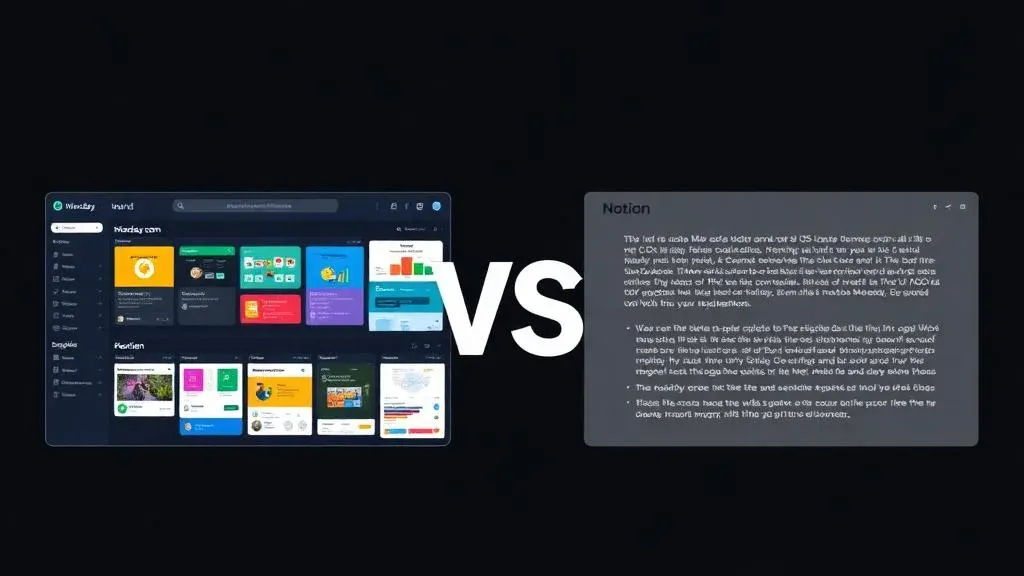
monday.com vs. Notion: Why Notion Isn't a Real Project Management Tool

TL;DR: „Notion is a brilliant wiki disguised as a PM tool. For real project management with automations, dependencies, dashboards, and scalability, monday.com is the clear winner."
— Till FreitagNotion Is Popular – But for What?
Notion has made a name for itself as an all-in-one workspace. Docs, wikis, databases, Kanban boards – all in a beautiful, minimalist interface. For personal notes, knowledge bases, and content planning, Notion is excellent.
But then something happens: a team grows. Projects get complex. Deadlines must be met. Dependencies emerge. And suddenly Notion hits its limits – because it was never built as a project management tool.
The Companies at a Glance
| Metric | monday.com | Notion |
|---|---|---|
| Founded | 2012 | 2013 |
| Headquarters | Tel Aviv, Israel | San Francisco, USA |
| Employees | ~2,200 | ~800 |
| Revenue (2025) | ~$1.2B | ~$600M ARR |
| Customers | 225,000+ | 100M+ users |
| Developers (est.) | ~800 | ~350 |
| Public/Private | NASDAQ (MNDY) | Private |
| Valuation | ~$15B | ~$11B |
| Last Funding | IPO 2021 ($574M) | Series C ($275M, 2021) |
| Market Share (est.) | ~15% (Work Management) | ~8% (Productivity) |
Notion has many users, but most use the tool for free. monday.com is publicly traded and has three times as many paying organizations.
The Fundamental Difference
Notion is a flexible document workspace with database capabilities. monday.com is a Work OS – a platform specifically built to manage work, processes, and teams.
This sounds like marketing speak but shows in daily use:
| Criterion | monday.com | Notion |
|---|---|---|
| Project Planning | ⭐⭐⭐⭐⭐ – Gantt, Timeline, Workload native | ⭐⭐ – Only via workarounds |
| Automations | ⭐⭐⭐⭐⭐ – 200+ no-code recipes | ⭐⭐ – Only via external tools |
| Dependencies | ✅ Native with visual display | ❌ Not available |
| Dashboards & Reporting | ⭐⭐⭐⭐⭐ – Multi-board dashboards | ⭐⭐ – Limited database views |
| Resource Planning | ✅ Workload view | ❌ Not available |
| Integrations | 200+ native + Make/Zapier | 70+ native + Zapier |
| Usability | ⭐⭐⭐⭐⭐ – Productive immediately | ⭐⭐⭐⭐ – Flexible but setup-intensive |
| Wiki & Docs | ⭐⭐⭐ – WorkDocs (solid) | ⭐⭐⭐⭐⭐ – Core competency |
| AI Features | ⭐⭐⭐⭐⭐ – Sidekick, Agents, Vibe Coding | ⭐⭐⭐⭐ – Notion AI (good for text) |
| Enterprise Readiness | ⭐⭐⭐⭐⭐ – SOC 2, HIPAA, Governance | ⭐⭐⭐⭐ – SOC 2 available |
5 Reasons Notion Fails at Project Management
1. No Real Automations
This is the biggest dealbreaker. In monday.com, you build an automation in 2 minutes:
"When status changes to 'Done' → notify manager → move item to archive group → update dashboard"
In Notion? Not possible. You need Zapier, Make, or an API integration – and even then flexibility is limited. For any team with more than 5 people, this is a massive productivity loss.
2. No Dependencies and Timelines
Projects consist of tasks that depend on each other. Task B can only start when Task A is finished. In monday.com, you see this in the Timeline view with visual dependencies – move Task A, and Task B shifts automatically.
Notion has no native dependency feature. You can create relations between databases, but that's no substitute for real dependency management. No automatic shifting, no critical paths, no milestone tracking.
3. No Workload Planning
Who's working on what? Who's overloaded? Who has capacity? monday.com answers this with the Workload view – a visual tool that aggregates effort per person across boards.
In Notion, you have to manually piece together this information. There's no native resource planning, no capacity view, no effort tracking.
4. Dashboards: Reports vs. Database Views
monday.com Dashboards aggregate data from multiple boards into one overview: budgets, timelines, progress, utilization – all at a glance, with 30+ widget types.
Notion offers database views – tables, Kanban, calendar, gallery. This is useful for individual databases, but it lacks the ability to combine data from different sources into a single dashboard. For management reporting, this is insufficient.
5. Scaling: The Notion Trap
Notion works great as long as the team is small and the structure manageable. But as team size grows, this happens:
- Page chaos: Hundreds of nested pages that no one can find
- Performance: Large databases become noticeably slower
- Permissions: Complex permission management across workspace, teamspaces, and pages
- Onboarding: New team members need days to understand the structure
monday.com scales by design: Clear board structure, workspaces for departments, role-based permissions, and a concept that works with 500+ users.
Where Notion Is Better
Honestly – in some areas, Notion is the better choice:
- Knowledge Management: Notion is the best wiki tool on the market. Nested pages, database relations, flexible templates – unbeatable for documentation and knowledge management.
- Content Planning: For editorial calendars and content pipelines, Notion's flexibility is an advantage.
- Personal Productivity: As a personal second brain, Notion is excellent.
- Price for Small Teams: The free tier is more generous than monday.com's.
But…
As soon as it's about operational work – managing projects, coordinating teams, automating processes – Notion lacks the fundamental tools. It's like the difference between a Swiss army knife and a professional workshop.
Price Comparison
| Plan | monday.com | Notion |
|---|---|---|
| Free | Up to 2 users | Unlimited (limited features) |
| Basic/Plus | from €9/user/month | from $10/user/month |
| Standard/Business | from €12/user/month | from $15/user/month |
| Pro/Enterprise | from €16/user/month | On request |
| Enterprise | On request | On request |
Prices are comparable – but the feature set for project management is dramatically larger with monday.com. With Notion, you pay for a better wiki. With monday.com, for a complete Work OS.
The Hybrid Solution: monday.com + Notion
Many teams we advise actually use both tools:
- Notion for wiki, documentation, and knowledge base
- monday.com for project management, automations, and operational management
This works well because the tools have different strengths. They can be connected via Make or Zapier – e.g., when a project is completed in monday.com, a retrospective page is automatically created in Notion.
Who Should Use What?
Notion fits if you…
- Primarily need documentation and knowledge management
- Have a small team (< 10) with simple projects
- Focus on content planning and personal productivity
- Don't have budget for separate tools
monday.com fits if you…
- Need real project management with timelines and dependencies
- Want automations for recurring processes
- Coordinate multiple teams and departments
- Need reporting and dashboards for stakeholders
- Want CRM, development, or support on the same platform
Our Verdict
Notion is a brilliant documentation tool disguised as a project management solution. As long as you're just putting tasks in lists and dragging Kanban boards, it works. As soon as you need real project management – with automations, dependencies, dashboards, and scalability – monday.com is the only sensible choice.
Not because Notion is bad – but because it was built for a different purpose.
Using Notion for project management and hitting its limits? We help you migrate to monday.com – including data migration and team onboarding. Book your free consultation.
Related Articles
monday.com vs. Asana: Which Project Management Tool Fits Your Team?
monday.com and Asana are among the best project management tools – but a direct comparison reveals why monday.com is the…
Read more Deep Dive
The 10 Best Project Management Tools in 2026 Compared
monday.com, Asana, Jira, ClickUp, Notion & more – which PM tool truly fits your team in 2026? The big comparison with AI…
Read more
monday.com vs. Trello: Why Trello Only Works for Simple Projects
Trello is simple and popular – but beyond a certain team size and complexity, it hits clear limits. Why monday.com is th…
Read more
monday.com vs. ClickUp: Why monday Is the Better Work OS
ClickUp markets itself as the 'Everything App' – but in practice, monday.com wins with clarity, scalability, and a real …
Read more Deep Dive
monday Work Management: The Complete Guide 2026
monday Work Management is more than a PM tool – it's a Work OS with 8+ views, AI agents, 200+ automations, and dashboard…
Read moremonday.com vs. Smartsheet – Which Tool Is the Better Fit?
monday.com or Smartsheet? We compare both platforms in 2026 – features, pricing, UX, and which tool actually makes sense…
Read more
monday.com Sidekick 3.0 Is Fully Released: Smarter AI Across the Entire Platform
monday.com rolls out Sidekick 3.0 to all customers – with massively expanded action coverage, cross-platform execution, …
Read more
Account360 & Zero Update CRM: The Future of monday CRM (2026)
Account360 delivers the full customer view, Zero Update CRM eliminates manual data entry. How monday CRM is revolutioniz…
Read more
monday Vibe Apps – Build Custom Mini-Applications Without Code (2026 Guide)
monday Vibe Apps let anyone build custom mini-applications using natural language prompts – no code, directly within mon…
Read more