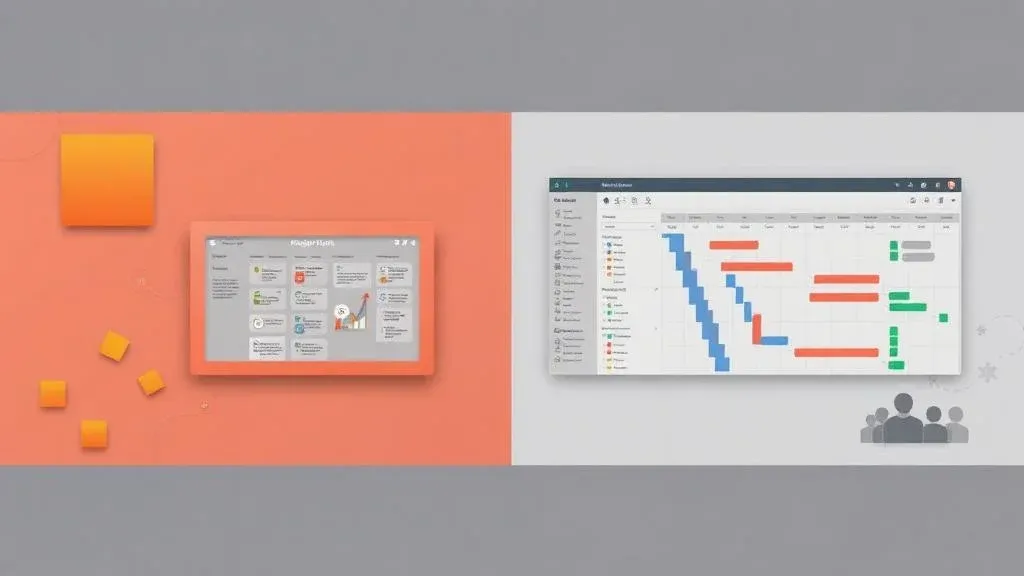
The 10 Best Project Management Tools in 2026 Compared

TL;DR: „monday.com remains our 2026 winner – no longer just a PM tool but a Work OS with native CRM, Dev, and Service. Asana excels in portfolio management, Linear is the dev reference, and ClickUp remains the feature monster with performance questions."
— Till FreitagWhy This Comparison Looks Different in 2026
Project management tools in 2026 are no longer simple task managers. The leading platforms have evolved into Work OS systems: AI assistants write summaries, automations run across departments, and CRM data flows seamlessly into project boards.
We've re-evaluated the 10 most relevant PM tools – based on over 400 client projects, current AI features, and GDPR compliance.
What We Evaluate
- Usability: How quickly are new users productive?
- Automation & AI: No-code automations, AI assistants, agents
- Integrations: Native connections and extensibility
- Scalability: From 5-person team to enterprise
- GDPR: EU hosting, data processing, compliance
- Value for Money: What do you get for your investment?
1. monday.com – Our Winner ⭐
Best for: Teams of any size that need PM, CRM, Dev, and Service on one platform
monday.com has definitively evolved from a PM tool into a Work OS in 2026. With four specialized products (Work Management, CRM, Dev, Service), it covers what other teams need three to four separate tools for.
Strengths:
- 200+ no-code automations – cross-departmental, not just within a single board
- AI Sidekick & Agents – AI writes updates, creates formulas, summarizes boards, and executes workflows autonomously
- Four native products – PM, CRM, Dev, Service on one platform
- 8+ views – Kanban, Gantt, Timeline, Workload, Calendar, Map, Files, Dashboard
- 200+ integrations + open API
- EU hosting available (GDPR compliant)
Weaknesses:
- Can be overkill for very small teams (< 5 people)
- Full feature set only from Pro plan
- Learning curve with complex cross-board automations
Pricing 2026: From €9/user/month (Standard) | Pro from €16/user/month
Our take: The best combination of flexibility, AI power, and ecosystem. No other tool offers PM + CRM + Dev + Service natively on one platform. → Detailed comparison: monday.com vs Asana | monday.com vs ClickUp
2. Asana – Strong in Portfolio Management
Best for: Marketing and Ops teams with complex campaigns and OKR tracking
Asana has leveled up in 2026 with AI Studio and enhanced portfolio features. It remains the reference for teams that need pure project management at a high level – without CRM or Dev.
Strengths:
- Excellent portfolio and workload views
- AI Studio: Smart Fields, automatic status updates
- Clean goal tracking (native OKRs)
- Strong timeline for campaign planning
Weaknesses:
- No CRM, no Dev module, no service management
- Automations weaker than monday.com
- Expensive for full feature set (Business from $24.99/user)
- Primarily US hosting
Pricing 2026: Starter from $10.99/user/month | Advanced from $24.99/user/month
3. Jira – The Dev Standard
Best for: Software development teams with Scrum/Kanban and complex workflows
Jira remains the gold standard for agile development in 2026. With Atlassian Intelligence (AI) and deep integration into Confluence and Bitbucket, it's hard to beat for dev teams.
Strengths:
- Best agile features on the market (sprints, backlogs, velocity)
- 3,000+ marketplace apps
- Atlassian Intelligence: AI-powered issue creation and summaries
- Strong Git integration (Bitbucket, GitHub, GitLab)
Weaknesses:
- Steep learning curve – often frustrating for non-developers
- Dev only – no CRM, no marketing PM
- Admin complexity with large instances
- Pricing model opaque since cloud migration
Pricing 2026: Free (up to 10 users) | Standard from $8.15/user/month
4. ClickUp – Feature Monster
Best for: Teams that want maximum features in one tool
ClickUp continues to market itself as the "Everything App" in 2026. Feature density is impressive – but in practice, the platform struggles with performance issues and a steep learning curve.
Strengths:
- Enormous feature set: Docs, Whiteboards, Goals, Chat, Time Tracking
- Affordable entry price
- ClickUp Brain (AI) for summaries and automations
- Custom Fields and Views in great variety
Weaknesses:
- Performance: Load times noticeable with large workspaces
- Overwhelming for new users (feature overload)
- No specialized CRM or Dev module
- US hosting, GDPR only via DPA
Pricing 2026: Free (limited) | Unlimited from $7/user/month | Business from $12/user/month
5. Notion – Wiki Meets Lightweight PM
Best for: Startups and knowledge workers who want to combine Docs + databases + light PM
Notion has positioned itself in 2026 with Notion Projects and AI as a lightweight PM tool. For teams that primarily document and secondarily track projects, it's ideal.
Strengths:
- Extremely flexible databases with relations
- Notion AI: summaries, drafts, Q&A across workspace
- Excellent documentation and wikis
- Beautiful, minimalist design
Weaknesses:
- Not real PM: No Gantt charts, no workload management, no resource planning
- Automations very limited
- Performance issues with large databases
- No native CRM or Dev functionality
Pricing 2026: Free (limited) | Plus from $10/user/month | Business from $18/user/month
6. Linear – The Dev Reference for Speed
Best for: Dev teams that value speed and design above all else
Linear has established itself in 2026 as the most beautiful and fastest alternative to Jira. Keyboard-first, blazing fast, opinionated – a dream for developers.
Strengths:
- Blazing fast performance (local-first architecture)
- Beautiful, minimalist design
- Cycles, Projects, and Roadmaps for product teams
- AI-powered issue triage and auto-assign
Weaknesses:
- Software development only – no marketing PM, no CRM
- Limited customization options (opinionated by design)
- Limited integrations (no large marketplace ecosystem)
- No EU hosting
Pricing 2026: Free (up to 250 issues) | Standard from $8/user/month | Pro from $14/user/month
7. Smartsheet – For Spreadsheet Teams
Best for: Enterprise teams coming from Excel/Google Sheets who need tabular PM
Smartsheet has strengthened its enterprise position in 2026 with Brandfolder and expanded automations. For teams with strong spreadsheet culture, it's the most natural transition.
Strengths:
- Familiar tabular interface
- Strong resource management and proofing
- Good dashboards and reports
- Brandfolder for digital asset management
Weaknesses:
- UI feels dated compared to monday.com or Linear
- Expensive in enterprise segment
- AI features behind competitors
- Limited community and ecosystem
Pricing 2026: Pro from $9/user/month | Business from $19/user/month | Enterprise on request
8. Wrike – Enterprise Heavyweight
Best for: Large organizations with complex approval and proofing workflows
Wrike remains a solid enterprise solution in 2026 with strong proofing and resource management. A good choice for corporations with regulated processes.
Strengths:
- Strong resource management and workload balancing
- Proofing and approval workflows (ideal for creative teams)
- Cross-tagging for cross-departmental visibility
- AI Work Intelligence for risk detection
Weaknesses:
- Expensive and complex setup
- UI less intuitive than modern alternatives
- High onboarding effort
- Less agile in feature development than monday.com or ClickUp
Pricing 2026: Free (limited) | Team from $10/user/month | Business from $24.80/user/month
9. Basecamp – Simple and Opinionated
Best for: Remote teams that consciously choose simplicity and avoid feature bloat
Basecamp continues its anti-feature-creep philosophy in 2026. Flat-rate pricing, no per-user model, intentionally reduced feature set.
Strengths:
- Flat-rate pricing ($299/month for unlimited users)
- Intentionally simple – quick to set up
- Good message boards and check-ins
- Hill charts for visual project progress
Weaknesses:
- Very limited customization options
- No Gantt charts, no workload, no portfolio
- Barely any automations
- Barely any AI features
Pricing 2026: $15/user/month | Pro Unlimited $299/month (flat)
10. Trello – Simple Kanban to Start
Best for: Small teams and individuals who want to track projects quickly and visually
Trello remains the easiest entry point into project management in 2026. A Kanban board is set up in 2 minutes – but quickly becomes limiting for complex requirements.
Strengths:
- Minimal learning curve (Kanban immediately understandable)
- Generous free plan
- Butler automations for simple workflows
- Power-Ups for extensions (calendar, Gantt, etc.)
Weaknesses:
- Too limited for complex projects
- No real portfolio or workload management
- AI features rudimentary (Atlassian Intelligence lite)
- Scales poorly beyond 50+ boards
Pricing 2026: Free (unlimited boards) | Standard from $5/user/month | Premium from $10/user/month
Comparison Table 2026
| Tool | Price from | Automation | AI Features | Integrations | GDPR | Best for |
|---|---|---|---|---|---|---|
| monday.com ⭐ | €9 | ⭐⭐⭐⭐⭐ | ⭐⭐⭐⭐⭐ | 200+ | ✅ EU | All teams |
| Asana | $10.99 | ⭐⭐⭐ | ⭐⭐⭐⭐ | 200+ | ⚠️ US | Marketing/Ops |
| Jira | $8.15 | ⭐⭐⭐ | ⭐⭐⭐ | 3,000+ | ✅ EU | Development |
| ClickUp | $7 | ⭐⭐⭐⭐ | ⭐⭐⭐ | 100+ | ⚠️ US | Feature fans |
| Notion | $10 | ⭐ | ⭐⭐⭐ | 80+ | ⚠️ US | Startups/Docs |
| Linear | $8 | ⭐⭐ | ⭐⭐⭐ | 50+ | ⚠️ US | Dev speed |
| Smartsheet | $9 | ⭐⭐ | ⭐⭐ | 100+ | ⚠️ US | Excel transition |
| Wrike | $10 | ⭐⭐⭐ | ⭐⭐⭐ | 400+ | ⚠️ US | Enterprise |
| Basecamp | $15 | ⭐ | ⭐ | 50+ | ⚠️ US | Remote teams |
| Trello | €0 | ⭐⭐ | ⭐ | 200+ | ✅ EU | Simple start |
The 3 Key Trends in 2026
1. AI Becomes a Co-Pilot
Not just summaries – but autonomous agents that prepare projects, detect risks, and execute follow-ups. monday.com (Sidekick, Agents) and Asana (AI Studio) lead here.
2. Platform Beats Point Solution
Teams don't want to juggle 5 tools. Work OS platforms like monday.com that unify PM, CRM, Dev, and Service are displacing standalone solutions.
3. GDPR Becomes a Buying Criterion
EU hosting is no longer a nice-to-have. Tools without transparent EU data processing are increasingly losing bids in the DACH region and across Europe.
Conclusion: Which Tool Fits Your Team?
| Your Scenario | Our Recommendation |
|---|---|
| All-rounder for all departments | monday.com |
| Pure portfolio/marketing PM | Asana |
| Agile software development (enterprise) | Jira |
| Agile software development (startup) | Linear |
| Maximum features, small budget | ClickUp |
| Docs-first with light PM | Notion |
| Spreadsheet transition | Smartsheet |
| Intentional simplicity | Basecamp or Trello |
The best tool is the one that fits your processes – not the other way around. Our tip: test 2–3 tools in parallel with a real project before deciding.
Want to know which PM tool fits your team? We're happy to help – book your free consultation.
Related Articles
monday.com vs. Asana: Which Project Management Tool Fits Your Team?
monday.com and Asana are among the best project management tools – but a direct comparison reveals why monday.com is the…
Read more
monday.com vs. Notion: Why Notion Isn't a Real Project Management Tool
Notion is an outstanding wiki – but not a project management tool. Why monday.com is the clearly better choice for teams…
Read more
monday.com vs. Trello: Why Trello Only Works for Simple Projects
Trello is simple and popular – but beyond a certain team size and complexity, it hits clear limits. Why monday.com is th…
Read more
monday.com vs. ClickUp: Why monday Is the Better Work OS
ClickUp markets itself as the 'Everything App' – but in practice, monday.com wins with clarity, scalability, and a real …
Read more
ClickUp vs Asana vs monday.com – AI Features Compared (2026)
All three platforms now ship AI assistants, agents, and automation – but the approaches are radically different. Here's …
Read more Deep Dive
monday Work Management: The Complete Guide 2026
monday Work Management is more than a PM tool – it's a Work OS with 8+ views, AI agents, 200+ automations, and dashboard…
Read moremonday.com vs. Smartsheet – Which Tool Is the Better Fit?
monday.com or Smartsheet? We compare both platforms in 2026 – features, pricing, UX, and which tool actually makes sense…
Read moreAI in Project Management: Opportunities, Risks & Actionable Tips
How artificial intelligence makes your project management smarter – with concrete tips you can implement today.…
Read more
monday.com Sidekick 3.0 Is Fully Released: Smarter AI Across the Entire Platform
monday.com rolls out Sidekick 3.0 to all customers – with massively expanded action coverage, cross-platform execution, …
Read more