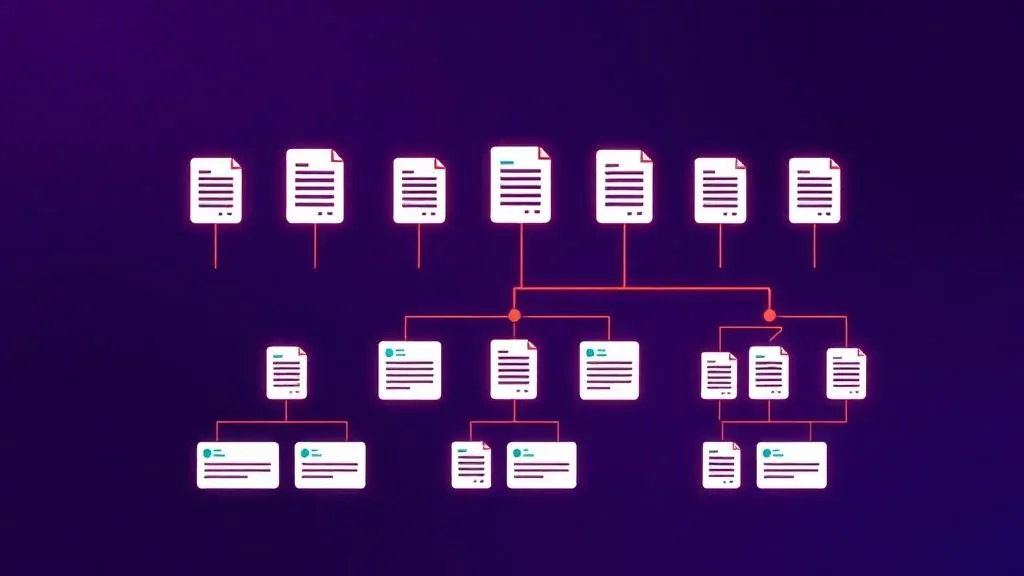
From SKILL.md to SkillOps: Scaling Agent Skills Across Teams

TL;DR: „SkillOps treats Agent Skills like Infrastructure as Code: versioned, tested, reviewed, and centrally managed. Without SkillOps, every skill becomes a maintenance risk."
— Till FreitagThe Scaling Problem
The first three Skills are easy to write. A deployment Skill here, a code review Skill there. But then what always happens with decentralized growth occurs:
- Team A has a testing Skill, Team B does too – they contradict each other
- Nobody knows which Skills are current and which are outdated
- A Skill works with Claude Code but breaks in Cursor
- New hires find 30 Skills and don't know which ones are relevant
Welcome to SkillOps – the operational framework for scaling Agent Skills across teams.
What Is SkillOps?
SkillOps is to Agent Skills what DevOps is to infrastructure: a discipline that systematizes development, maintenance, and governance of Skills.
| DevOps | SkillOps |
|---|---|
| Infrastructure as Code | Skills as Code |
| CI/CD Pipelines | Skill Testing & Deployment |
| Container Registry | Skill Registry |
| Monitoring & Alerting | Skill Drift Detection |
| RBAC & Policies | Skill Governance |
The core idea: Skills aren't one-time documents. They're living artifacts that deserve the same lifecycle as code.
The Five Pillars of SkillOps
1. Skill Registry: A Single Source of Truth
Without a central registry, Skills proliferate in personal folders, Slack threads, and local .cursor/ directories. A Skill Registry solves this:
skills-registry/
├── global/                    ← apply to all teams
│   ├── code-style/SKILL.md
│   ├── security/SKILL.md
│   └── git-conventions/SKILL.md
├── team-backend/              ← team-specific
│   ├── api-design/SKILL.md
│   ├── database-migrations/SKILL.md
│   └── error-handling/SKILL.md
├── team-frontend/
│   ├── component-patterns/SKILL.md
│   ├── accessibility/SKILL.md
│   └── state-management/SKILL.md
└── REGISTRY.md                ← index with descriptions and ownership
Best Practice: The registry is its own Git repository (or monorepo folder), included in projects as a Git submodule or package.
2. Skill Lifecycle Management
Every Skill goes through defined phases:
Draft → Review → Active → Deprecated → Archived- Draft: New Skill is written and tested locally
- Review: PR with at least one reviewer who tests the Skill against real agent outputs
- Active: Skill is approved and used in projects
- Deprecated: Skill is outdated, successor is defined
- Archived: Skill is no longer loaded but remains in history
# SKILL.md Frontmatter
---
name: api-design
version: 2.1.0
status: active
owner: team-backend
last-tested: 2026-03-15
compatible-agents: [claude-code, cursor, codex]
depends-on: [code-style, error-handling]
---
3. Skill Testing
Skills without tests are like code without tests – they work until they don't. Three test levels:
Syntax Tests
Is the SKILL.md structure correct? Are all required fields present?
# Simple linter for SKILL.md
skillops lint skills-registry/
Integration Tests
Does the agent understand the Skill correctly? Here the Skill is tested against defined scenarios:
# test-scenarios/api-design.yml
scenarios:
  - name: "New endpoint"
    prompt: "Create a GET /users endpoint"
    expect:
      - "OpenAPI 3.1 convention"
      - "Problem Details for errors"
      - "Rate limiting headers"
    reject:
      - "Custom error format"
      - "No versioning"
Regression Tests
Was an existing Skill affected by a change to another Skill? Automated checks after every merge.
4. Skill Governance
Who can create, modify, or delete which Skills? Without governance, chaos ensues:
Ownership Model:
- Global Skills (Code Style, Security): Only the platform team can modify
- Team Skills (API Design, Component Patterns): The respective team has ownership
- Personal Skills (IDE preferences): Each developer themselves, not in the registry
Review Rules:
- New global Skills need approval from 2+ teams
- Changes to active Skills need a test report
- Deprecation requires a migration guide
5. Skill Observability
How do you know if a Skill actually helps? Metrics:
- Activation Rate: How often is the Skill used by the agent?
- Override Rate: How often does the developer correct the agent output despite the Skill?
- Drift Score: How much does current team behavior deviate from the Skill?
- Compatibility: Does the Skill work with all agents in use?
## Skill Health Dashboard (Example)
| Skill | Activations/Week | Override Rate | Drift | Status |
|---|---|---|---|---|
| code-style | 342 | 3% | Low | ✅ Healthy |
| api-design | 128 | 18% | Medium | ⚠️ Review needed |
| legacy-migration | 12 | 45% | High | 🔴 Rework |
SkillOps in Practice: A Rollout Plan
Phase 1: Inventory (Week 1-2)
- Collect all existing Skills (local, personal, team)
- Identify and consolidate duplicates
- Assign ownership
Phase 2: Build Registry (Week 3-4)
- Create Git repository for Skills
- Define folder structure (global, team, project)
- Create REGISTRY.md as index
- Set up CI pipeline for syntax linting
Phase 3: Introduce Governance (Week 5-6)
- Define review process for new Skills
- Implement lifecycle status (Draft → Active → Deprecated)
- Document ownership model
Phase 4: Automate Testing (Week 7-8)
- Write test scenarios for critical Skills
- Integrate automated checks into CI/CD
- Regression tests on Skill changes
Phase 5: Observability (from Week 9)
- Capture metrics (activations, overrides)
- Set up health dashboard
- Quarterly reviews for Skill quality
Anti-Patterns: What to Avoid
❌ Skill Sprawl
"Everyone writes Skills however they want." → Result: 200 Skills, 50 outdated, 30 contradictory.
❌ Monolith Skills
A single SKILL.md with 2,000 lines covering everything. → Result: Agent uses it inconsistently, changes have unpredictable side effects.
❌ Copy-Paste Skills
Every project copies Skills from another project instead of the registry. → Result: Versions drift apart, bugfixes don't reach all copies.
❌ Governance Without Tooling
"We have rules but no automation." → Result: Rules get ignored as soon as deadline pressure rises.
The Role of Skill Platforms
Platforms like SkillMD.ai and Mintlify already offer tooling for SkillOps:
- Discovery: Find and install Skills from public registries
- Sync: Automatically convert docs into Skills and keep them synchronized
- Compatibility: Serve Skills for 20+ agents simultaneously
- Analytics: Usage data and quality metrics
For teams with their own tooling: the open-source ecosystem is growing fast. A .well-known/skills/ endpoint is becoming the standard for public Skill distribution.
Conclusion: Skills Need Ops
A single Skill is a productivity boost. 50 uncontrolled Skills are a maintenance nightmare. SkillOps is the bridge between both states – bringing proven DevOps principles (automation, governance, observability) into the world of Agent Skills.
Teams that adopt SkillOps early build an operational advantage: their Skills are tested, versioned, and consistent – while others are still stuck in copy-paste chaos.
→ Understand Agent Skills as an industry standard
Related Articles
Skills Made Documentation Sexy: Why Developers Suddenly Love Writing Docs
Nobody likes writing docs. But Agent Skills changed the game: documentation is now executable knowledge – and suddenly e…
Read more
Lovable Skills: Repetition Turns Into Reusable Playbooks
Lovable just rolled out Skills – Anthropic's format for reusable agent instructions. What Skills are, how they differ fr…
Read more
Agent Skills Are Becoming an Industry Standard: What Teams Need to Know
Agent Skills are reusable capabilities for AI agents – and they're becoming the new standard. What sets them apart from …
Read more
AI Agent Ops: How to Monitor, Audit, and Control Agents in Production
Governance is the strategy – Agent Ops is the execution. How to monitor autonomous AI agents in production, audit every …
Read more
Ponytail: The Best Code Is the Code You Never Wrote
A dev built Ponytail because his AI agents wrote 500 lines for a 5-line problem. The result: 80-94% less code, 47-77% ch…
Read more
Why 🦞 Became the Secret Handshake of the Agentic AI Movement
How a crustacean became the tribal emoji of the agentic AI scene – from Anthropic memes to X bios full of lobster claws.…
Read more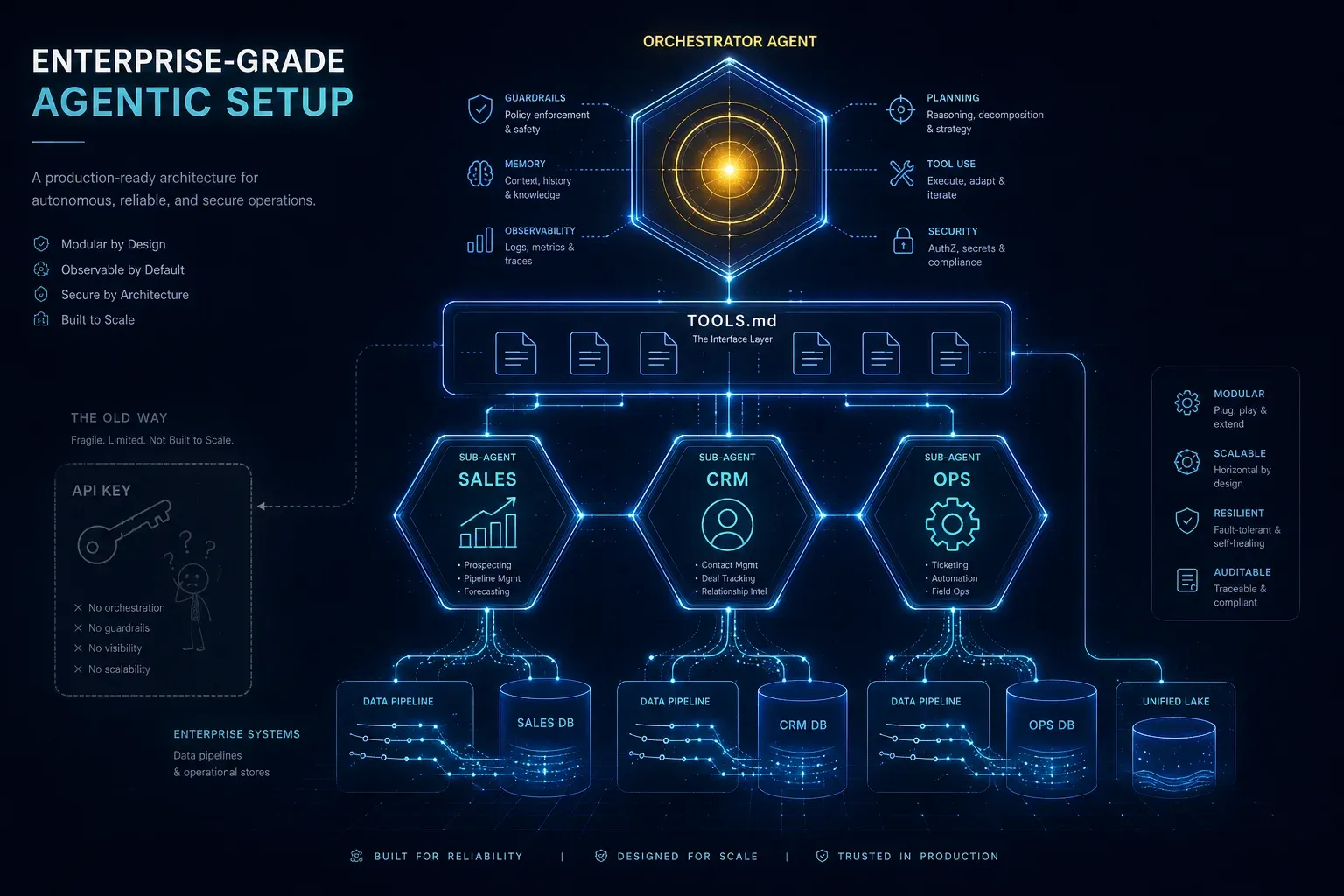
Enterprise-Grade Agentic Setup: Why an API Key Is Not an AI Strategy
An API key on your website is child's play. An agentic setup with specialised sub-agents, TOOLS.md, clean system prompts…
Read more
LangGraph vs. CrewAI vs. AutoGen: Which Multi-Agent Framework in 2026?
Three frameworks, three philosophies: LangGraph gives you state machines, CrewAI gives you teams, AutoGen gives you conv…
Read more
Claude Code Is No Longer a Dev Tool – It's a GTM Layer
With Opus 4.6, Claude Code has fundamentally changed: from a developer tool to an autonomous Go-To-Market layer. What we…
Read more