NemoClaw: NVIDIA's Privacy Router and What It Means for Agent Architecture

TL;DR: „NVIDIA calls it a Privacy Router: sensitive data stays on local models, everything else goes to the cloud. Policy-driven, not agent-decided. For Europe, this isn't a nice-to-have – it's table stakes."
— Till FreitagIn 30 Seconds
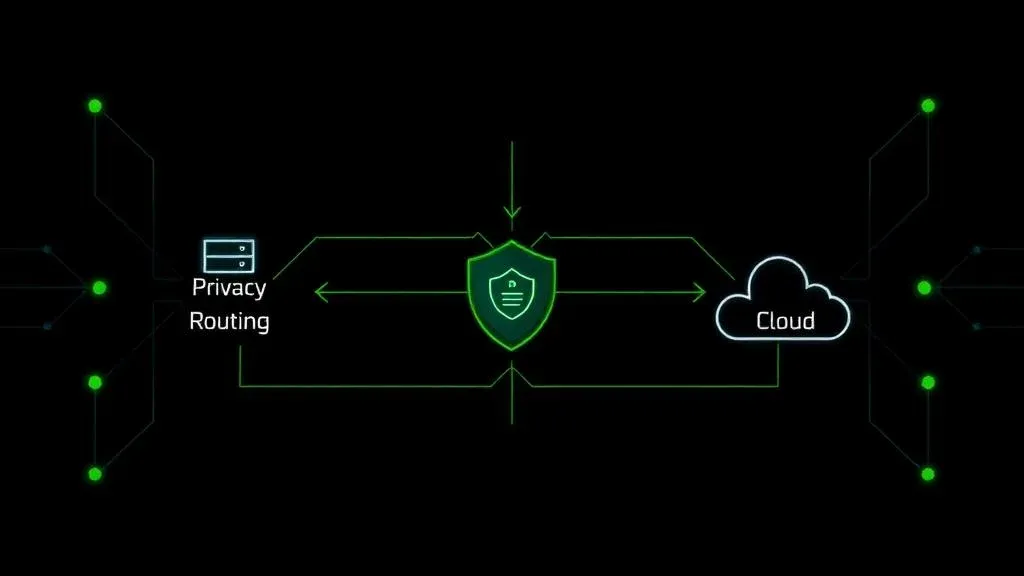
NVIDIA is now officially in the Claw business. At GTC, they announced NemoClaw – enterprise security for OpenClaw agents. The most interesting concept: a Privacy Router that routes sensitive queries to local Nemotron models and everything else to cloud frontier models. Alongside it, the new Nemotron 3 model family with a Nano variant running 3B active parameters and a 1M token context window.
Why Privacy Routing Matters
Every production router for AI agents today optimizes for cost. Cheap tasks go to cheap models, complex analysis goes to more capable ones. That works – but it's missing a second axis: privacy.
The idea: agents need two routing dimensions:
| Axis | Decision | Example |
|---|---|---|
| Cost | Which model is most efficient? | Triage → small model, analysis → large model |
| Privacy | Can this data leave the infrastructure? | Customer data → local, general query → cloud |
Nobody has shipped the privacy axis in production yet. Every router optimizes cost only. NVIDIA's announcement changes that – at least conceptually.
What NemoClaw Actually Does
NemoClaw is a security layer for OpenClaw agents. The core features:
Privacy Router
Sensitive queries get routed to local Nemotron models, everything else to cloud frontier models. Critically: the routing decision is made by policy, not by the agent. This is a fundamental distinction – the agent doesn't get to decide whether data is sensitive.
Query → Policy Engine → Sensitivity Check
                            ├── sensitive → local Nemotron model
                            └── non-sensitive → cloud frontier model
Sandboxing
NemoClaw uses containerization for tool isolation. It's a valid approach, but not the only one:
| Approach | Project | Trade-off |
|---|---|---|
| Containers | NemoClaw | Proven, but overhead |
| WASM Sandboxes | IronClaw | Lightweight, less isolated |
| Kernel-Level | nono | Maximum isolation, higher complexity |
The market is still figuring out how to properly contain agents. Containers are the conservative path – but whether they scale with thousands of parallel tool calls remains to be seen.
Nemotron 3: The Local Model for the Privacy Router
Alongside NemoClaw, NVIDIA introduced the Nemotron 3 model family. Architecture: Hybrid Mamba-Transformer with Mixture-of-Experts (MoE).
The Nano variant is particularly interesting:
- 3B active parameters (significantly more total parameters via MoE)
- 1M token context window
- Hybrid architecture for efficient local inference
If the benchmarks hold up, this is exactly the kind of model you'd want on the receiving end of a privacy router: small enough for local inference, large enough for meaningful processing, and with a context window that covers complex documents.
No independent benchmarks yet – numbers come from NVIDIA's presentation. Assessment to follow once the model is available.
What This Means for Agent Architecture
Privacy routing isn't a new concept. In the 5 building blocks architecture for AI agents, it appears as a cross-cutting concern: model routing by data sensitivity. But there's a world between concept and product.
NVIDIA putting "Privacy Routing" in a GTC keynote gives the concept legitimacy. The market signal:
- Privacy-aware routing becomes standard – not optional
- Policy-driven, not agent-decided – the agent must not assess sensitivity itself
- Local models become first-class citizens – not just a fallback for offline scenarios
The European Perspective
For wider adoption in Europe, privacy routing isn't a feature. It's table stakes. GDPR, Schrems II, the AI Act – all require demonstrable control over where data flows. A router that automates this decision on a policy basis solves a real compliance problem.
Open Questions
The implementation details are still thin. The docs describe the vision, but the actual routing configuration isn't publicly documented yet. That's expected for alpha software. Still, questions remain:
- How granular are policies? Field-level, document-level, or query-level?
- How is sensitivity classified? Automatically, manually, or both?
- How does the local path perform? Latency difference between local Nemotron and cloud frontier?
- How does this integrate with existing OpenClaw deployments?
Conclusion
NVIDIA didn't launch a finished product with NemoClaw – they validated a concept. Privacy routing – splitting model routing by cost AND data sensitivity – is an idea that's been discussed in the agent community for months. Putting it in a GTC keynote makes it real.
Three takeaways:
- Privacy Router ≠ VPN – It's not about encryption, it's about routing decisions at the policy level
- Nemotron 3 Nano could be the local building block – 3B parameters + 1M context with hybrid architecture
- Not optional for Europe – Anyone deploying AI agents in the EU needs demonstrable privacy routing
→ The 5 Building Blocks of an AI Agent → Learn about Agentic Engineering → Get in touch
Related Articles
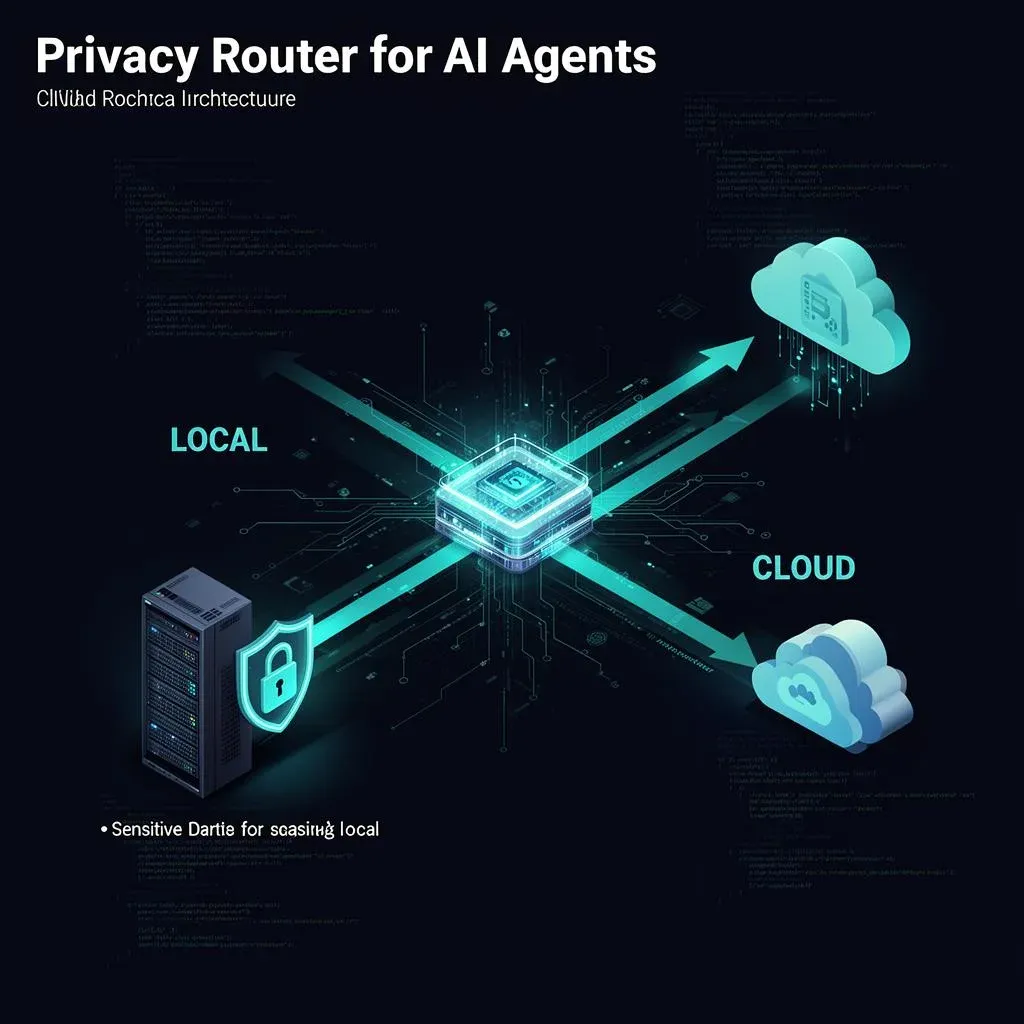
Building a Privacy Router with OpenClaw: A Practical Guide with Code
Privacy Routing is the concept – but how do you build it? A practical guide with OpenClaw, a policy engine, and concrete…
Read more
Globster: monday.com Enters the Personal AI Agent Game – on NVIDIA's NemoClaw
monday agent labs just launched Globster: personal AI agents built on OpenClaw, secured by NVIDIA's NemoClaw runtime. Wh…
Read more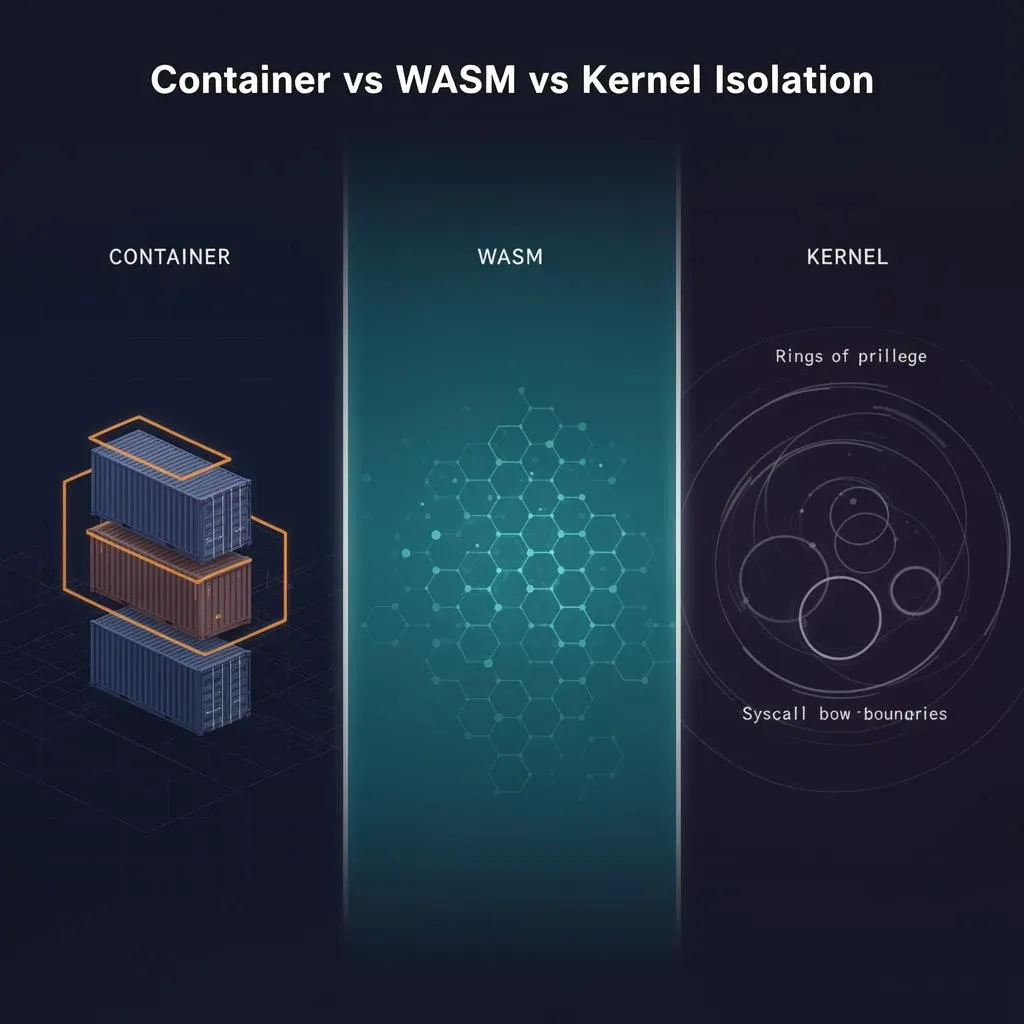
Agent Sandboxing: Containers vs. WASM vs. Kernel – Three Ways to Contain AI Agents
AI agents need isolation. But which kind? Containers, WASM, or kernel-level – three approaches compared with concrete tr…
Read more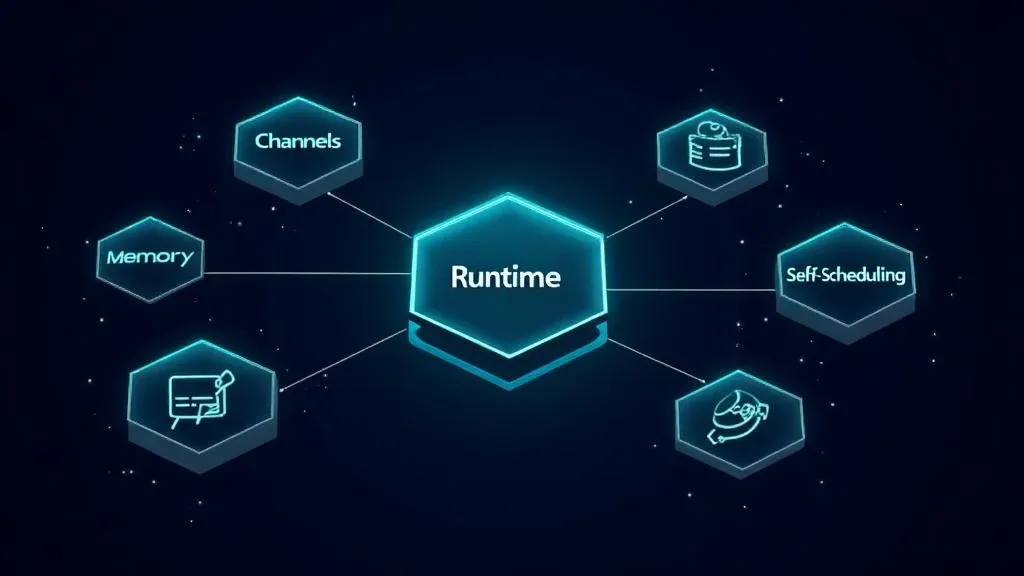
The 5 Building Blocks of an AI Agent – What's Really Under the Hood
Anthropic, AWS, and Google have published their agent frameworks. But what does an AI agent actually need? 5 building bl…
Read more
Ponytail: The Best Code Is the Code You Never Wrote
A dev built Ponytail because his AI agents wrote 500 lines for a 5-line problem. The result: 80-94% less code, 47-77% ch…
Read more
Google's Agent Marketplace Goes Live – And monday.com Is Already Inside
Google just opened Gemini Enterprise to partner-built AI agents – and monday.com is one of the first in. What that means…
Read more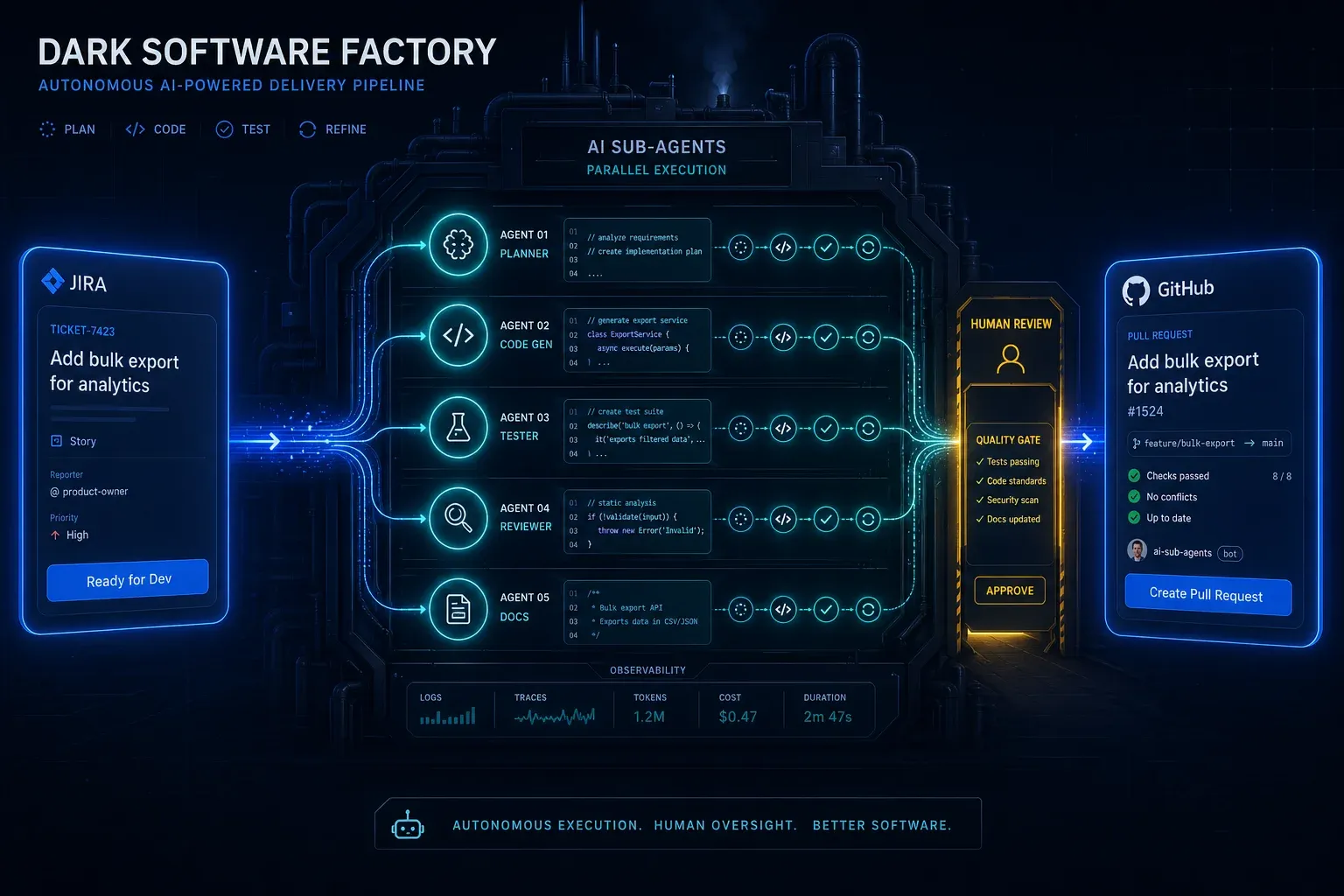
AI Agentic First at Groupon: What Ales Drabek's Dark Software Factory Teaches Us
Ales Drabek, CTIO at Groupon, runs two patterns in production: Dark Software Factory and Speedboats. What that reveals a…
Read more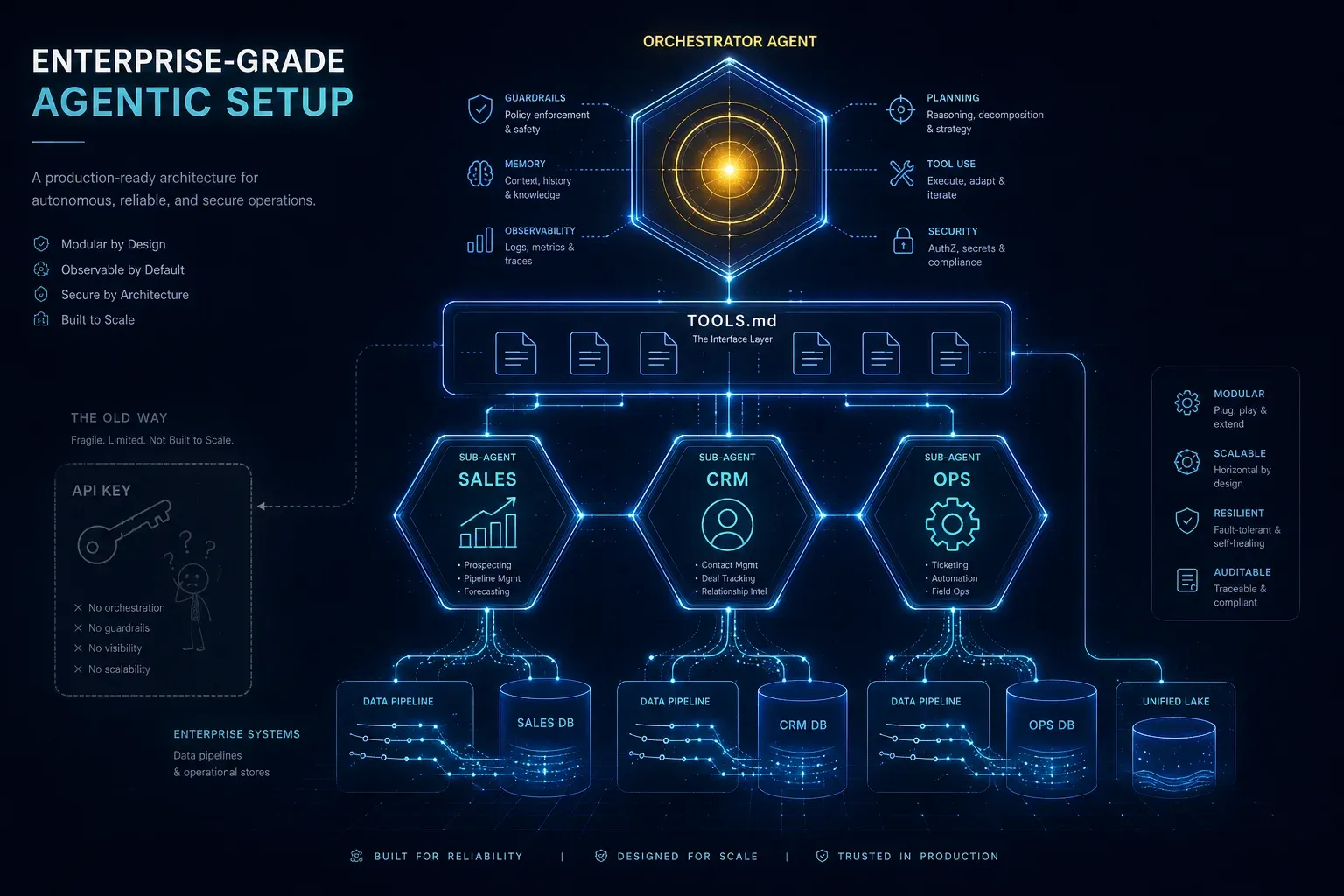
Enterprise-Grade Agentic Setup: Why an API Key Is Not an AI Strategy
An API key on your website is child's play. An agentic setup with specialised sub-agents, TOOLS.md, clean system prompts…
Read more
Agentalent.ai: monday.com Launches the First Marketplace for Hiring AI Agents
monday.com launches Agentalent.ai – a marketplace where companies can 'hire' AI agents for real business roles. Here's w…
Read more