
Radical Autonomy: Why We Bet on Remote, Small Teams, and Radical Freedom
TL;DR: „Remote-first, small teams, full ownership, no hierarchy loops. We organize around principles from Reinventing Organizations – not as a trend, but because senior teams don't need babysitters."
— Till FreitagWhy is there no Till Freitag office?
Because we don't need one.
That sounds like the standard remote-work pitch you've read on every other careers page since 2020. But it's not. For us, remote-first isn't a benefit that looks good in a job ad. It's an architectural decision.
If you only hire seniors, you don't need oversight. And if you don't need oversight, you don't need an office where oversight takes place.
Small Teams, Big Ownership
Our model: Two to three people per client project. Complete ownership from first analysis to go-live. No handoffs, no telephone game between teams, no "nobody told me."
That means:
- Every person knows the entire project. Not just their slice.
- Decisions are made where the information lives. Not three hierarchy levels above.
- Responsibility isn't delegated – it's distributed.
Sounds simple. It is. When you have the right people.
What We Learned from Reinventing Organizations
Frederic Laloux describes three breakthroughs in Reinventing Organizations that lift companies to a new level: self-management, wholeness, and evolutionary purpose.
We didn't use the book as a blueprint – we used it as a mirror. Much of what Laloux describes, we had already been doing intuitively before we read the book:
Self-Management
No fixed departments. No team leads assigning tasks. Instead: roles that orient around projects, not org charts.
If someone can make a decision – they make it. No approval process, no ticket for sign-off, no waiting for the next weekly meeting.
Wholeness
We don't separate "professional self" from "private self." If someone picks up their kids at 3 PM and has their best ideas at 8 PM – great. We measure outcomes, not attendance.
That also means: Showing vulnerability is ok. Not knowing is ok. "I need a break today" is ok.
Evolutionary Purpose
We don't have a rigid five-year plan. Our purpose evolves – with the projects, the people, the market. What drove us a year ago isn't identical to what drives us today.
And that's not a bug. It's the feature.
Freedom in Decision-Making
The classic consulting model works like this: Junior researches → Senior validates → Partner decides → Client nods → Junior executes.
Our model: The person closest to the problem decides.
That requires three things:
- Trust – and you don't get that without senior-level competence
- Context – everyone needs to see the full picture, not just their slice
- Error culture – a wrong decision is better than no decision
We'd rather have ten fast decisions, two of which need correcting, than one perfect decision that takes three weeks.
This Is Not an Experiment
Some think remote-first and self-organization are ideology. Something a small company can "afford" that doesn't scale.
We say: It scales exactly as far as you want it to. We don't want to be 500 people. We want to be a team where every single person can carry full responsibility – and wants to.
This doesn't work despite remote. It works because of remote. Because remote is the only work model that doesn't just preach autonomy – it enforces it.
More from the Manifesto
All eleven principles that define how we work. Read in any order – they reinforce each other.
Related Articles

Growth at Till Freitag: How We Build Learning Into the System
Professional development doesn't happen once a year at a conference. Here's how we make growth part of the operating sys…
Read moreWe Believe in Europe and the Power of Balance
We believe in Europe. In cultural diversity. In the power of balance. And against the extremes – no matter which directi…
Read moreWe Care: Why Attitude Matters More Than Skills
We care. For our customers, partners, employees, society, nature and ourselves. Sounds soft. Is hard. And it decides who…
Read more
Scale Impact, Not Headcount: Why We Don't Want to Grow Endlessly
Growth isn't a goal in itself. We scale impact, not headcount – and here's why that's the better strategy.…
Read more
AI First = People First: Why AI-Native Doesn't Mean Anti-Human
AI First sounds like a technology fetish. For us, it means the opposite: we use AI so people can do better work – not so…
Read moreImpact Beyond Business: Why More Than Revenue Drives Us
We're still small. But we have big goals: giving back to the community, supporting the monday Emergency Response Team, m…
Read moreIndependence & Sovereignty: Why We Don't Need Investors – or a Single Software Vendor
No investors, no vendor lock-in, no dependencies. We work with the best in every field – and make our own decisions.…
Read moreWork in Progress: Why This Manifesto Is Never Done
Better done than perfect. Don't work for assholes. Imperfect = Perfect. The last chapter of our manifesto is also a warn…
Read more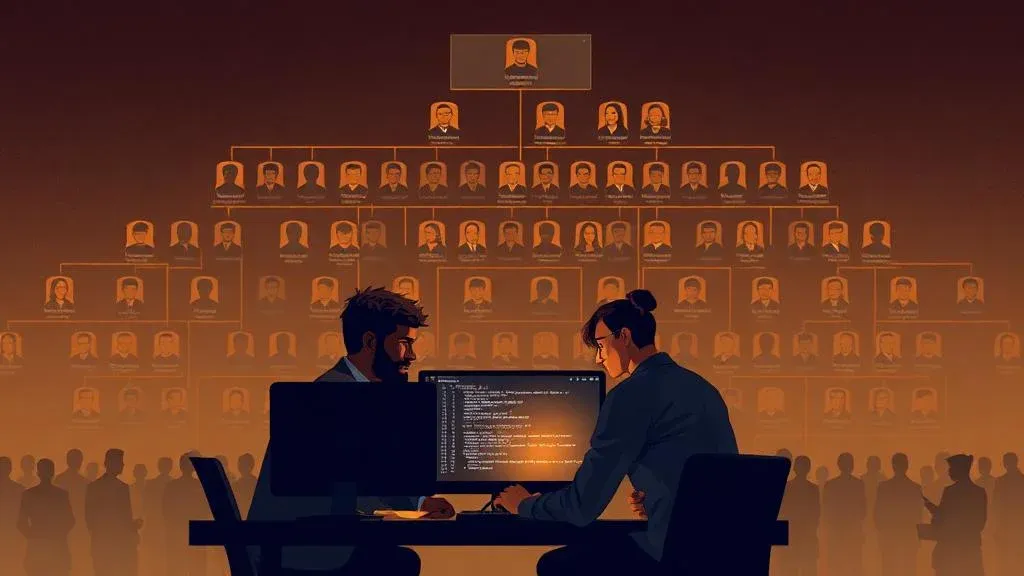
Senior-Only: Why We Don't Put Juniors on Client Projects
The classic consulting model sells senior partners and delivers junior analysts. At Till Freitag, everyone on your proje…
Read more