
Scale Impact, Not Headcount: Why We Don't Want to Grow Endlessly


TL;DR: „More people ≠ more impact. We only grow when it doesn't dilute quality. Our goal: maximum impact per person."
— Till FreitagThe Growth Lie
In the startup and consulting world, there's an unspoken assumption: Growth is always good. More employees, more revenue, more offices, more clients. If you don't grow, you die.
That's nonsense.
Or more precisely: it's a truth that applies to a certain type of company – and becomes a trap for everyone else.
| Growth Metric | What It Measures | What It Hides |
|---|---|---|
| Employee count | Size | Coordination costs |
| Revenue | Income | Margin loss from overhead |
| Client count | Reach | Quality loss per client |
| Offices/Locations | Presence | Culture loss from distance |
Each of these metrics can grow while actual impact declines. This happens more often than most will admit.
What Happens When Consultancies Grow
We've both seen it – at former employers, partners, competitors:
Phase 1: The Golden Era (5–15 people) Everyone knows everyone. Decisions happen in minutes. Quality is high because founders work directly with clients. Clients love you because they talk to the best people.
Phase 2: The Growth Rush (15–50 people) First middle managers. First processes nobody needs. First meetings about meetings. Founders no longer work with clients but "on the business." Clients notice the difference.
Phase 3: The Bureaucracy (50+ people) HR department, compliance team, three hierarchy levels. The best people leave because they're tired of politics. New hires are brought in to fill gaps left by departures. The cycle begins.
Growth isn't the opposite of stagnation. Growth without direction is just more expensive stagnation.
Our Counter-Model: Impact Per Person
At Till Freitag, we don't measure how many people we are. We measure how much impact each individual achieves.
Our core metric: impact per person.
This means:
- Everyone on the team works directly on client projects – no pure overhead
- Every project has a measurable deliverable – no vague "consulting"
- Every client gets senior expertise – no junior learning curves
How We Measure Impact
Not in hours. Not in slides. But in:
- Systems that go live – Does the code work in production?
- Time-to-value – How quickly does the client see measurable benefit?
- Client returns – The most honest metric there is
- Team satisfaction – Because burned-out people don't deliver impact
Why AI Changes the Equation
The reason "Scale Impact, Not Headcount" is possible today is AI.
Three years ago, a full-stack MVP required:
- 1 Product Manager
- 1 Designer
- 2 Frontend developers
- 1 Backend developer
- 1 DevOps engineer
- = 6 people, 3 months, ~€150,000
Today, with AI-native development and our Build > Advise approach:
- 1 Senior Full-Stack Builder
- 1 Senior Strategist/PM
- = 2 people, 4 weeks, fraction of the cost
This isn't a thought experiment. This is our daily reality. Every sprint. Every project.
AI has radically lowered the minimum efficient team size. Anyone still working with 6-person teams where 2 suffice doesn't have a quality problem – they have an organizational problem.
The Five Principles of Intentional Non-Growth
1. We Only Hire When It Hurts
Not "when we can afford someone." Not "when someone great is on the market." But when the existing workload threatens quality. That's the only legitimate reason.
2. Every New Person Must Raise the Average
We don't hire anyone who's "okay." Every new person must make the team better – not just bigger. That sounds elitist. It's respectful. To the team that will work with this person. And to the clients who pay for excellence.
3. We Actively Say No to Projects
More projects = more people needed = more coordination = less quality. The simpler path: fewer projects, better selected, full force.
We declined more projects last quarter than we accepted. That's not failure – that's strategy.
4. Automation Before Hiring
Before we hire someone, we ask: can AI or automation meet this need? Not to replace people – but to free people for the work that matters.
5. Profit ≠ Growth Obligation
We don't use profitability to expand. We use it to:
- Pay the team fairly
- Invest in continuous learning
- Build a buffer that keeps us independent
- Decline projects that don't fit
What This Means for Clients
You Get Undivided Attention
When a team handles 3 projects in parallel, each gets a third. With us: your project gets full force. Because we take on few projects simultaneously – by design.
You Work with the Decision-Makers
No account manager who "forwards" your requests. No junior being "onboarded." The people discussing your project are the people building it.
You Get Honesty
We'll tell you if a project isn't right for us. We'll recommend someone else if that's the better solution. Because our business model doesn't depend on closing every deal.
The Uncomfortable Question for You
If you're reading this and thinking "Sounds good, but does it really work?" – ask yourself a counter-question:
Has the opposite worked for you?
Did the large team deliver faster? Did the additional hierarchy level improve quality? Did the sixth consultant on the project bring the breakthrough?
Usually the answer is: No. More was just more. Not better. This article is the fifth part of our manifesto series:
More from the Manifesto
All eleven principles that define how we work. Read in any order – they reinforce each other.
Related Articles

AI First = People First: Why AI-Native Doesn't Mean Anti-Human
AI First sounds like a technology fetish. For us, it means the opposite: we use AI so people can do better work – not so…
Read more
We Believe in Europe and the Power of Balance
We believe in Europe. In cultural diversity. In the power of balance. And against the extremes – no matter which directi…
Read moreWe Care: Why Attitude Matters More Than Skills
We care. For our customers, partners, employees, society, nature and ourselves. Sounds soft. Is hard. And it decides who…
Read moreImpact Beyond Business: Why More Than Revenue Drives Us
We're still small. But we have big goals: giving back to the community, supporting the monday Emergency Response Team, m…
Read moreWork in Progress: Why This Manifesto Is Never Done
Better done than perfect. Don't work for assholes. Imperfect = Perfect. The last chapter of our manifesto is also a warn…
Read more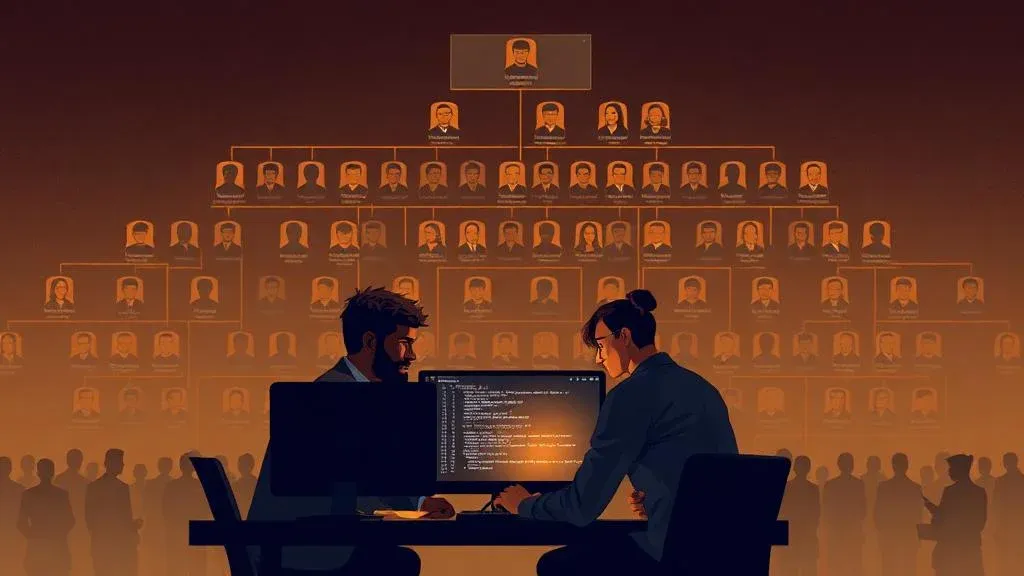
Senior-Only: Why We Don't Put Juniors on Client Projects
The classic consulting model sells senior partners and delivers junior analysts. At Till Freitag, everyone on your proje…
Read more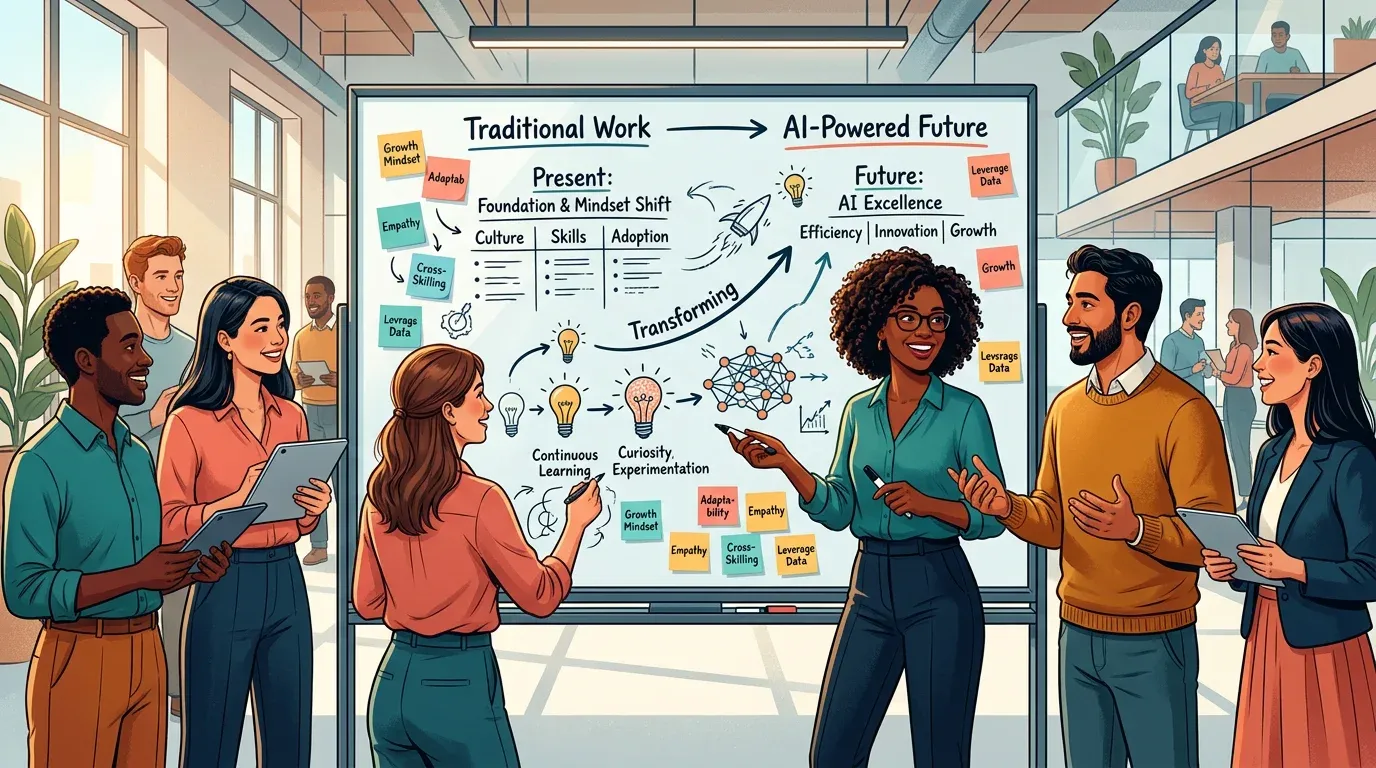
Culture & Mindset – How to Get Your Team Ready for the AI Era
Introducing AI tools is easy. Creating the culture for it is the real challenge. How to get your team ready for Working …
Read more
Growth at Till Freitag: How We Build Learning Into the System
Professional development doesn't happen once a year at a conference. Here's how we make growth part of the operating sys…
Read more
Cofounder Mindset – How Builders Actually Work
Cofounder Mindset sounds like startup jargon. It's not. It's the attitude that makes the difference – every single day.…
Read more