Senior-Only: Why We Don't Put Juniors on Client Projects


TL;DR: „We don't put juniors on client projects. Not out of arrogance – but because your time is too valuable for learning curves on your invoice."
— Till FreitagThe Pyramid Model of Consulting
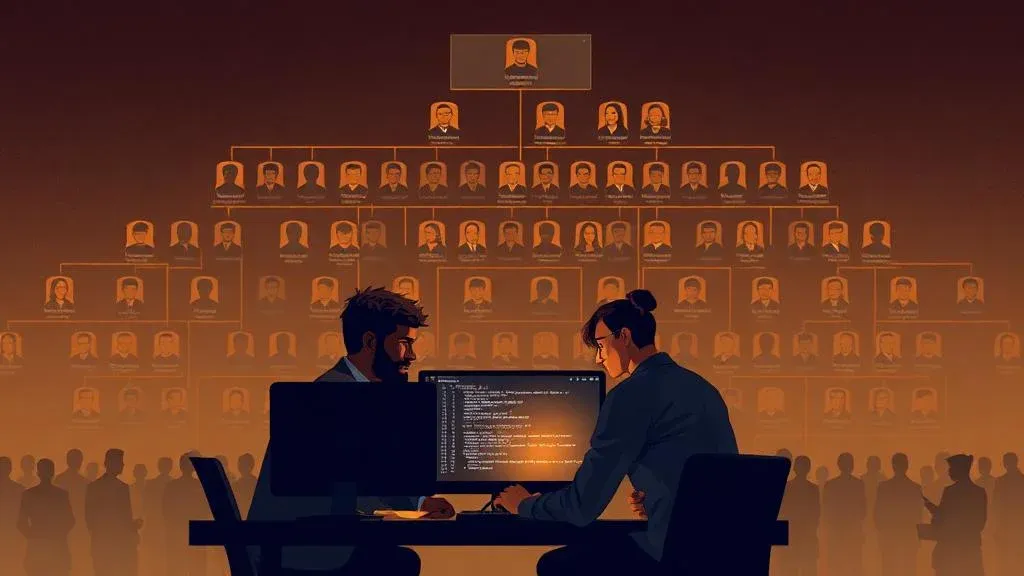
Every big consultancy works the same way: at the top sits a partner who closes the deal. Below them, a manager who steers the project. And at the bottom? Three to five junior analysts doing the actual work.
This isn't a secret. It's the business model.
| Role | Day Rate | Experience | Time on Project |
|---|---|---|---|
| Partner | €8,000–12,000+ | 15+ years | 5% |
| Project Manager | €5,000–6,000 | 10–15 years | 15% |
| Manager | €3,500–5,500 | 8–12 years | 20% |
| Senior Consultant | €2,500–3,500 | 4–7 years | 30% |
| Junior Analyst | €1,500–2,500 | 0–3 years | 80% |
Sources: McKinsey GSA Price List 2024, publicly available framework agreements, and industry reports (e.g. ALM Intelligence, Source Global Research). Actual day rates vary by region, project scope, and negotiation.
You pay for the partner's name. You get the junior's learning curve.
This isn't malicious – it's systemic. The pyramid needs a broad base to be profitable. And that base consists of people who are still learning.
Why We Know This So Well
We don't come from traditional consulting. We come from management positions – from businesses that hired consultants. We sat on the other side of the table. We experienced the junior analysts who were sold with the partner's expertise. We paid the invoices that didn't match the output.
That's exactly why we built Till Freitag differently.
What "Still Learning" Means in Practice
Imagine you have an AI integration project. The questions that determine whether it flies or crashes are:
- Which architecture scales?
- Where are the data pitfalls?
- What looks great in a prototype but breaks in production?
- Which edge cases does only someone who's lived through them know?
A junior can google these questions. A senior has already answered them three times – in real projects, with real consequences. The difference isn't months. The difference is years of experience that pay off in hours.
A senior needs 2 hours for an architecture decision that a junior researches for 2 weeks – and still gets wrong.
Our Model: Everyone Is Senior
At Till Freitag, there's no pyramid. There's a team of specialists who all have at least 10 years of experience in their field. And every one of them works directly on client projects.
This means:
- No "knowledge transfer" from partner to junior
- No onboarding time on your invoice
- No mistakes that an experienced developer would have caught immediately
- No overhead from hierarchy layers
But Is It Scalable?
Honest answer: No. Not in the McKinsey sense. We'll never have 50,000 consultants. That's not the goal either.
Our goal is to deliver excellent results for a few clients. Not mediocre results for many.
This means: we say no more often than yes. We only take projects where our team makes a real difference. And we only grow when we find people who share our quality standards.
Why AI Amplifies the Senior Model
Here's where it gets interesting: AI tools like Cursor, Claude, and Lovable are multipliers for experience.
A junior with AI tools is faster than a junior without. But a senior with AI tools? That's a different league.
| Scenario | Junior + AI | Senior + AI |
|---|---|---|
| Generating code | Often works | Works and is production-ready |
| Designing architecture | Accepts AI suggestion | Questions and improves AI suggestion |
| Spotting edge cases | Misses them | Specifically asks about them |
| Debugging | Trial and error | Pattern recognition |
| Code review | Accepts AI output | Refactors AI output |
AI doesn't replace experience – it amplifies it. Those with little experience get faster results from AI. Those with deep experience get better results from AI.
That's why our 4-week model works: not because the tools are that good – but because the people using them know what they're doing.
The Three Principles of the Senior-Only Model
1. Everyone Builds
Nobody on our team just coordinates, just presents, or just manages. Everyone builds. Everyone writes code, designs systems, talks to clients. Titles are noise – output counts.
2. Learning Curves Are Our Cost, Not Yours
Of course, seniors learn too. Every day. But we finance that learning curve ourselves – through internal projects, research, and training. What's on your invoice is productive work. Not onboarding.
3. Fewer Heads, More Impact
Where others need 8 people, we need 2. Not because we're superhuman, but because experience plus AI tools has fundamentally changed the equation.
Scale Impact, Not Headcount.
4. Sustainable Working Hours
In traditional consulting, 60–80 hour weeks are the norm. It's not just tolerated – it's expected. Leave before 10 PM and you're seen as uncommitted.
At Till Freitag, things work differently. Can overtime happen? Yes, during a critical launch or a tight deadline. But it's the exception, not the rule – and certainly not encouraged.
Sustainable working hours aren't a perk – they're part of the model. Anyone who consistently works 70 hours makes bad decisions. And bad decisions are the most expensive thing there is.
What This Means for You
Faster Time-to-Value
No ramp-up. From day one, people work on your project who already know the problem. Who know where the pitfalls are. Who can make decisions without consulting three hierarchy levels.
Less Risk
Junior mistakes in production are costly. Not just money, but trust, time, and momentum. With a senior team, you radically reduce this risk.
Direct Line
No "I need to discuss this with my manager." Everyone on our team can make decisions. That accelerates everything.
An Honest Word to Career Starters
Senior-Only doesn't mean we look down on juniors – quite the opposite. But as a 100% remote company, we simply can't mentor career starters the way we'd want to. Spontaneous pair programming at the next desk, absorbing team dynamics in the office, learning by osmosis – that's part of a great career start.
That's why we honestly think it's good when career starters begin in a different setting. Get some office experience. Watch experienced colleagues work up close. Learn the fundamentals from real conversations at the whiteboard, not from Slack threads.
Once you know what you're capable of after a few years – and what you're not – you're exactly right for us.
When Senior-Only Doesn't Fit
If you need 20 people to fill spreadsheets – we're the wrong choice. If the project mainly consists of grunt work that doesn't require deep expertise, there are cheaper options.
We're the right choice when complexity is high, the cost of errors is even higher, and when you need results in weeks, not months. This article is the third part of our manifesto series, explaining why Till Freitag works differently:
More from the Manifesto
All eleven principles that define how we work. Read in any order – they reinforce each other.
Related Articles

Build > Advise: How We Deliver in 4 Weeks What Others Present in 4 Months
Strategy decks are legacy. We deliver working systems in 4 weeks – with AI-native development, real code instead of reco…
Read moreAnti-McKinsey: Why We're Flipping the Consulting Model
Till Freitag is the anti-McKinsey of the AI era. We build instead of advise, hire predominantly women, donate profits fr…
Read more
Scale Impact, Not Headcount: Why We Don't Want to Grow Endlessly
Growth isn't a goal in itself. We scale impact, not headcount – and here's why that's the better strategy.…
Read more
AI First = People First: Why AI-Native Doesn't Mean Anti-Human
AI First sounds like a technology fetish. For us, it means the opposite: we use AI so people can do better work – not so…
Read more
Culture & Mindset – How to Get Your Team Ready for the AI Era
Introducing AI tools is easy. Creating the culture for it is the real challenge. How to get your team ready for Working …
Read more
Growth at Till Freitag: How We Build Learning Into the System
Professional development doesn't happen once a year at a conference. Here's how we make growth part of the operating sys…
Read moreWe Believe in Europe and the Power of Balance
We believe in Europe. In cultural diversity. In the power of balance. And against the extremes – no matter which directi…
Read moreWe Care: Why Attitude Matters More Than Skills
We care. For our customers, partners, employees, society, nature and ourselves. Sounds soft. Is hard. And it decides who…
Read more
Why We Stopped Calling Ourselves Consultants – Behind the Scenes
We changed every job title from 'Consultant' to 'Builder'. Not a rebrand – an honest look at a decision that wasn't obvi…
Read more