
How to Rank Serponado – Strategy Documented in Public


TL;DR: „This article documents our open Serponado ranking strategy for the 2026 Seobility SEO contest: authority on till-freitag.com, daily freshness updates, targeted link velocity – and why transparency itself is the strongest link signal."
— Till FreitagWhy we're documenting our Serponado strategy in public
Most SEO contest participants hide their tactics like poker players hiding their cards. We do the opposite. This article is our open strategy document for the Seobility & Agenturtipp.de SEO Contest 2026 – and it explains not just what we're doing to rank Serponado, but why it works.
Three reasons why open documentation is the best strategy:
- Linkbait quality: An article that reveals its own tactics is self-linking. Every SEO pro writing about the contest references the source that shows everything.
- Self-imposed discipline: Whoever publicly commits to a plan has to follow through. No half-measures, no abandoned experiments.
- Community value: The German SEO scene benefits from honest case studies – not from "I won, but my tactics are a secret" posts.
In short: This article is simultaneously a strategy document, a link magnet, and a public commitment. Anyone who wants to rank Serponado can copy from here – or give us backlinks because we wrote it first.
The playing field: what the Serponado contest really tests
A fantasy keyword like Serponado eliminates all classic SEO advantages:
- No existing search intent
- No historical rankings to inherit
- No commercial competition with big budgets
- Identical starting conditions for all participants
What remains are the pure ranking factors – and in 2026, they're different than five years ago. The Serponado contest is therefore a time-compressed experiment: What happens when hundreds of domains compete for a word nobody knew before?
Our answer: Authority + Freshness + Link-Velocity. In that order. Everything else is a distraction.
Pillar 1: Authority – why the domain decides
The most common misconception in SEO contests: "I'll register an exact-match domain and win." That was 2015. In 2026, that's a guaranteed trip to the sandbox.
Google doesn't evaluate a newly registered domain as trustworthy in three weeks – no matter how many keywords are in the domain name. That's why we're betting on till-freitag.com:
- 3+ years of domain age with continuous publishing
- Hundreds of indexed pages in AI, Tools, SEO, and Technology
- Existing topical authority through expert articles already ranking for related terms
- Technical foundation: Lighthouse 95+, green Core Web Vitals, clean schema markup
- Internal linking: Existing articles link to the Serponado pillar, which in turn links to this strategy article
Practical tip: If you don't have access to an established domain, use a subdomain on an existing project or partner with a publisher. A
serponado.destands no chance against an established blog.
Fun fact / small fuckup: We originally planned to build on aifb.de – cooler name, faster indexing. Didn't pan out, so we moved to Till's personal domain. Not perfect, but honest. And hey, the domain still has authority.
Pillar 2: Freshness – Google likes moving targets
In a three-week sprint, every day counts. Google crawls pages that change frequently more often and evaluates them as more active – this is no secret, but it's decisive in a contest timeframe.
Our freshness tactic for Serponado:
- Daily pillar page updates: The Serponado journal is expanded every day. Each entry changes
dateModifiedand signals Google: something is happening here. - Supporting articles: This strategy article is the first of several. Each new article in the cluster generates a fresh crawling signal and builds internal link nodes.
- Real-time social signals: LinkedIn posts, X threads, and short updates accompany every strategic step. Not because social is a direct ranking signal – but because it generates traffic, which in turn produces dwell time and interaction.
- Sitemap ping: After every update, the sitemap is regenerated and submitted via Google Search Console.
Learning from Day 1: The pillar page was indexed within 90 minutes of going live. This isn't luck – it's the established domain plus immediate GSC submission plus internal linking from existing pages.
Pillar 3: Link velocity – speed beats mass
Backlinks remain the hardest ranking signal. But in a contest, the absolute number doesn't matter – what matters is the speed of acquisition.
Why? Because in a three-week window, Google can't initially distinguish between a "good link" and a "bad link" – it only measures the rate of new reference signals. 30 clean links in 7 days create a stronger impulse than 100 links over 12 months.
Our link velocity strategy for Serponado:
| Source | Type | Target Count | Quality |
|---|---|---|---|
| Own properties (social, GitHub, subdomains) | Brand/NoFollow | 10–15 | high (controllable) |
| SEO community & forums (OMR, t3n, abakus, r/SEO) | Editorial/Follow | 5–10 | very high (real value) |
| Founder team's LinkedIn reach | Brand/NoFollow | 3–5 | high (viral potential) |
| PR & newsletters (openPR, industry newsletters) | Editorial/Follow | 3–5 | high |
| Podcast & video mentions | Editorial | 2–3 | very high |
| Guest posts & agency partnerships | Editorial/Follow | 5–8 | very high |
What we deliberately don't do:
- PBNs (Private Blog Networks): Risk a manual action and disqualify the domain long-term.
- Paid links: Every link you can buy is suspicious to Google – especially in a contest where algorithm teams are watching closely.
- AI-generated wall-of-text: 10,000 words of keyword stuffing does more harm than good. The page must be readable for humans.
- Comment spam: Not even as an "experiment."
The cluster strategy: how we build topical authority
A single pillar page isn't enough. Google understands domains better when they cover an entire topic area. That's why we're building a content cluster around Serponado:
- Pillar: Serponado – the 2026 SEO contest explained – The central hub document with live journal
- Cluster Article 1: This article (strategy documented openly) – the tactical deep-dive
- Cluster Article 2 (planned): "Serponado ranking tracker: live positions of all participants" – tool character, high dwell time
- Cluster Article 3 (planned): "Serponado vs. Schniedelwutz: what changed in SEO contests since 2012" – historical context, nostalgia factor
- Cluster Article 4 (planned): "How vibe coding helped us rank Serponado in 48 hours" – bridge article to our core topic
Every article links to the pillar. The pillar links to every cluster article. This internal linking creates a topical authority structure that signals to Google: this domain understands Serponado better than any other.
The first 48 hours: what we learned
Day 0 (June 7) – Preparation
- Cluster article (this one) written and dated June 7. It serves as the strategic foundation before the keyword was even announced.
- Technical infrastructure checked: sitemap, schema templates, GSC access, internal linking structure.
Day 1 (June 9) – Go-live
- 10:00 CET: Keyword announcement. Serponado is live.
- 11:30 CET: Pillar page deployed. Title, H1, schema, BreadcrumbList, FAQPage – all prepared.
- 12:00 CET: GSC indexing request. Confirmed within minutes.
- 13:00 CET: First LinkedIn post with direct link to pillar.
- 15:00 CET: German version live. Hreflang correctly set.
- Evening: Three backlink outreach emails to friendly agencies. No templates, personal approach.
First insight: established domains win the indexing sprint
A new domain would have taken hours or days for Google to even crawl. On till-freitag.com, the page was in the index within 90 minutes. That's the authority advantage in action – even if we originally planned on aifb.de. Sometimes the plan isn't the reality.
 The current SERP: no clear winner, several contest entries clustered together – exactly the playing field where our authority strategy should land. (Illustration.)
FAQ: strategy questions about ranking Serponado
Does this strategy work outside an SEO contest?
Yes – with one caveat: link velocity in a contest is extremely high and short-term. For "real" keywords, we recommend the same triad (authority, freshness, backlinks) but spread over months instead of weeks.
How many backlinks do you need to win Serponado?
We estimate: 30–50 high-quality domains in 7–10 days is the sweet spot. Fewer works with strong authority, more is hard to organize with clean provenance.
Is keyword stuffing really dead?
For fantasy keywords like Serponado, it's not just dead – it's counterproductive. Google recognizes semantic manipulation faster than ever. The keyword belongs in title, H1, first 100 words, image alt texts, and schema – beyond that, it approaches the spam threshold.
Why did you date this article June 7?
Because we documented the strategy before the contest started. It shows: we planned, not just reacted. And it creates an earlier publishing date than most competitors.
Where can I follow your results live?
In the dedicated Serponado diary – daily entries with actions, rankings, and learnings. Short version also in the journal block on the pillar page.
Author: Malte Lensch, AI First Builders. Last updated: June 9, 2026. Cross-link: Serponado-Strategie auf Deutsch.
Want this method for your own project? We offer Serponado-style SEO sprints as a service – pillar + cluster + backlink outreach + daily loop. → See Serponado SEO as a service
Frequently Asked Questions
Strategy, backlinks, keyword stuffing and why we published early – answered.
Related Articles

Serponado – the 2026 SEO Contest Explained
Serponado is the fantasy keyword of the 2026 Seobility & Agenturtipp.de SEO contest. We're competing – and documenting o…
Read more Deep Dive
Serponado Diary – Daily Log from the 2026 SEO Contest
Daily log from the 2026 Seobility SEO contest: what we do for the keyword Serponado, what works, what flops – and which …
Read moreserponado.io – How Felix Grote Vibe-Coded a SEO Contest Site in 12 Hours
Felix Grote of seobuddha GmbH shipped serponado.io in 12 hours – one of the most creative entries in the 2026 SEO Contes…
Read moreSerponado SEO Audit: What 8 Cluster Articles Reveal About Internal Links, Canonicals and Fragments
Short SEO audit across all 8 Serponado cluster articles (DE+EN): link status, canonicals, fragment matches – with the fu…
Read more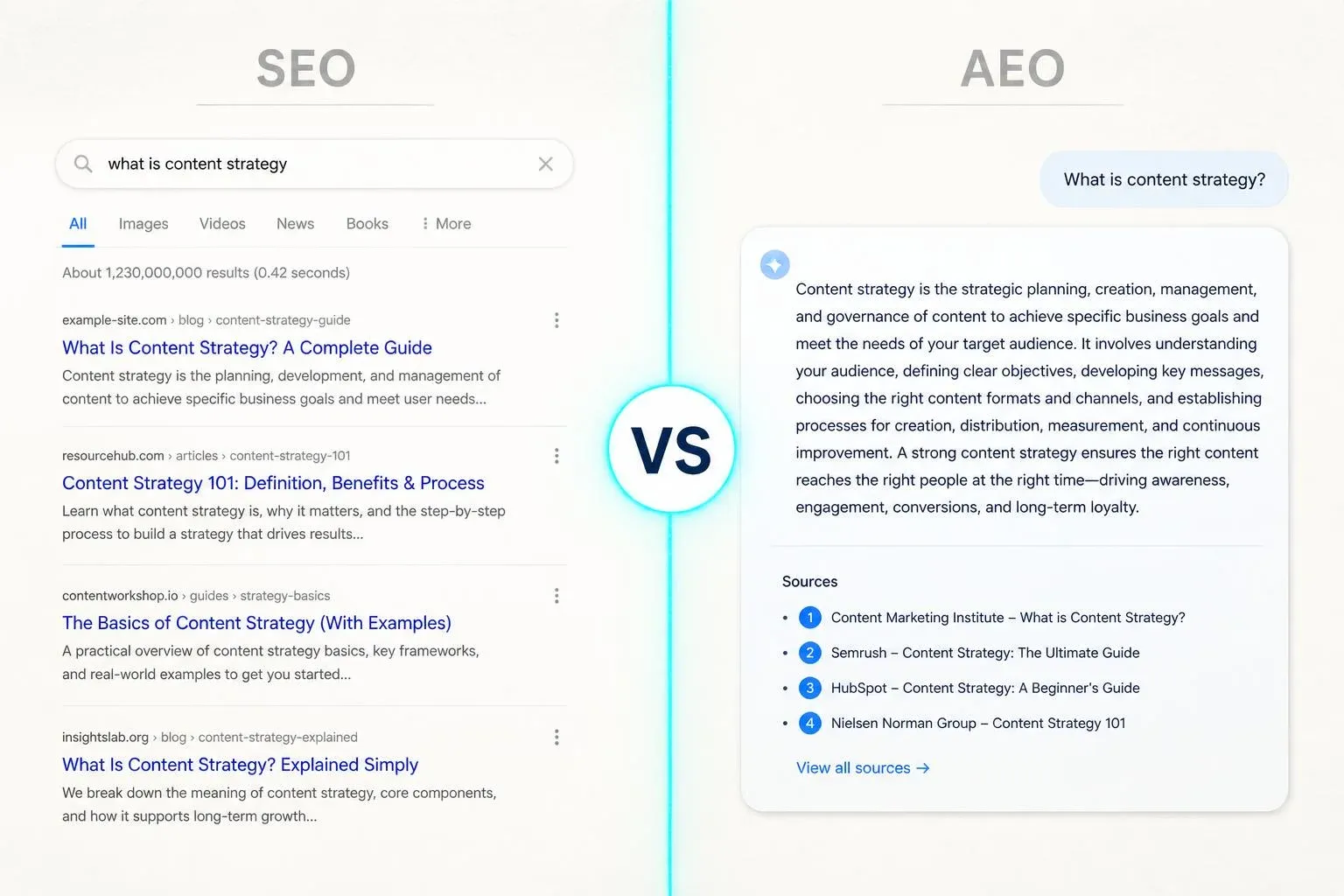 Deep Dive
SEO vs. AEO – aren't they the same thing?
SEO and AEO sound like the same game with a different acronym. They're not. Where the two disciplines overlap, where the…
Read more
Domain Authority & Domain Rank: What the Number Really Means – and What to Watch For
Authority Score, Domain Rank, DR, DA – every SEO suite has its own number. What it actually measures, why it matters, an…
Read more
GPTBot, ClaudeBot, PerplexityBot: What AI Crawlers Really See With Prerendering
We analyzed three months of edge logs: who actually crawls, who executes JavaScript, and who relies entirely on the HTML…
Read more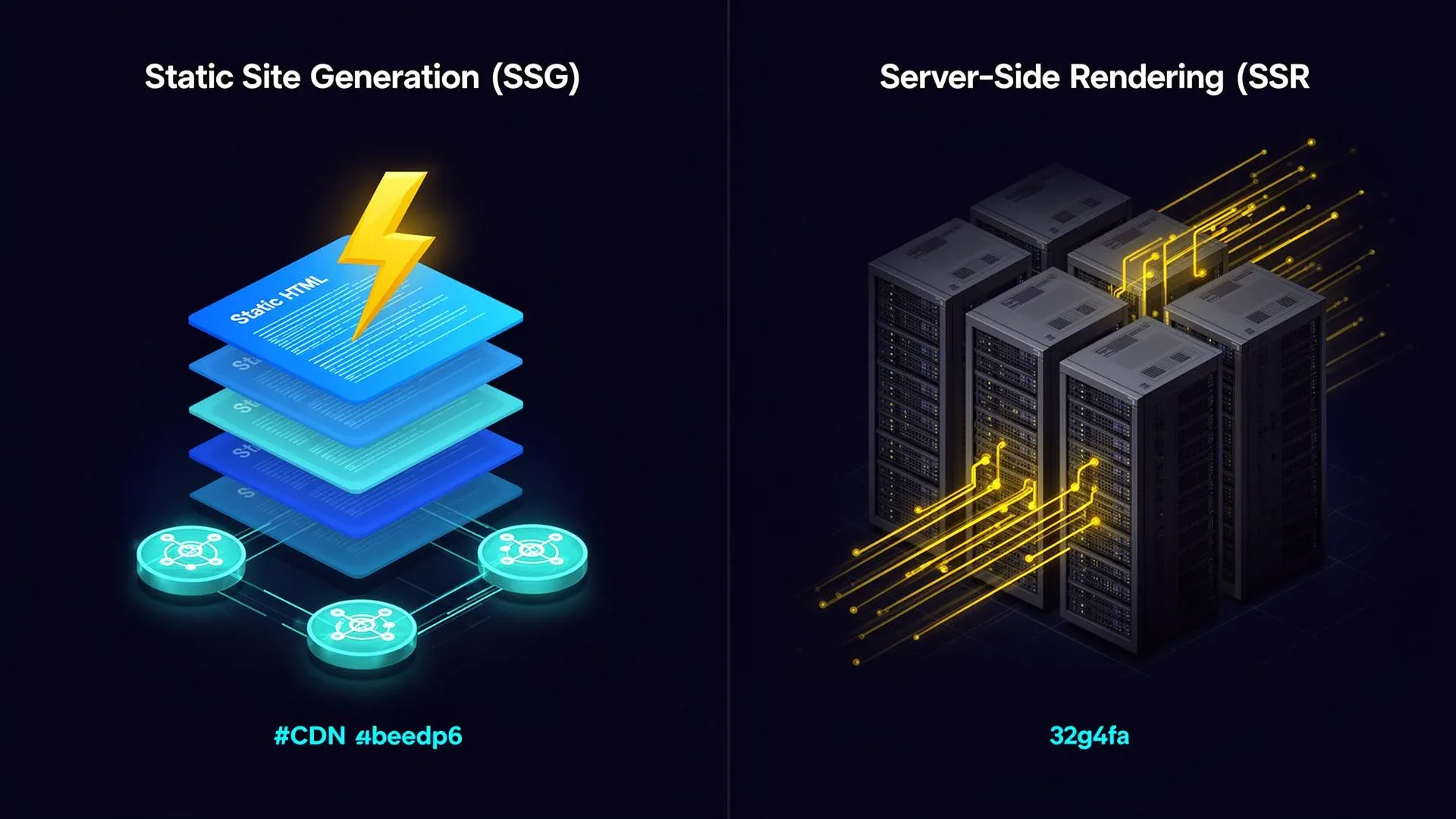
SSR or Pre-Rendering? What We Evaluated for Mykeythai vs. Our Default Approach
Lovable now ships real SSR via TanStack Start. We checked for Mykeythai whether to switch – and why our pre-rendering ap…
Read more
Lovable SEO/AEO: Every App Discoverable by Google and ChatGPT From Day 1
Lovable ships server-side rendering, pre-rendering for existing apps, Semrush directly in the builder chat, and an on-de…
Read more